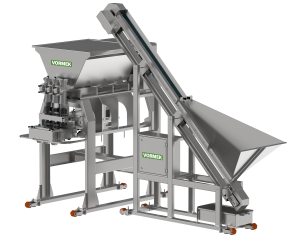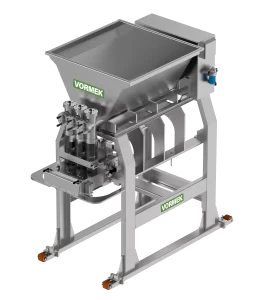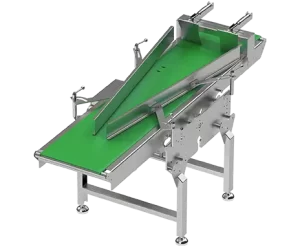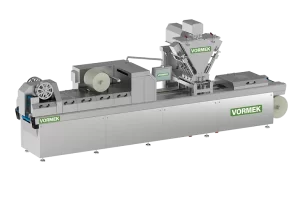
Introduction to the Vormek EaseCapper VAP-500
Once the product is in the container, the film is sealed, and the package is ready for market—sometimes one more step remains: placing a second lid on the container. At first glance, this may seem like an extra step, but anyone familiar with the food industry understands the true value of that second lid.
After purchase, the consumer peels off the top film, uses part of the product, and stores the remainder in the refrigerator or appropriate storage. At that moment, without a lid to reseal the container, the product is exposed to air, contamination, and drying. Flavor changes, texture deteriorates, and the product loses its freshness—leaving a poor impression of the brand in the consumer’s mind.
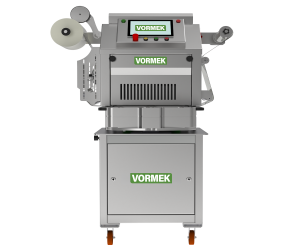
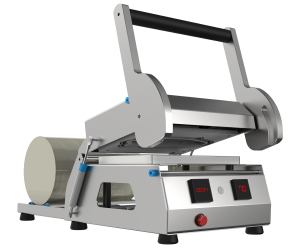
The EaseCapper VAP-500 is designed precisely for this purpose. Positioned after the film sealing process (on the tray sealer), it places plastic lids onto containers—ensuring the product remains protected both during consumption and storage.
The technical slogan captures its design philosophy: Pneumatic Capping, Unstoppable Performance, Ease – Fully Adjustable.
What Is the Second Lid and Why Do We Need It?
For many food products packaged in wide-mouth plastic containers—such as yogurt, cream cheese, dairy desserts, Olivier salad, sauces, pickles, cream, butter, nuts, and more—the packaging process includes two stages:
| Stage | Description |
|---|---|
| Stage 1: Film Sealing | A film (typically aluminum or plastic) is sealed over the container opening, completely closing the package against air. |
| Stage 2: Plastic Lid Application | A plastic lid is placed over the container so that after the top film is peeled off, the consumer can reseal the container. |
This second lid offers three key advantages:
| Benefit | Description |
|---|---|
| Post-consumption protection | After peeling the top film, consumers can reseal the container with the plastic lid and store leftovers safely |
| Contamination prevention | Prevents dust, insects, and environmental contaminants from entering the product |
| Moisture retention | Prevents drying and moisture loss from the product surface |
| Brand enhancement | Provides additional space for logo printing, design, and product information—giving the package a more professional, complete appearance |
Common Industry Challenges with Manual Capping
In many factories, placing the second lid is still done manually by operators. This approach has several disadvantages:
| Challenge | Description |
|---|---|
| Slow process | Operators cannot match the speed of an automatic line |
| Fatigue and quality decline | Speed and accuracy decrease during late shifts |
| Human error | Lids may be placed crooked, not fully seated, or forgotten entirely |
| Hygiene risks | Hand contact with lids and containers increases microbial load |
| Labor costs | At least one operator per shift is required solely for capping |
Engineering Architecture and Technical Specifications
1. Suction Cup Mechanism
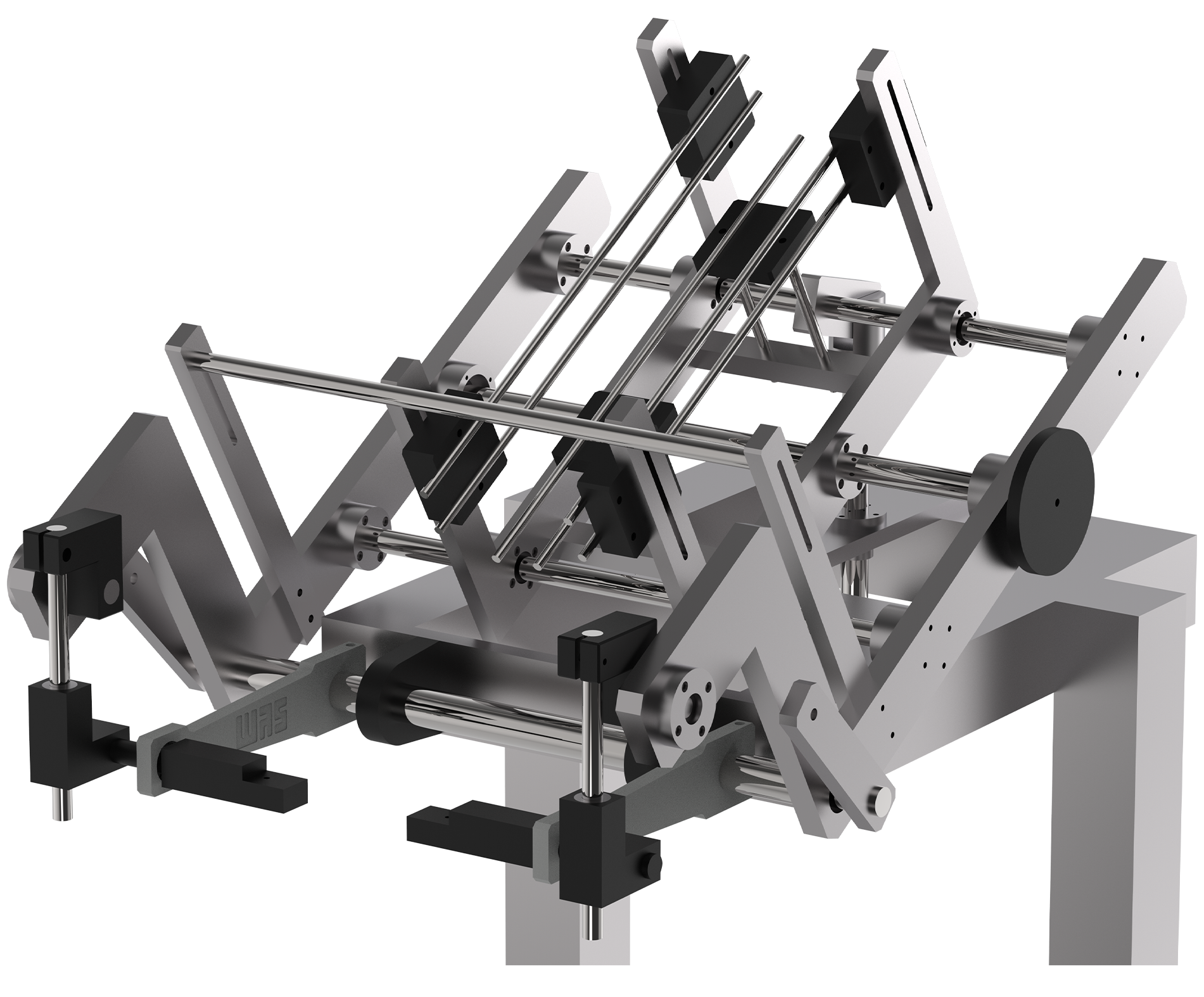
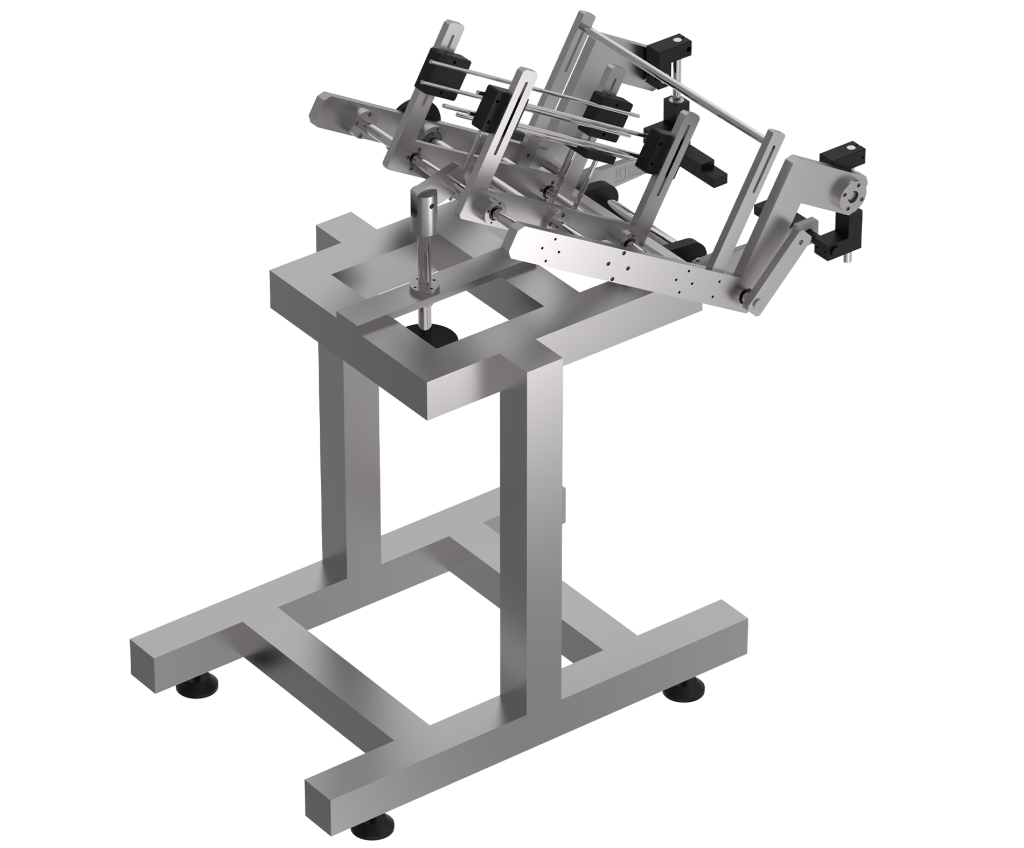
The heart of the machine is the pneumatic suction cup system. A moving head moves in a circular (rotary) up-and-down motion:
- On the upward stroke: The suction cup uses vacuum to pick up a lid from the magazine (lid hopper).
- On the downward stroke: The suction cup places the lid onto the container opening.
- Final seating: A separate pneumatic cylinder applies additional pressure to firmly seat the lid on the container.
2. Fully Adjustable
The machine is adjustable for containers and lids of different sizes:
| Adjustable Parameter | Description |
|---|---|
| Head height | For containers of varying heights |
| Lid hopper (magazine) | For different lid sizes |
| Suction pressure | Matched to lid material and weight |
| Final seating pressure | Ensures secure, firm lid closure |
3. Speed Synchronized with Production Line
The machine speed is matched to the tray sealer‘s output. For example, if the tray sealer produces 21 containers per minute, the capper places exactly 21 lids per minute.
4. Robust and Hygienic Construction
| Component | Material | Feature |
|---|---|---|
| Main body | 304 stainless steel | Corrosion-resistant, washable |
| Mechanical parts | Aluminum alloy with protective coating | Lightweight, strong, corrosion-resistant |
| Conveyor belt | PU food-grade | Washable, detergent-resistant |
5. Intelligent Control System
The machine can be controlled in two ways:
- Connection to the main packaging machine’s PLC (full speed and cycle synchronization)
- Independent electrical enclosure with its own PLC (suitable for adding the capper to existing lines)
Control capabilities:
- Speed adjustment via inverter
- Operational status display on HMI touchscreen
- Automatic fault diagnosis and alert display
6. High Washability and Hygiene
- All surfaces in contact with lids and containers are smooth with no dead corners
- The conveyor belt is easily removable for cleaning and reinstallation
- The 304 stainless steel body resists industrial cleaning agents
Technical and Economic Benefits
| Category | Benefit | Description |
|---|---|---|
| Hygienic | Eliminates hand contact with lids and containers | Reduced microbial load; HACCP compliant |
| Operational | Speed synchronized with tray sealer | No line bottleneck |
| Adjustable for various lid and container types | Flexibility for product changeover | |
| Economic | Reduced labor costs | Eliminates one operator per shift |
| Management | Reduced human error | Consistent, uniform capping |
| Enhanced brand value | More complete, professional packaging | |
| Economic | Fast ROI | Typically less than 12 months |
Impact on Productivity and Quality
From a production manager’s perspective, adding a capper to the packaging line:
- Eliminates the end-of-line bottleneck (operators no longer stop for capping)
- Increases final output rate (line runs at designed speed)
- Improves packaging appearance (all lids are flat, secure, and uniform)
- Increases consumer satisfaction (second lid enables easy resealing)
Suitable Industries
| Industry | Products | Need for Second Lid |
|---|---|---|
| Dairy | Yogurt, cream cheese, dairy desserts, butter, cream | Gradual consumption; needs resealing |
| Food | Olivier salad, mayonnaise, barbecue sauce, salad dressing | Multiple uses; refrigeration storage |
| Pickled products | Pickles, olives, mixed pickles | After opening, requires tight seal to prevent odor and liquid leakage |
| Ready meals | Ready-made stews, thick soups, semi-prepared meals | Gradual consumption and storage |
| Bakery and confectionery | Halva, edible creams, prepared pastes | Prevents drying; preserves texture |
A Smart Investment
The monthly salary that would have been paid to an operator can now be transformed into a fixed asset—the EaseCapper VAP-500. An investment that works for the production line not for one year, but for many years. Human error, contamination, and delays from operator fatigue are completely eliminated. This is the essence of smart investment: converting ongoing expenses into lasting assets.
Key Advantages at a Glance
- Pneumatic suction cup mechanism – Precise, gentle lid pickup from the hopper
- Fully adjustable – Height, lid hopper, suction pressure, seating pressure
- Synchronized with tray sealer – No bottlenecks; maximum productivity
- Full 304 stainless steel construction – Robust, hygienic, washable
- Intelligent control (PLC + HMI) – Connection to main machine or independent enclosure
- Eliminates operator – Reduces labor costs and human errors
- Fast ROI – Typically less than a few months