

Introduction
Shrimp is one of the most valuable seafood commodities in the global market. Its delicate texture, mild flavour, and exceptional nutritional profile have made it a staple in cuisines worldwide. Yet, for all its popularity, shrimp presents one of the most significant preservation challenges in the food industry.
The moment shrimp is harvested, its natural enzymes and surface bacteria begin a process of deterioration that, if unchecked, can render the product unfit for consumption within hours. The traditional reliance on simple ice storage and rudimentary packaging methods has long limited the reach of shrimp producers, particularly in developing regions where access to advanced processing technology remains limited.
Today, however, the landscape is transforming. Modern shrimp processing and packaging technology has redefined what is possible, enabling producers to deliver premium-quality products to international markets with confidence. Central to this transformation is the adoption of sophisticated packaging machinery capable of creating environments that preserve freshness, extend shelf life, and maintain the visual appeal that discerning consumers demand.
This article examines the evolution of shrimp processing and packaging, from traditional ice-based preservation to contemporary automated systems. It explores the technologies that have reshaped the industry, the standards that govern export markets, and the equipment that makes it all possible. Whether you are a producer seeking to upgrade your operation, an exporter preparing for new markets, or an industry professional tracking technological developments, this comprehensive guide offers practical insights into the modern shrimp processing and packaging landscape.
Looking to upgrade your seafood packaging line? Vormek’s specialised shrimp processing machinery delivers precision, reliability, and hygiene. Speak to our packaging engineers today.
1. The Global Significance of Shrimp: Economic and Nutritional Perspectives
Shrimp occupies a unique position in the global food system. As one of the most widely traded seafood products, it supports livelihoods across the supply chain—from artisanal fishers in Southeast Asia to industrial processing facilities in Latin America and distribution networks spanning every continent.
Nutritional Excellence
The nutritional credentials of shrimp are well established. As a lean protein source, it provides all nine essential amino acids required for human health. Its omega-3 fatty acid content, particularly EPA and DHA, is associated with cardiovascular health, cognitive function, and inflammatory regulation. Shrimp is also an exceptional source of selenium, a trace mineral with potent antioxidant properties that protect cells from oxidative damage. The presence of vitamin B12 supports neurological function and red blood cell production, while iodine contributes to healthy thyroid metabolism.
The nutritional value of shrimp, however, is not guaranteed. It depends entirely on proper handling and processing. When shrimp is subjected to temperature abuse or exposed to oxygen for extended periods, proteins begin to denature, fatty acids oxidise, and micronutrients degrade. This is why modern processing and packaging technology is not merely a matter of convenience—it is essential for preserving the nutritional integrity of the product.
The Global Market Landscape
Global shrimp production exceeds five million tonnes annually, with farmed production accounting for approximately half of this total. Key producing nations include China, India, Indonesia, Vietnam, and Ecuador, while major import markets are concentrated in the United States, the European Union, Japan, and increasingly, China itself.
Iran occupies a significant position in regional shrimp production, with major farming operations concentrated in the southern provinces of Hormozgan, Bushehr, and Khuzestan. Iranian shrimp is exported to markets including the UAE, Russia, China, Vietnam, and Persian Gulf countries. For Iranian producers to compete effectively in these demanding export markets, investment in processing and packaging technology is not optional—it is fundamental.

2. Traditional Shrimp Processing: Methods, Limitations, and Consequences
Understanding the value of modern shrimp processing technology requires an appreciation of the limitations inherent in traditional methods. For centuries, shrimp preservation relied on a simple principle: keep it cold and keep it simple.
Characteristics of Traditional Processing
Traditional shrimp handling typically involved minimal intervention. Freshly caught shrimp were placed in containers with crushed ice, often without temperature monitoring or quality assessment. Packaging, where it existed at all, consisted of simple plastic bags or loose packing in polystyrene boxes with no hermetic sealing.
Processing activities such as peeling and de-veining were performed manually by hand, with variable standards of hygiene and productivity. Sorting was conducted by eye, with workers grading shrimp by approximate size and visual appearance—a process inherently subject to inconsistency and fatigue.
The Consequences of Conventional Methods
The limitations of these approaches are severe and multifaceted:
- Accelerated Microbial Spoilage: The warm, humid conditions prevalent in many fishing regions promote rapid bacterial growth. As bacterial populations proliferate, they produce enzymes that break down proteins and lipids, generating volatile compounds responsible for the characteristic off-odours of spoiled shrimp.
- Nutritional Degradation: Oxidation of polyunsaturated fatty acids not only diminishes nutritional value but also generates rancid flavours. Vitamins, particularly B-complex vitamins and vitamin E, are highly susceptible to degradation when exposed to oxygen and light.
- Texture and Colour Deterioration: Uncontrolled freezing and temperature fluctuations promote the formation of large ice crystals that rupture cell walls. Upon thawing, these damaged cells release moisture, resulting in a mushy, waterlogged texture. The natural pink colour of shrimp, derived from astaxanthin, is also vulnerable to oxidation and fading.
- Export Rejection: Perhaps the most economically consequential limitation of traditional processing is the inability to meet international import standards. Markets such as the European Union, the United States, and Japan have established rigorous requirements for seafood imports, including microbiological limits, residue testing, and traceability. Shrimp processed under uncontrolled conditions is highly unlikely to satisfy these requirements.
3. Modern Shrimp Processing: An Overview
The shrimp processing industry has undergone a technological transformation that touches every stage of the value chain. The adoption of mechanised and automated systems has enabled producers to achieve consistent quality, regulatory compliance, and competitive unit costs.
Key Processing Stages
Contemporary shrimp processing typically follows a structured sequence of operations. Each stage presents opportunities for quality optimisation and value addition.
- Receiving and Chilling: The clock starts ticking the moment shrimp leaves the water. Rapid chilling to near-zero temperatures is essential to arrest enzymatic activity and microbial growth. Modern facilities receive shrimp in insulated containers equipped with ice-making systems that maintain consistent temperatures.
- Washing and Decontamination: Shrimp is washed thoroughly with chilled, potable water to remove surface contaminants. Some operations incorporate antimicrobial rinses approved for food contact to reduce pathogen loads.
- Sorting and Grading: Automated graders now replace manual sorting in modern facilities. Using optical sensors and weighing technology, these systems classify shrimp by size, colour, and quality grade with consistency no manual operation can match.
- Peeling and De-veining: Mechanical peeling and de-veining machines have transformed the productivity of shrimp processing. These machines remove the shell and intestinal tract at speeds far exceeding manual labour, with minimal damage to the flesh.
- Freezing: The freezing method chosen has a profound impact on final product quality. Conventional block freezing, once the industry standard, has largely been superseded by Individual Quick Freezing (IQF), which preserves the integrity of each shrimp.
- Packaging: Final packaging is the point at which the preservation gains achieved in earlier stages are either secured or lost. The choice between vacuum packaging, MAP, and other methods depends on the product type, target market, and distribution requirements.
4. Freezing Technology: IQF and Its Benefits
Among the innovations that have improved shrimp quality, Individual Quick Freezing stands out as one of the most significant. The IQF method addresses the fundamental limitations of older freezing techniques.
The Science Behind IQF
IQF involves subjecting individual shrimp to intensely cold air or cryogenic gases, typically at temperatures well below freezing. The freezing process is rapid enough to minimise the size of ice crystals formed within the shrimp’s cells. Small ice crystals cause less mechanical damage than the large crystals produced by slow freezing.
The result is shrimp that, upon thawing, retains its original texture, moisture content, and appearance. Unlike block-frozen shrimp, which can be difficult to separate and may suffer surface damage, IQF shrimp remain loose and easy to portion.
Operational Advantages
Beyond product quality, IQF offers significant operational benefits. Producers can freeze shrimp immediately after processing without waiting to accumulate sufficient volume for a block. The ability to freeze continuously, without batch interruption, improves production flow and reduces labour requirements.
5. Packaging Technologies for Shrimp: Vacuum, MAP, and Beyond
The packaging stage is the final opportunity to preserve shrimp quality before it reaches the consumer. Modern packaging technologies are sophisticated, employing gas mixtures, barrier films, and sealing systems to maintain freshness for extended periods.
Vacuum Packaging
Vacuum packaging remains the most widely used method for shrimp, particularly for frozen products. By removing atmospheric oxygen from the package and creating a tight seal, vacuum packaging addresses the primary mechanisms of shrimp spoilage.
Preservation Mechanisms: The removal of oxygen inhibits the growth of aerobic bacteria and moulds. It also prevents oxidative rancidity of lipids, preserving both flavour and nutritional value. The tight seal prevents moisture loss, maintaining product weight and texture.
Applications: Vacuum packaging is particularly suited to frozen shrimp, where the absence of oxygen prevents freezer burn—the dehydration and oxidation that can degrade product quality during long-term storage.
Equipment Considerations: Industrial vacuum packaging machines for shrimp typically use chamber systems that accommodate multiple packages per cycle. Dual-chamber machines offer continuous operation, with one chamber being loaded while the other is under vacuum, maintaining productivity.
Modified Atmosphere Packaging (MAP)
MAP represents the next evolution in seafood packaging technology. Rather than simply removing air, MAP replaces the package atmosphere with a controlled gas mixture designed to preserve quality.
The MAP Principle: For shrimp and other seafood, the MAP gas mixture typically combines nitrogen and carbon dioxide. Nitrogen acts as an inert filler, maintaining package volume and preventing collapse, while carbon dioxide provides antimicrobial activity. The precise proportions are tailored to the product characteristics and requirements.
Advantages for Shrimp: MAP is particularly effective for chilled, never-frozen shrimp, where the preservation challenge is greatest. The gas environment extends the period during which the product remains fresh, enabling distribution over greater distances. MAP-packaged shrimp also retains a more natural appearance than vacuum-packaged product, as there is no compression from the film.
Equipment Needs: MAP packaging requires machinery capable of flushing packages with the correct gas mixture before sealing. Tray sealers and thermoforming machines are commonly used for this purpose, equipped with gas mixing and flow control systems.
Multilayer Barrier Films
The performance of both vacuum and MAP packaging depends on the quality of the packaging film. Modern films are complex multilayer structures, each layer contributing a specific property to the overall package.
Key Layers: The barrier layer prevents oxygen ingress. The sealant layer provides heat-sealability. Additional layers may contribute mechanical strength, puncture resistance, or printability.
Material Advances: The ongoing development of biodegradable and recyclable films adds a sustainability dimension to shrimp packaging. While performance standards must be maintained, producers are increasingly considering the environmental impact of their packaging choices.

6. Packaging Machinery for Shrimp Processing
The effectiveness of modern shrimp packaging depends on the quality and capability of the equipment used. From basic vacuum chamber machines to fully automated MAP lines, the range of available machinery reflects the diversity of producer requirements.
Vacuum Chamber Machines
Chamber vacuum packaging machines are the workhorses of shrimp packaging, particularly for small to medium-scale operations. The shrimp, either in flexible pouches or more rigid packages, is placed inside a vacuum chamber. The chamber is sealed, air is evacuated, and the package is sealed before the chamber is vented.
Key Features: Industrial chamber machines offer programmable vacuum and seal parameters, accommodating different package types and product requirements. Stainless steel construction is essential for the corrosive marine environment, and hygiene is supported by smooth surfaces and accessible design.
Tray Sealers
For shrimp packaged in rigid or semi-rigid trays, tray sealers provide the necessary sealing capability. These machines place a film over the filled tray and heat-seal it in place, creating a hermetic seal. MAP capability is a common feature, enabling gas flushing before sealing.
Versatility: Modern tray sealers are adaptable to various tray sizes, materials, and sealing conditions. This flexibility is valuable for producers serving multiple market segments with different packaging formats.
Thermoforming Machines
For high-volume operations, thermoforming packaging machines offer the ultimate in productivity. These machines form the package base from a roll of film, fill it with product, apply a top film, evacuate or gas-flush, and seal—all in a continuous automated process.
Automation Benefits: Thermoforming lines can operate at high speeds with minimal manual intervention. They are integrated with upstream and downstream equipment, including fillers, checkweighers, and labelling systems, enabling fully automated packaging lines.
7. Vormek Packaging Solutions for Shrimp
Vormek has developed a comprehensive portfolio of packaging machinery applicable to shrimp and seafood processing. With a focus on engineering reliability and hygienic design, Vormek equipment is deployed in operations ranging from small-scale facilities to major industrial lines.
Vormek Tray Sealer
The Vormek Tray Sealer is designed specifically for applications requiring precise sealing and gas flushing. Its robust construction and advanced control systems make it suitable for continuous operation in demanding seafood processing environments.
Key Features: The machine features stainless steel construction, washdown-compatible design, and an intuitive touchscreen interface. Sealing parameters are programmable, allowing rapid changeover between different tray types and film materials.
Hygienic Design: Food safety is addressed through the elimination of crevices and recesses where bacteria could accumulate. Surfaces are designed for easy cleaning, and components that come into contact with food are manufactured from appropriate food-grade materials.
Operational Reliability: The sealing system is engineered for consistent performance across long production runs. Temperature control and sealing pressure are monitored continuously, ensuring each package meets quality standards.
Vormek Thermoforming Machine
For producers requiring high-volume packaging capacity, the Vormek Thermoforming Machine offers automated forming, filling, and sealing in a single continuous process.
Production Efficiency: Thermoforming lines integrate seamlessly with upstream processing equipment and downstream handling systems. The result is a complete packaging solution capable of sustained high-output operation.
Flexibility: The machine accommodates a range of package formats and films, making it suitable for diverse product lines. Changeover between formats is efficient, minimising downtime.
8. Regulatory Standards and Quality Assurance
Exporting shrimp to major international markets requires compliance with established food safety and quality standards. For producers equipped with modern processing and packaging lines, meeting these standards is achievable but demands a systematic approach.
HACCP (Hazard Analysis and Critical Control Points)
HACCP is the internationally recognised framework for food safety management. It is a preventive approach that identifies potential hazards and establishes controls to prevent, eliminate, or reduce them to acceptable levels.
Application to Shrimp: In shrimp processing, critical control points typically include temperature during storage, cooking where applicable, and packaging integrity. Each critical control point is monitored continuously, with corrective actions specified should deviations occur.
Export Requirements: HACCP certification is mandatory for shrimp exported to the United States, and is increasingly required by other major importers. The system provides documented evidence of due diligence, protecting producers in the event of product liability claims.
ISO 22000
ISO 22000 integrates HACCP principles within a broader food safety management system. It addresses the entire food chain, from primary production to consumption, and requires documented management practices.
Good Manufacturing Practices (GMP)
GMP covers the fundamental operational requirements for food processing. It includes facility design, equipment construction, personnel hygiene, cleaning and sanitation, and record-keeping. The essential principle is that preventive measures produce more reliable results than reactive testing.
9. Cold Chain Management
The quality of shrimp processing and packaging is ultimately contingent on the integrity of the cold chain. Temperature abuse at any stage during transport, storage, or distribution can compromise the preservation achieved in packaging.
Temperature Monitoring
Continuous temperature monitoring throughout the supply chain is essential for shrimp quality assurance. Modern monitoring systems incorporate data loggers and wireless sensors, providing real-time visibility and enabling prompt corrective action when temperatures deviate.
Frozen and Chilled Logistics
The logistics requirements for chilled and frozen shrimp differ significantly. Frozen shrimp can tolerate limited temperature fluctuations without immediate quality degradation, while chilled shrimp maintained just above freezing are inherently more perishable and require more stringent control.
10. Sustainability in Shrimp Packaging
Environmental considerations are increasingly influencing packaging decisions in the shrimp industry. The challenge is to balance the preservation requirements of the product with the sustainability objectives of both producers and consumers.
Challenges of Conventional Packaging
Traditional multilayer plastic packaging presents significant end-of-life challenges. The combination of different materials makes recycling difficult, and much seafood packaging ends up in landfill or the environment. The durability that makes plastic effective for preservation also makes it persistent in the environment.
Sustainable Solutions
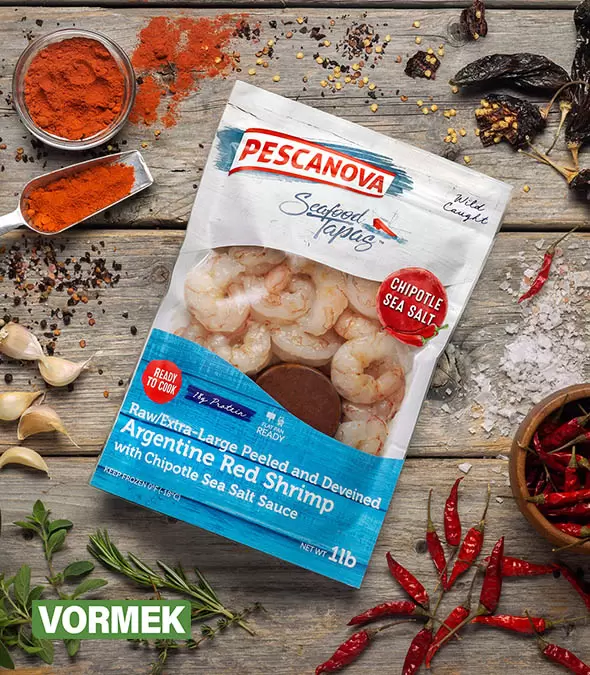
Progress is being made in developing more sustainable shrimp packaging. Mono-material films, using a single polymer type throughout all layers, are more readily recyclable. Biodegradable films from renewable sources, while still an emerging technology, show promise for applications with shorter shelf-life requirements.
11. Industry Challenges and Practical Solutions
While the benefits of modern shrimp packaging are clear, implementation can present challenges for producers. Understanding these challenges and their solutions is valuable for planning technology upgrades.
Initial Equipment Investment
The capital cost of packaging machinery—particularly automated MAP lines—can be substantial. For small and medium producers, this investment may seem daunting.
Solution: A phased approach is often practical, starting with the equipment that addresses immediate quality issues and scalability needs. The efficiency and quality gains from modern packaging often produce attractive payback periods.
Technical Training Requirements
Advanced packaging machinery requires operator training for efficient operation and basic troubleshooting.
Solution: Equipment suppliers often provide comprehensive training as part of the procurement package. User interfaces on modern machines are increasingly intuitive, with operator-friendly touchscreen controls.
Market Access and Competition
Competing in international markets requires product quality that meets or exceeds that of established producers in other countries.
Solution: Premium quality positioning, using the finest raw materials and best-practice processing, can command premium prices. Differentiation through packaging quality—including print quality, pack appearance, and format innovation—adds value that can offset production cost differences.
12. Future Directions in Shrimp Processing
The evolution of shrimp processing and packaging is likely to accelerate, driven by consumer expectations, technological capabilities, and regulatory requirements.
Smart Packaging
The integration of sensors into packaging is an emerging trend. Indicators that change colour in response to temperature abuse or spoilage can provide consumers with real-time freshness information. This technology has particular relevance for shrimp, where quality perception is so closely tied to visual indicators.
Machine Vision
Cameras and image analysis systems are likely to become more widespread in shrimp processing. Sorting, grading, and quality inspection can be performed with speed and consistency that no manual process can match.
Automation and Robotics
Fully automated shrimp processing lines are already a reality in some high-volume operations. The potential for robotics to handle repetitive tasks—from feeding to packaging—continues to expand.
13. Conclusion
The transformation of shrimp processing from a traditional, labour-intensive activity to a technology-driven industry has been profound. At every stage, from handling and freezing through to final packaging, advances in equipment and methods have enabled producers to achieve levels of quality, safety, and consistency that were once unimaginable.
For shrimp producers seeking to access export markets, the adoption of modern processing and packaging technology is not a luxury—it is a prerequisite. The sophisticated machinery now available, from vacuum packaging chambers to fully automated MAP lines, provides the tools necessary to meet international quality standards while maintaining competitive productivity.
As we look forward, the integration of smart technologies, sustainability considerations, and further automation will continue to shape the industry. Producers who invest in technology now, and who choose equipment partners with proven capabilities and commitment to quality, will be best positioned to succeed in the competitive global shrimp market.
Ready to transform your shrimp packaging operation? Vormek engineers are available to assess your requirements and recommend the right equipment for your production needs. Contact us today to discuss your project.
Frequently Asked Questions
1. What packaging method is most effective for shrimp?
The most effective method depends on the product type and distribution requirements. For frozen shrimp, vacuum packaging is generally preferred. For chilled shrimp, MAP provides excellent preservation while maintaining product appearance.
2. What is the difference between IQF and conventional freezing?
IQF freezes each shrimp individually, preventing the formation of large ice crystals that can damage texture. Conventional freezing often results in blocks of frozen shrimp that are difficult to separate and may suffer quality loss.
3. Is vacuum packaging suitable for all shrimp products?
Vacuum packaging is suitable for frozen shrimp products. For chilled shrimp, the compression inherent in vacuum packaging can affect appearance, making MAP a better choice in some cases.
4. What standards apply to exported shrimp?
Major export markets require compliance with HACCP, ISO 22000, and GMP standards. These frameworks ensure food safety and quality throughout the processing and packaging chain.
5. How does packaging affect shrimp quality?
Packaging protects shrimp from oxygen exposure, moisture loss, and contamination. Proper packaging extends the period during which shrimp maintains its original quality, enabling distribution to distant markets.
Final Call to Action
For expert guidance on shrimp packaging equipment selection, line design, and operational optimisation, Vormek’s engineering team is ready to assist. Our packaging specialists understand the specific requirements of shrimp processing, and we are committed to delivering solutions that enhance product quality, operational efficiency, and export readiness.
Contact Vormek today to discuss your project requirements.

