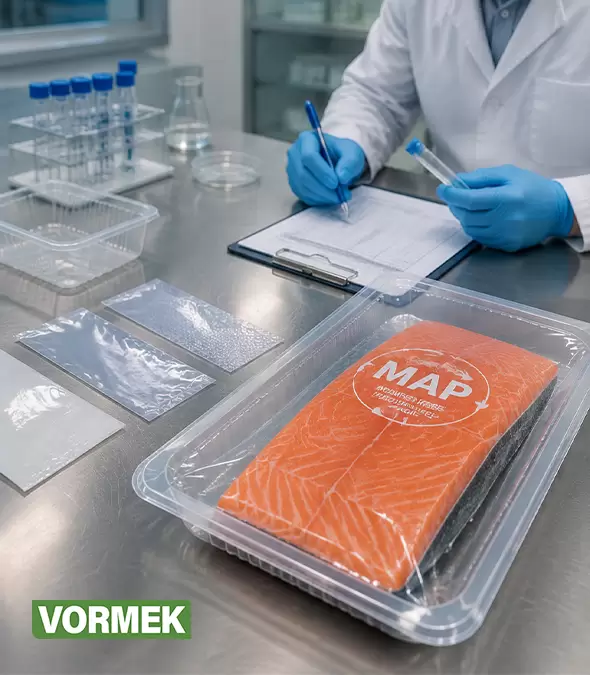
Introduction
Red meat processing has undergone a remarkable transformation over the past century. What once was a localized activity serving immediate community needs has evolved into a sophisticated global industry capable of delivering products across continents while maintaining quality and safety standards. This evolution reflects broader changes in food technology, urbanization, and consumer expectations.
The desire for convenient, ready-to-cook meat products has driven significant innovation in processing and packaging technologies. However, the fundamental challenge remains unchanged: meat is a perishable product that requires careful handling to maintain its safety and quality throughout the supply chain. Modern processing and packaging systems address this challenge through engineering solutions that preserve product integrity while enabling efficient distribution.
Processed meat products encompass a wide range of items that have been modified from their natural state through various preservation methods. These include traditional techniques like salting, smoking, and drying, as well as modern industrial processes involving curing, cooking, and specialized packaging. Each approach offers distinct advantages for shelf life extension and product differentiation.
For producers targeting export markets, understanding international packaging standards has become essential. Different destinations impose varying requirements for materials, labeling, traceability, and food safety documentation. Equipment selection must accommodate these diverse requirements while maintaining operational efficiency and product quality.
This comprehensive guide examines red meat packaging from an engineering perspective, addressing the technical considerations that define success in international markets. Drawing on established standards and practical production experience, we provide actionable insights for processors seeking to expand their export capabilities.
Understanding Processed Meat Products
Definition and Classification
Processed meat refers to meat that has been modified through various preservation and preparation methods to extend shelf life, enhance flavor, or improve convenience. The processing can range from simple salting to complex industrial operations involving multiple stages.
Traditional processing methods have been employed for centuries across different cultures. Salting reduces water activity, creating an environment less favorable for microbial growth. Smoking imparts distinctive flavors while contributing antimicrobial and antioxidant effects. Drying removes moisture, inhibiting microbial proliferation. These methods remain relevant today, particularly for specialty products with established consumer acceptance.
Industrial processing has expanded the range of products available and enabled production at scale. Modern facilities implement controlled processes that ensure consistent quality while maintaining food safety. Products such as sausages, hams, nuggets, and schnitzels represent significant market segments with established consumer demand.
Primary Product Categories
Cooked and smoked products include sausages, hams, and similar items that undergo thermal processing. Cooking eliminates pathogens while developing characteristic flavors and textures. Smoking adds additional preservation benefits and distinctive taste profiles. These products typically require refrigeration during distribution.
Dried and fermented products such as salami and dry sausages employ controlled fermentation combined with drying to achieve extended shelf life. The reduction in water activity, combined with pH reduction from fermentation, creates conditions that inhibit spoilage organisms.
Canned and shelf-stable products undergo thermal processing in hermetically sealed containers to achieve commercial sterility. These products do not require refrigeration and offer extended shelf life, making them suitable for export to markets with limited cold chain infrastructure.
Ready-to-cook products including breaded items, marinated portions, and formed products offer convenience for consumers. These products typically require refrigeration and have shorter shelf life than fully processed alternatives.
Health and Nutrition Considerations
Processed meat products provide valuable nutrition including high-quality protein, iron, and B-vitamins. However, they also contain ingredients that warrant consideration in a balanced diet.
Sodium content from salt and curing agents contributes to preservation but also represents a health consideration. Processors have developed reduced-sodium formulations in response to consumer health concerns.
Saturated fat content varies significantly among products. Lean formulations and fat reduction strategies have been implemented across many product categories.
Additives including nitrates and nitrites serve essential food safety functions, particularly inhibiting botulism-causing organisms. However, consumer interest in natural alternatives has driven development of products using alternative preservation systems.
Regulatory limits for additives in meat products vary among markets. Export-oriented producers must understand and comply with destination country requirements.
Processing Technology Fundamentals
Raw Material Selection and Preparation
Product quality begins with raw material selection. Consistent sourcing of appropriate meat cuts, fat content, and quality parameters establishes the foundation for successful processing.
Meat quality assessment includes evaluation of pH, color, water-holding capacity, and microbiological status. These parameters influence processing characteristics and final product quality.
Fat content and composition affect product texture, flavor, and processing behavior. Appropriate fat selection ensures product quality while meeting formulation specifications.
Temperature management from receipt through processing maintains product safety and quality. Cold chain integrity is essential for perishable raw materials.
Supplier qualification and auditing ensure consistent raw material quality. Traceability systems enable tracking from farm to finished product.
Grinding and Mixing Operations
Size reduction and mixing represent critical processing stages for many processed meat products. Proper equipment selection and operation ensures consistent product quality.
Grinding equipment reduces meat particle size to specifications for each product type. Plate size selection, temperature control, and equipment maintenance affect grinding quality.
Mixing and blending incorporate ingredients uniformly while developing protein extraction that influences product texture. Mixing time, speed, and temperature control are essential parameters.
Emulsification for products like frankfurters and bologna creates stable fat-water protein emulsions that provide characteristic texture. Equipment selection and operation affect emulsion stability.
Curing and Flavor Development
Curing agents serve multiple functions including preservation, color development, and flavor enhancement. Understanding the chemistry of curing supports process optimization.
Nitrate and nitrite role in cured meat products extends beyond preservation to include characteristic color and flavor development. Regulatory limits for residual nitrite vary among markets.
Curing methods include dry curing, immersion curing, and injection curing. Method selection affects processing time, product characteristics, and process efficiency.
Flavor development during curing results from complex reactions between meat components and curing agents. Time, temperature, and formulation affect flavor development.
Thermal Processing
Heat treatment serves multiple functions including pathogen destruction, enzyme inactivation, and texture development. Understanding thermal processing requirements supports food safety and quality objectives.
Process establishment for thermal processing should be based on validated studies demonstrating pathogen reduction. Time and temperature parameters must be verified for each product and process.
Cooking equipment selection affects product quality and process efficiency. Options include smokehouses, continuous ovens, and water cooking systems. Equipment selection should consider product type and production requirements.
Cooling requirements after thermal processing must be managed to prevent pathogen growth and maintain product quality. Rapid cooling reduces the time products spend in temperature ranges favorable for microbial growth.
Red Meat Packaging Technologies
Vacuum Packaging Applications
Vacuum packaging removes air from the package before sealing, creating an oxygen-depleted environment that inhibits aerobic microorganisms. This technology is widely used for processed meat products.
Process principles involve placing the product in a barrier film package, evacuating air using vacuum pumps, and sealing the package. Complete evacuation removes oxygen while maintaining product integrity.
Package formats include bags, pouches, and form-fill-seal packages. Selection depends on product characteristics, distribution requirements, and desired presentation.
Material requirements for vacuum packaging include appropriate oxygen barrier properties, mechanical strength for distribution protection, and compatibility with product components.
Equipment options include chamber machines for batch operations and continuous systems for high-volume production. Equipment selection should match production requirements.
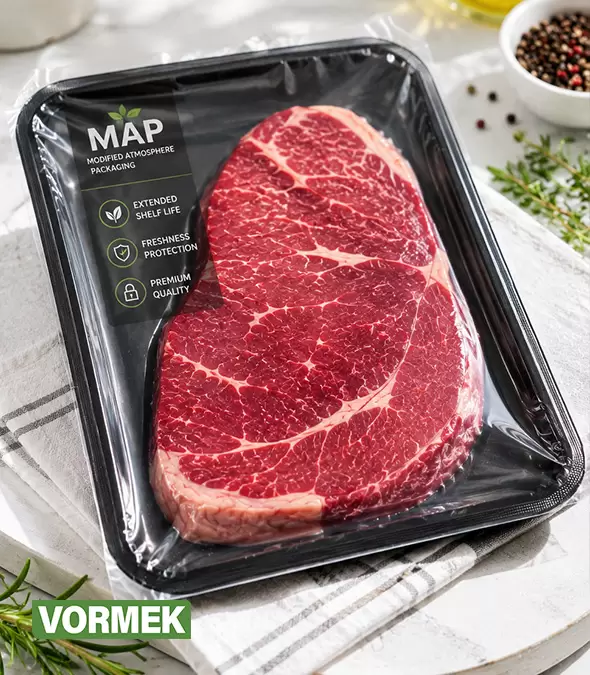
Modified Atmosphere Packaging (MAP)
MAP replaces the package atmosphere with a controlled gas mixture tailored to product requirements. This approach extends shelf life while maintaining product appearance and quality.
Gas composition selection should be based on product characteristics and preservation goals. The appropriate gas mixture for each product type must be determined through testing.
Preservation mechanisms in MAP include reduced oxygen slowing oxidative degradation and carbon dioxide inhibiting microbial growth. The combined effects extend product life while maintaining quality attributes.
Film selection is critical for MAP success. Appropriate gas permeability maintains the desired atmosphere composition while preventing package collapse. Multilayer barrier films with tailored permeabilities support MAP applications.
Equipment integration with filling and sealing operations should ensure consistent atmosphere composition. Gas flushing systems require accurate control to achieve specified compositions.
Skin Packaging Technology
Skin packaging uses vacuum to draw film tightly around the product, creating a “second skin” appearance. This technology enhances product presentation while providing oxygen barrier properties.
Process characteristics involve placing product on a rigid base, applying a film, and evacuating air between the film and product. Heat-softened film conforms to the product shape, creating a tight, wrinkle-free seal.
Benefits for processed meat include superior presentation, extended shelf life, and enhanced consumer appeal. The tight packaging highlights product quality while providing protection.
Material requirements include appropriate extensibility for conformation to product shapes, sufficient barrier properties for shelf life extension, and compatible sealing characteristics for reliable closure.
Tray Sealing Systems
Tray sealing technology seals film to pre-formed trays, creating hermetically sealed packages suitable for retail and foodservice applications. This versatile technology accommodates diverse product formats.
Process operation involves placing filled trays in the sealing machine, positioning film over the tray, applying heat and pressure to seal the film to the tray flange, and indexing sealed packages for downstream handling.
Applications for processed meat include sliced products, sausages, portion packs, and value-added items. Tray sealing provides superior product presentation while maintaining quality throughout distribution.
Container and film selection must be matched to product requirements. Factors include chemical compatibility, appropriate barrier properties, clarity for product visibility, and mechanical properties for distribution protection.
Thermoforming Systems
Thermoforming systems form packages directly from roll stock film, fill the formed containers with product, and seal them in a continuous process. This integrated approach offers material efficiency and high throughput.
Process flow includes unwinding film, heating and forming containers, filling with product, applying lid film, sealing, and indexing finished packages. Automated controls manage each stage for consistent quality.
Value proposition includes material savings through reduced film usage, high production speed, complete automation, and package consistency. Higher initial investment is justified by substantial per-unit cost reductions at volume.
Product applications range from whole cuts to portions and processed products. Package designs can be customized to product dimensions, enhancing presentation and protection.
Packaging Performance Considerations
Barrier Properties and Product Protection
Packaging barrier properties determine the level of protection provided against environmental factors that affect product quality. Understanding barrier requirements supports appropriate material selection.
Oxygen barrier protects against oxidative degradation that affects color, flavor, and nutritional value. Oxygen barrier requirements vary by product type and desired shelf life.
Moisture barrier prevents dehydration that affects product texture and appearance. Appropriate moisture transmission rates maintain product quality throughout distribution.
Light barrier protects against photochemical reactions that can affect color and flavor. Light barrier packaging may be appropriate for light-sensitive products.
Mechanical protection through appropriate material selection and package design prevents physical damage during handling and distribution.
Seal Integrity and Reliability
Package sealing is critical for maintaining product quality and safety. Seal failures compromise product protection and consumer acceptance.
Seal quality parameters include strength, continuity, and integrity. Consistent seal quality requires appropriate equipment, process control, and quality verification.
Common failure modes include incomplete seals, contaminated sealing surfaces, parameter drift, and material incompatibilities. Each requires specific prevention through process control and equipment maintenance.
Quality verification through seal integrity testing provides assurance that packaging meets requirements. Testing methods include visual inspection, destructive testing, and non-destructive techniques.
Process optimization should identify sealing parameters that consistently produce reliable seals. Factors include temperature, pressure, dwell time, and material compatibility.
Contamination Prevention
Packaging operations must prevent contamination that could compromise product safety and quality. Effective control requires comprehensive hygiene systems.
Equipment design principles include stainless steel construction, smooth surfaces without crevices, appropriate slopes for drainage, and accessibility for cleaning. Design that facilitates cleaning reduces contamination risk.
Sanitation protocols should specify cleaning frequencies, procedures, and verification methods. Validated sanitation programs are essential for maintaining hygienic conditions.
Personnel hygiene requirements include appropriate protective clothing, hand washing, and health monitoring. Employee training supports effective contamination prevention.
Environmental controls including air handling, temperature management, and pest prevention contribute to contamination prevention.
International Packaging Standards
Global Regulatory Framework
Exporting red meat products requires compliance with destination country regulations. Understanding the regulatory framework for each market is essential for successful export operations.
Codex Alimentarius provides international food safety standards that serve as reference for many national regulations. Codex standards address food additives, contaminants, hygiene, and labeling.
European Union requirements include specific regulations for meat products including hygiene rules, residue monitoring, and labeling requirements. EU regulations are among the most comprehensive globally.
United States requirements administered by USDA and FDA include meat inspection standards, food safety regulations, and labeling requirements. US regulations differ from EU requirements in several respects.
Other major markets including Japan, China, and Gulf Cooperation Council countries have specific requirements that must be understood for successful market access.
Labeling and Traceability Requirements
Labeling requirements vary among export markets. Understanding these requirements supports compliance and market acceptance.
Product name and description must comply with destination country requirements. Certain product names may be restricted or require specific qualifiers.
Ingredient declaration must list all ingredients in descending order of predominance. Allergen labeling requirements vary among markets.
Nutritional information requirements differ among markets. Some markets require full nutritional panels while others have less comprehensive requirements.
Date marking requirements for meat products include production date, expiration date, and storage conditions. Date formats and terminology may differ among markets.
Traceability information including lot numbers enables product tracking and recall capability. Traceability systems should be designed for compatibility with destination country requirements.
Packaging Material Requirements
Packaging materials must comply with destination country food contact regulations. Material certification and documentation support compliance.
Food contact approval requirements vary among markets. Materials must be manufactured from approved substances and comply with applicable migration limits.
Documentation requirements for packaging materials may include declarations of compliance, test reports, and supplier certifications. Documentation must be maintained and available for review.
Labeling of packaging materials for regulatory compliance may be required in some markets. Information including material identification and manufacturer identification may be required.
Sustainability requirements affecting packaging include recycling content requirements, recyclability requirements, and materials restrictions. Sustainability requirements are increasing across many markets.
Equipment Selection Considerations
Compliance Capability
Equipment selected for red meat packaging should support compliance with destination country requirements. Equipment design and capability affect compliance feasibility.
Documentation capability including recording and reporting functions supports regulatory compliance. Equipment with data capture and storage capability facilitates record keeping.
Verification capability including integrated quality monitoring supports compliance verification. Equipment with verification features simplifies quality assurance.
Cleaning and sanitation capability supports hygiene requirements for meat processing. Equipment designed for sanitary operation reduces cleaning time and supports effective sanitation.
Production Flexibility
Export-oriented operations typically manage diverse product portfolios with varying packaging requirements. Equipment flexibility supports efficient operations.
Format changeover capability affects production efficiency for diverse product lines. Equipment with quick-change tooling supports efficient format switching.
Material compatibility with packaging materials appropriate for different export markets supports operational flexibility. Equipment that accommodates various films and containers simplifies operations.
Scalability for production growth supports business development. Equipment with expansion capability accommodates growing export volumes.
Reliability and Serviceability
Equipment reliability is essential for production efficiency and compliance. Serviceability affects downtime and maintenance costs.
Maintenance requirements should be understood before equipment selection. Equipment with straightforward maintenance procedures supports efficient operations.
Spare parts availability affects downtime and maintenance costs. Suppliers with established parts distribution networks support equipment reliability.
Technical support responsiveness affects resolution of production issues. Suppliers with responsive technical support contribute to operational reliability.
Supplier Qualification
Equipment suppliers should be evaluated based on multiple criteria including technical capability, service support, and compliance knowledge.
Industry experience with red meat packaging applications is valuable for equipment selection and implementation. Experienced suppliers understand application requirements.
Compliance knowledge including understanding of export market requirements supports equipment selection for specific destinations.
After-sales support including training, documentation, and technical assistance contributes to successful equipment implementation and operation.
FAQ Section
What are the main packaging technologies for processed meat products?
The primary packaging technologies for processed meat include vacuum packaging, modified atmosphere packaging (MAP), skin packaging, tray sealing, and thermoforming. Each has distinct advantages for specific product types and applications. Selection should be based on product characteristics, shelf life expectations, distribution requirements, and production volume.
How do international packaging standards affect equipment selection?
International packaging standards influence equipment selection through requirements for documentation capability, verification features, cleaning and sanitation capability, and material compatibility. Equipment that supports compliance with destination country requirements should be selected.
What packaging materials are appropriate for red meat export?
Packaging materials for red meat export must comply with destination country food contact regulations, provide appropriate barrier properties for product protection, and meet mechanical requirements for distribution protection. Material selection should be based on product characteristics and market requirements.
How does packaging affect product shelf life?
Packaging affects product shelf life through barrier properties that control oxygen, moisture, and light transmission. Vacuum packaging extends shelf life by removing oxygen. MAP extends shelf life through controlled atmosphere composition. Appropriate packaging selection is essential for achieving shelf life requirements.
What are the labeling requirements for red meat export?
Labeling requirements vary among export markets but typically include product name and description, ingredient declaration, nutritional information, date marking, traceability information, and storage instructions. Exporters must understand and comply with destination country labeling requirements.
How can producers ensure packaging compliance for export markets?
Ensuring packaging compliance for export markets requires understanding destination country regulations, selecting appropriate materials and equipment, implementing verification procedures, and maintaining documentation. Consultation with regulatory specialists and equipment suppliers with compliance knowledge supports success.
What is the role of traceability in red meat packaging?
Traceability enables product tracking from production through distribution, supporting recall capability and regulatory compliance. Packaging systems should incorporate traceability information including lot numbers and production dates. Traceability systems should be designed for compatibility with destination country requirements.
How does packaging equipment maintenance affect export compliance?
Packaging equipment maintenance affects export compliance through its influence on seal integrity, contamination prevention, and quality consistency. Preventive maintenance programs support consistent performance. Equipment with good serviceability and parts availability supports compliance.
Conclusion
Red meat packaging for export markets presents significant opportunities and challenges for processors. Success requires understanding international standards, selecting appropriate packaging technologies, and implementing robust quality management systems.
The engineering considerations underlying packaging equipment selection include product characteristics, production requirements, export market regulations, and operational objectives. Equipment that balances these requirements supports efficient compliance and market access.
Packaging technologies including vacuum packaging, MAP, skin packaging, tray sealing, and thermoforming each offer advantages for specific applications. Selection should be based on thorough evaluation of product requirements and market needs.
For processors evaluating red meat packaging options, collaboration with experienced equipment manufacturers is recommended. Vormek’s engineering expertise and understanding of export requirements can support equipment selection and implementation. Our precision packaging systems are designed to meet the demanding requirements of international red meat distribution.