The Critical Role of Proper Cleaning in Food Processing Environments
In food production environments, cleanliness is not merely about aesthetic appearance—it is an integral component of product safety and quality assurance. Stainless steel, despite its reputation as a durable and hygienic material, can become a significant challenge in production lines when improperly maintained. This article provides a scientific and practical approach to preventing rust, corrosion, and contamination in stainless steel equipment, ultimately extending its service life and ensuring compliance with stringent hygiene standards.
The food industry operates under some of the most rigorous hygiene regulations globally. Equipment must withstand daily washdowns, exposure to acidic or salty food products, and continuous mechanical stress. The choice of cleaning agents and maintenance protocols directly influences equipment performance, product safety, and regulatory compliance. Understanding the science behind stainless steel cleaning is not merely an academic exercise—it is a practical necessity for ensuring long-term operational reliability and consumer protection.
Food processing facilities face unique challenges when it comes to equipment hygiene. Unlike other industries, food production requires materials and cleaning protocols that not only maintain equipment integrity but also ensure that no harmful residues transfer to the final product. This dual requirement—protecting both the equipment and the food—demands a thorough understanding of cleaning chemistry, material science, and food safety regulations.
The Importance of Selecting the Right Cleaner for 304 Stainless Steel
In the food industry, stainless steel equipment is the preferred choice due to its exceptional durability and hygienic surface properties. However, contrary to its name, stainless steel is not entirely immune to corrosion. In many production environments—particularly in humid conditions or when exposed to salt and chloride-containing materials—equipment can develop stains, discoloration, or surface corrosion over time.
This issue not only compromises the appearance of machinery but can also lead to product contamination, quality degradation, and even failure during health inspections. The financial and reputational consequences can be severe: production stoppages, regulatory warnings, or loss of hygiene certifications.
Consider this scenario: you have invested in 304 stainless steel equipment for your production line, but due to the use of inappropriate cleaning agents or improper cleaning techniques, yellowish or brownish stains begin to appear on the equipment surfaces. This indicates that the natural protective layer of the steel—the passive layer—has been compromised. From this point forward, corrosion spreads rapidly. Microscopic rust particles may enter the food product, contaminating your output. A health inspector will notice this during the first visit, potentially resulting in production shutdowns, warnings from standards organizations, or even suspension of your hygiene license.
All of these consequences stem from a single, preventable oversight: improper stainless steel cleaning practices. The cost of replacing corroded equipment far exceeds the cost of proper maintenance. A single piece of food processing equipment can cost tens of thousands of dollars, and the downtime associated with equipment failure can result in lost production worth many times that amount.
Understanding the Passive Layer: The Foundation of Corrosion Resistance
The passive layer is a thin, transparent, and self-healing oxide film that forms naturally on the surface of stainless steel. This layer, primarily composed of chromium oxide (Cr₂O₃), is approximately 2–5 nanometers thick—about 1,000 times thinner than a human hair. Despite its microscopic thickness, this layer is the primary defense against corrosion[reference:0].
How the Passive Layer Works
When stainless steel is exposed to oxygen, chromium atoms in the alloy react with oxygen to form chromium oxide on the surface. This oxide layer is chemically stable, impermeable to water and air, and acts as a barrier that prevents the underlying metal from reacting with corrosive substances.
Self-Healing Property: If the passive layer is scratched or damaged, chromium atoms from the metal migrate to the surface and immediately react with available oxygen to reform the protective layer. This self-healing mechanism is what gives stainless steel its exceptional corrosion resistance. In fact, this self-healing property is one of the key reasons stainless steel is preferred in food processing environments where surfaces are frequently cleaned and may be subject to mechanical wear.
Limitations: The passive layer is vulnerable to attack by certain chemicals:
- Chlorides (found in salt, brine, seawater, and some cleaning agents)
- Strong acids (hydrochloric acid, muriatic acid, and sulfamic acid)
- Extreme pH conditions (below 6 or above 9.5)
When these substances contact the passive layer, they can cause localized breakdown, leading to pitting corrosion. Once pitting begins, it can rapidly penetrate the metal and cause equipment failure. The pitting process is accelerated by the presence of chlorides and occurs when the passive layer is locally compromised, creating a small anode-cathode cell on the metal surface. The area of the passive layer becomes the cathode, and the exposed metal becomes the anode, leading to rapid localized dissolution of the metal.
The Science Behind Passivation
Passivation is the process of enhancing the natural corrosion resistance of stainless steel by removing free iron from the surface and promoting the formation of a uniform, robust passive layer. While the passive layer forms naturally on stainless steel surfaces, it can be incomplete or contaminated with iron particles from fabrication processes such as machining, welding, or grinding. Passivation ensures that the surface is clean and fully protected.
The passivation process works by dissolving iron particles and other contaminants from the surface while leaving the chromium-rich layer intact. The acid used in passivation (typically nitric or citric acid) selectively attacks iron and iron compounds without damaging the chromium oxide layer. The result is a surface that is more resistant to corrosion and more hygienic for food contact.
Passivation vs. Pickling
While often confused, passivation and pickling are distinct processes. Pickling is a more aggressive chemical treatment used to remove weld discoloration and heavy scale from stainless steel surfaces. It uses stronger acids (often a mixture of nitric and hydrofluoric acid) and removes a thin layer of the metal itself. Passivation is a milder process that simply removes surface iron and promotes passive layer formation. For food equipment, passivation is the appropriate maintenance procedure, while pickling is typically reserved for fabrication[reference:1].
Vormek’s Comprehensive Solution
To prevent these issues, Vormek Packaging Solutions has developed a comprehensive scientific guide for stainless steel care and cleaning. This guide helps you prevent rust, staining, and corrosion by following a few simple principles, thereby extending equipment service life and maintaining product safety.
1. Using Appropriate Tools
Use soft cloths and plastic pads instead of metal brushes. Any scratch on the surface is an enemy of the protective layer. Abrasive tools can create microscopic grooves where contaminants accumulate and corrosion initiates[reference:2].
Engineering Note: The surface roughness (Ra) of food-grade stainless steel is typically maintained below 0.8 µm to prevent bacterial adhesion. Abrasive cleaning tools increase surface roughness, creating harborage points for microorganisms and making sanitation more difficult.
Tools that should never be used on stainless steel surfaces:
- Steel wool or wire brushes (embed iron particles that rust)
- Scouring pads containing metal particles
- Abrasive sponges or sandpaper
- Scrapers or knives
- Brushes with steel or carbon steel bristles
Recommended Tools:
- Microfiber cloths (lint-free and soft)
- Plastic or nylon scrub pads (non-abrasive)
- Soft bristle brushes (plastic or natural bristle)
- Sponges (non-abrasive)
- Clean, lint-free wipes
2. Cleaning in the Direction of Polish Lines
Always clean in the direction of the factory-applied polish lines (grain) to preserve the steel’s luster and maintain its hygienic surface properties. Cleaning perpendicular to the grain can create visible scratches that compromise both appearance and cleanability[reference:3].
The surface grain direction is the pattern created during manufacturing when the steel is polished. Cleaning against the grain can trap dirt and bacteria in the microscopic valleys of the surface, making sanitation more difficult and reducing the effectiveness of cleaning procedures. This is particularly important for brushed or satin finishes where the grain is visible. For mirror-polished surfaces, the direction is less critical, but careful cleaning is still required to avoid scratches.

3. Selecting the Correct Cleaning Agent
Alkaline or chloride-free cleaners are the optimal choice. Avoid cleaners containing quaternary ammonium salts or muriatic acid, as these can cause pitting corrosion. The pH of cleaning solutions should ideally remain within the range of approximately 6 to 9.5[reference:4].
Critical Warning: Never use hydrochloric acid (muriatic acid) or strong acidic cleaners on 304 stainless steel. These aggressively attack the passive layer and can cause rapid, irreversible pitting corrosion. Even brief exposure to these chemicals can cause significant damage that may not be immediately visible[reference:5].
Acceptable Cleaning Agents
- Mild alkaline cleaners (pH 8–9.5)
- Neutral cleaners (pH 6–8)
- Mild acidic cleaners (citric acid, acetic acid at low concentrations)
- Soap-based detergents (chloride-free)
- Specialty stainless steel cleaners (commercial products)
Unacceptable Cleaning Agents
- Hydrochloric acid (muriatic acid)
- Sulfuric acid at high concentrations
- Phosphoric acid at high concentrations
- Chlorine bleach (sodium hypochlorite) at high concentrations
- Quaternary ammonium compounds at high concentrations or extended contact times
- Any cleaner with chloride content above 50 ppm
4. Water Quality Improvement
If you have hard water, implement water softening systems to prevent scale formation. Hard water contains high concentrations of calcium and magnesium ions, which can form deposits, reduce cleaning agent effectiveness, and eventually cause corrosion in equipment.
Water Softening Methods:
- Ion Exchange: Calcium and magnesium ions are exchanged with sodium or potassium ions in a resin bed. This is the most common and effective method for industrial applications. The resin bed must be periodically regenerated with salt brine. This method is cost-effective and well-established for water softening in food processing facilities.
- Reverse Osmosis (RO): Water is forced through a semi-permeable membrane, removing dissolved minerals. This produces high-purity water suitable for critical cleaning applications. RO systems require regular membrane maintenance and replacement, and they generate wastewater that must be properly managed.
- Chemical Scale Inhibitors: Additives that prevent mineral precipitation and scale formation. These are often added to existing water systems and can be effective in preventing scale buildup. However, they do not remove existing hardness and must be used continuously.
- Magnetic/Electronic Descalers: Physical methods that claim to alter mineral crystallization. These are less proven for industrial applications and should be evaluated carefully before implementation. The scientific consensus on their effectiveness is mixed.
Water Quality Targets for Food Processing:
- Hardness: Below 50 ppm CaCO₃ (soft water)
- Chloride content: Below 25 ppm
- pH: 6.5–8.5
- Total dissolved solids: Below 200 ppm
5. Thorough Rinsing and Drying
Always dry the surface after cleaning to allow oxygen to regenerate the protective passive layer. The passive layer (chromium oxide) reforms in the presence of oxygen, providing the corrosion resistance that makes stainless steel suitable for food contact.
Drying Methods:
- Air drying with clean, filtered air (low energy but slow)
- Wiping with clean, lint-free cloths (immediate but labor-intensive)
- Using heated drying systems in CIP applications (effective but higher energy cost)
- Compressed air drying (fast but requires clean, oil-free air)
Engineering Note: Never leave stainless steel surfaces wet. Residual moisture can trap contaminants against the surface, creating conditions for corrosion. Drying also prevents water spots and scale formation from hard water residues.
6. Periodic Passivation
Regular passivation treatment significantly enhances the steel’s resistance to corrosion by restoring and strengthening the natural passive layer[reference:6].
Understanding Periodic Passivation
Periodic passivation is a process performed to restore and strengthen the natural protective layer of stainless steel. This thin layer, known as the passive layer, consists of chromium oxide compounds and prevents direct contact between the base metal and air, moisture, and corrosive substances[reference:7].
Through continuous exposure to cleaning agents, food products, hard water, or chemicals, this layer may gradually become damaged. Periodic passivation helps to reform and repair this layer.
The Passivation Process:
- Thorough Cleaning and Degreasing: The surface is completely cleaned to remove all organic and inorganic contaminants. This step is critical because any residue will prevent the acid from contacting the metal surface evenly. Use an alkaline cleaner or solvent degreaser to remove oils, fats, and proteins.
- Acid Treatment: The surface is treated with mild, controlled solutions such as nitric acid (10–15% concentration) or citric acid (4–10% concentration). This step oxidizes the surface and reforms the chromium oxide protective layer. Nitric acid is traditional and highly effective, while citric acid is increasingly preferred due to environmental and safety considerations. Citric acid is non-toxic, biodegradable, and poses less risk to workers, making it attractive for food processing facilities[reference:8].
- Rinsing and Drying: The acid solution is thoroughly rinsed away with deionized or softened water, and the surface is dried completely. This step removes any acid residues that could continue to react with the metal.
Benefits of Periodic Passivation:
- Enhanced corrosion resistance (up to 3–5× better than untreated surfaces)[reference:9]
- Maintained luster and appearance
- Safe for sensitive environments such as food, pharmaceutical, and healthcare industries
- Extended equipment service life (can double the useful life of equipment)
- Prevention of product contamination
- Improved hygiene and cleanability
- Reduced maintenance costs over time
Things to Avoid (Prohibited Practices)
To prevent pitting corrosion and surface damage in 304 stainless steel, the following practices must be strictly avoided[reference:10]:
- Chloride Exposure: Avoid prolonged contact with chloride-containing substances or saline sprays. If contact occurs, immediately rinse the surface with clean water and dry thoroughly. Chlorides can penetrate and damage the passive layer, initiating localized corrosion.
- Strong Acids: Never use strong acids such as hydrochloric acid (muriatic acid). These aggressively attack the passive layer and can cause rapid, irreversible damage. Even diluted hydrochloric acid can cause pitting corrosion in 304 stainless steel[reference:11].
- Abrasive Tools: Do not use steel wool, metal brushes, or abrasive pads. These tools can embed iron particles into the steel surface, creating rust spots that spread and compromise the material’s integrity. Iron particles embedded in the surface will rust, creating conditions for further corrosion.
- Extreme pH Cleaners: Avoid cleaning agents with pH outside the range of approximately 6 to 9.5. Highly acidic or highly alkaline cleaners can degrade the surface and compromise the passive layer. The passive layer is most stable in the pH range of 6–9.5.
- Quaternary Ammonium Compounds (Quats): Avoid prolonged contact with concentrated quaternary ammonium compounds. While these are effective disinfectants, they can be corrosive to stainless steel at high concentrations or with extended contact time[reference:12]. If quats must be used, rinse thoroughly and dry immediately.
- Chlorine Bleach (Sodium Hypochlorite): Avoid using chlorine bleach on stainless steel surfaces. Chlorine bleach contains chlorides that can cause pitting corrosion. If bleach must be used for sanitation, dilute to less than 50 ppm and rinse immediately with clean water.
- Carbon Steel Contamination: Avoid contact between stainless steel and carbon steel tools, brushes, or storage containers. Iron particles from carbon steel can transfer to the stainless steel surface, causing rust spots and initiating corrosion[reference:13].
Suggested Cleaning Procedure
Step 1: Initial Cleaning
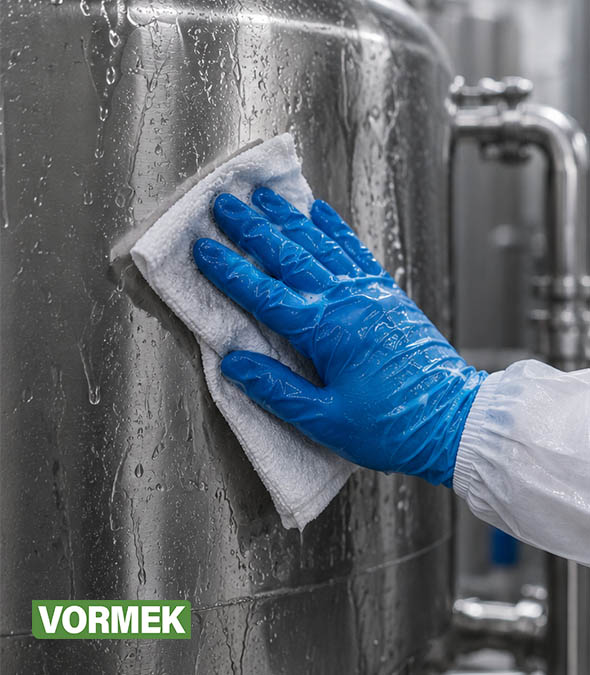
Using a soft cloth (preferably microfiber), remove dust and loose particles from the surface. This prevents scratching during subsequent cleaning steps.
Tip: Use compressed air or a soft brush for hard-to-reach areas. For heavily soiled surfaces, a soft plastic scraper can remove large debris before wet cleaning[reference:14].
Step 2: Solution Preparation
Use one of the recommended cleaning agents or a solution containing a small amount of mild dishwashing liquid in warm water (approximately 40–50°C). Avoid harsh detergents with strong acids or alkalis.
Water Temperature: Optimal water temperature for cleaning is between 40–60°C. Higher temperatures improve cleaning efficiency but may cause evaporation of cleaning agents before they can act. Lower temperatures may not effectively remove fats and oils. For protein-based soils (meat, dairy), temperatures above 50°C are often needed to break down protein bonds.
Step 3: Cleaning Application
Apply the solution according to the manufacturer’s instructions. On brushed surfaces, wipe in the direction of the surface grain to maintain uniform appearance and prevent visible scratches[reference:15].
Application Methods:
- Spray application for vertical surfaces (efficient and economical)
- Wipe application for horizontal surfaces (controlled and thorough)
- Immersion for small parts (complete coverage)
- Foam application for overhead and vertical surfaces (extended contact time)
Dwell Time: Allow the cleaning solution to remain on the surface for the manufacturer’s recommended dwell time, typically 2–5 minutes, to allow the chemicals to break down contaminants. Longer dwell times may be required for heavy soil or dried-on deposits. Do not allow the solution to dry on the surface, as this can lead to residue formation.
Step 4: Thorough Rinsing
Rinse the surface completely with warm, clean water to ensure no cleaning agent residue remains. Residual detergent can attract dirt and compromise the passive layer.
Rinsing Method: Use a clean cloth soaked in clean water, or spray rinse with a hose or pressure washer. Rinse until all visible foam and residue are removed. For CIP systems, ensure adequate rinse time and flow rate to remove all cleaning chemicals.
Water Quality for Rinsing: Use softened or deionized water for final rinsing to prevent scale formation and water spots. Hard water can leave mineral deposits that trap dirt and provide a site for corrosion.
Step 5: Drying
Immediately after rinsing, dry the surface completely with a clean towel to prevent water spots and scale formation. This step is critical for preserving and regenerating the passive layer.
Drying Tips:
- Use lint-free microfiber cloths to prevent fibers sticking to the surface
- Dry in the direction of the grain to prevent visible streaks
- Ensure all corners and crevices are completely dry
- For CIP systems, use heated air or vacuum drying to remove moisture
Step 6: Optional Final Polishing
If desired, apply a stainless steel polish or protective coating to enhance shine and create an additional protective layer. This step is particularly useful for decorative surfaces or highly visible equipment.
Polishing Tips:
- Use a product specifically formulated for stainless steel
- Apply sparingly and buff with a clean, dry cloth
- Remove all excess polish to prevent residue buildup
- Polish in the direction of the grain for best results
Recommended Commercial Cleaners
Consumer-Grade Products (Available in Germany and EU Markets)
- Cif Edelstahlreiniger Professional: Specifically formulated for stainless steel with gentle abrasive action that removes fingerprints, grease, and light staining without damaging the surface. Suitable for routine cleaning of kitchen equipment, sinks, and countertops.
- Mellerud Edelstahl & Metall Reiniger: Suitable for stainless steel and metal surfaces, provides shine while protecting against further staining. Contains no chlorides and has a neutral pH.
- domol Edelstahl‑Reiniger: Affordable option for routine cleaning of stainless steel surfaces. Available in most supermarkets and hardware stores.
Industrial and Food‑Grade Products (High Hygiene Requirements)
- Diversey Suma Star D1: Neutral, chloride-free cleaner suitable for food environments. Excellent for daily cleaning of food processing equipment. pH neutral (approximately 7) and free from phosphates and chlorides.
- Ecolab Neutral Disinfectant Cleaner: Combines cleaning and disinfection in one product, suitable for food contact surfaces. pH neutral to protect stainless steel surfaces. Effective against a broad spectrum of bacteria and yeasts.
- Ecolab Oxonia Active: Peracetic acid (PAA)-based disinfectant that is non-corrosive to 304 and 316 at recommended concentrations. Effective against a broad spectrum of microorganisms including bacteria, yeasts, molds, and spores. PAA breaks down to acetic acid, water, and oxygen, leaving no harmful residues.
- Alcohol‑Based Disinfectants: Fast-acting surface disinfectants for external machinery surfaces. Recommended by equipment manufacturers such as MULTIVAC for quick sanitation between production runs. Evaporates quickly, leaving no residue.
- Vinoxin (Kiehl Group): Ready-to-use, highly active acid-based cleaner for stainless steel and acid-resistant surfaces. Free of fragrances and dyes. Removes lime, limescale deposits, and greasy or oily dirt. Suitable for work surfaces, trolleys, and stainless steel transport rails in kitchen and food areas[reference:16].
- Sibin (BÜFA Cleaning): Highly alkaline cleaner for removing stubborn grease and protein stains. Suitable for stainless steel (1.4301, 1.4401, and 1.4571) and alkali-resistant plastics. Designed for cleaning tasks in food processing plants such as dairies, meat production, and beverage production[reference:17].
- Foaming Acid Cleaner (Momar): Concentrated descaler formulated with phosphoric acid and high-foaming detergents. Excellent in dairy applications to descale and passivate 304 and 316 stainless steel. Removes mineral deposits, lime, rust, scale, and milkstone residues. USDA A3 and Kosher certified[reference:18].
Note: When using peracetic acid (PAA) products, always follow the manufacturer’s recommended concentration and contact time to prevent any risk of corrosion. Typically, concentrations of 0.5–2% PAA are suitable for stainless steel surfaces. Higher concentrations or extended contact times may cause discoloration or pitting.
Passivation Frequency Guidelines
The frequency of passivation should be adjusted based on the operating environment and the level of exposure to corrosive substances[reference:19][reference:20]:
| Environment | Description | Recommended Frequency |
|---|---|---|
| Low‑Risk | Dry processing, minimal chemical exposure, climate‑controlled | 12–18 months |
| Medium‑Risk | Regular food contact (not highly acidic/salty), occasional washdowns | 9–12 months |
| High‑Risk | Daily acidic/salty foods, frequent CIP, coastal environments | 3–6 months[reference:21] |
| Critical | Highly acidic processing, continuous chloride exposure, signs of degradation | As needed (immediately following repair or welding) |
Note: Some companies choose to passivate processing equipment once per year as a scheduled maintenance procedure. Others do it more frequently because they are processing foods that are aggressive on the stainless steel[reference:22]. The need varies according to how the equipment is being used and whether the surface has been damaged[reference:23].
Summary and Conclusion
Stainless steel 304, due to its durability, hygienic appearance, and excellent corrosion resistance, is one of the most widely used materials in the food industry. However, these properties are only maintained when cleaning and maintenance are performed correctly using appropriate materials and techniques.
The use of inappropriate cleaning agents, abrasive tools, or hard water can damage the surface’s passive layer, leading to rust, pitting corrosion, and even product contamination. The following principles are essential for maintaining equipment integrity[reference:24][reference:25]:
Key Maintenance Principles
- Select Food‑Grade, Neutral, Chloride‑Free Cleaners: Prevents chemical attack on passive layer. Always check the label for chloride content and pH. Choose products specifically formulated for stainless steel surfaces[reference:26].
- Clean in the Direction of Surface Grain: Maintains appearance and prevents scratches that could harbor bacteria[reference:27]. This simple practice preserves the original finish and prevents visible damage.
- Complete Drying After Washing: Allows passive layer regeneration. Never leave surfaces wet. Drying is as important as cleaning in preserving stainless steel integrity.
- Periodic Passivation: Restores and strengthens corrosion resistance. Adjust frequency based on operating environment[reference:28]. This process can extend equipment life by years.
- Avoid Chlorides and Strong Acids: Prevents pitting and localized corrosion. Use alternative cleaning agents when possible. When chlorides are necessary, rinse immediately and thoroughly.
- Use Non‑Abrasive Tools: Prevents surface damage and particle embedding. Soft cloths and plastic pads are recommended. The extra cost of proper cleaning tools is far less than the cost of replacing corroded equipment.
By following these simple but critical principles, you can ensure that your stainless steel equipment remains hygienic, shiny, and resistant to corrosion. Maintenance costs are reduced, and producers can confidently pass health inspections.
Final Thought: Proper cleaning and maintenance of stainless steel is not merely a maintenance activity—it is an essential component of quality assurance, consumer safety, and brand reputation in the food industry. The investment in proper cleaning protocols and products pays dividends in equipment longevity, product quality, and regulatory compliance.
Need Expert Guidance on Equipment Hygiene and Maintenance?
Contact Vormek Packaging Solutions for professional consultation on maintaining your food packaging equipment. Our technical team provides customized cleaning protocols and maintenance recommendations tailored to your specific production environment and hygiene requirements.