Introduction
In the medical device industry, product quality extends far beyond design and manufacturing. Even the most sophisticated surgical instruments, implants, or diagnostic devices can be compromised by inadequate packaging. A compromised package can allow contaminants to reach the sterile product, potentially endangering patient safety and exposing the manufacturer to significant liability.
This reality has elevated medical device packaging from a routine production step to a critical quality control function. The packaging must protect the device throughout its entire lifecycle—from manufacturing through sterilization, storage, transport, and ultimately to the point of use in a clinical setting.
Medical device manufacturers face numerous questions when evaluating their packaging operations. Which sterile packaging method is most appropriate? What equipment best suits specific product requirements? How do medical thermoforming and tray sealing differ? What are the essential properties of medical-grade films? How can manufacturers ensure compliance with international standards?
This article addresses these questions and provides practical guidance for selecting appropriate equipment and materials for medical device packaging. It is intended for quality engineers, production managers, and packaging professionals seeking to enhance their sterile packaging operations.
Looking to optimise your medical device packaging operation? Vormek’s specialised sterile packaging machinery delivers precision, reliability, and compliance. Speak to our packaging engineers today.
1. The Critical Importance of Medical Device Packaging
Medical device packaging serves purposes that extend well beyond those of conventional product packaging. While consumer goods packaging primarily focuses on protection and presentation, medical packaging must meet additional requirements related to sterility, patient safety, and regulatory compliance.
Essential Functions of Medical Packaging
- Sterility maintenance: The packaging must preserve the sterility of the product until the moment of use. This requires a microbial barrier that prevents the ingress of contaminants throughout the product’s shelf life.
- Physical protection: The packaging must protect the device from mechanical damage during handling, transport, and storage. This includes protection against impact, vibration, compression, and puncture.
- Sterilization compatibility: The packaging must be compatible with the sterilization method used. Different sterilization methods have different requirements for packaging materials and construction.
- Tamper evidence: The packaging must provide evidence of tampering or prior opening, giving healthcare professionals confidence that the product has not been compromised.
- Traceability: The packaging must accommodate labelling and tracking information that enables product identification, lot traceability, and recall management.
- Aseptic presentation: The packaging must allow the healthcare professional to present the device in a sterile field without contaminating the product.
Regulatory Requirements
Medical device packaging is subject to regulatory oversight in all major markets. Regulatory bodies including the US Food and Drug Administration and the European Medicines Agency have established requirements for packaging that must be met for market access.
The primary international standard governing medical device packaging is ISO 11607, which specifies requirements for packaging materials, design, and validation. Compliance with this standard is essential for manufacturers seeking to export their products.
2. Sterile Packaging: Principles and Requirements
Sterile packaging refers to a packaging system that maintains the sterility of a medical device until the time of use. This requires careful consideration of materials, design, and process control.
Definition of Sterile Packaging
A sterile packaging system comprises the packaging materials and the packaging process that together maintain the sterility of the product. The system must provide an effective microbial barrier and maintain its integrity throughout the product’s shelf life.
The packaging must be designed to allow the product to be sterilized after packaging (terminal sterilization) or to be filled in a sterile environment (aseptic processing). In both cases, the packaging must maintain the sterility of the product until the seal is broken at the point of use.
Products Requiring Sterile Packaging
The following product categories typically require sterile packaging:
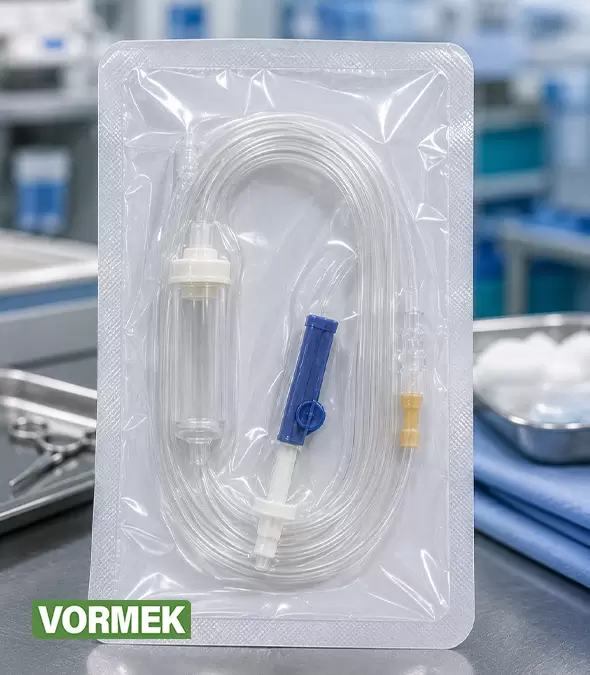
- Single-use medical devices: Syringes, needles, catheters, IV sets, and other disposable devices
- Surgical instruments: Scalpels, forceps, scissors, retractors, and other reusable instruments
- Implants: Orthopaedic implants, cardiovascular devices, dental implants, and other permanent implants
- Diagnostic devices: Test kits, specimen containers, and point-of-care testing devices
- Wound care products: Dressings, gauze, bandages, and other wound management products
- Procedure kits: Surgical procedure packs and custom procedure trays
- Laboratory equipment: Pipettes, culture plates, and laboratory consumables
3. ISO 11607: The International Standard for Medical Packaging
ISO 11607 is the primary international standard governing medical device packaging. It establishes requirements for packaging materials, design, and validation that manufacturers must meet to demonstrate the effectiveness of their packaging systems.
Scope of ISO 11607
The standard is divided into two parts. Part 1 covers materials, sterile barrier systems, and packaging systems. It specifies requirements for packaging materials and the final packaged product. Part 2 covers validation requirements for forming, sealing, and assembly processes, establishing requirements for process validation, including installation qualification, operational qualification, and performance qualification.
Key Requirements
- Material selection: Packaging materials must be appropriate for the intended use and compatible with the sterilization method. The materials must not release contaminants that could affect the product or patient.
- Design considerations: The packaging must be designed to protect the product throughout the expected shelf life. The design must consider transportation conditions, storage conditions, and handling requirements.
- Process validation: The packaging process must be validated to ensure consistent performance. This includes validating the sealing process, the packaging line, and any manual operations.
- Documentation: Complete documentation of the packaging process, validation studies, and ongoing monitoring is required.
4. Packaging Equipment: Medical Thermoforming and Tray Sealing
The selection of packaging equipment is one of the most important decisions in medical device packaging. The two most common technologies for sterile packaging are thermoforming and tray sealing.
Medical Thermoforming
Thermoforming is a packaging process in which a package cavity is formed from a roll of film, the product is placed in the cavity, and a top film is sealed over the product. This creates a complete package in a single automated process.
Process description: The bottom film is heated and formed into cavities using vacuum and pressure. The product is placed into the formed cavities. The top film is applied, and the package is sealed. Individual packages are separated by cutting.
Applications: Thermoforming is particularly suitable for products with regular shapes and medium to high production volumes. It is commonly used for surgical instruments, procedure kits, and diagnostic devices.
Key advantages: High production speed supports efficient operations. The continuous process minimises handling. Package cavities can be tailored to product shapes. Material usage is optimised. The process can be fully automated.
Medical Tray Sealing
Tray sealing uses pre-formed trays, which are filled with product and sealed with a top film. The trays provide rigidity and shape, while the film provides the sterile barrier.
Process description: Pre-formed trays are loaded into the machine. The product is placed in the tray. The tray is sealed with a top film. The sealed packages are discharged.
Applications: Tray sealing is particularly suitable for kits and procedure packs containing multiple components. It is also appropriate for irregularly shaped products that do not fit thermoforming cavity designs, and it allows for product visibility and retail appeal.
Key advantages: High flexibility supports frequent product changes. Different tray sizes and shapes can be accommodated. Lower initial investment compared to thermoforming equipment. Quick changeover between different products.
Equipment Selection Criteria
When selecting between thermoforming and tray sealing, manufacturers should consider production volume, product characteristics, flexibility requirements, and investment budget.
5. Medical-Grade Films: Essential Properties and Selection
The film used in sterile packaging is critical to maintaining product sterility and integrity. Medical-grade films must meet stringent requirements for barrier properties, mechanical strength, and compatibility with sterilization methods.
Essential Film Properties
- Microbial barrier: The film must provide an effective barrier to microorganisms to maintain product sterility. This is the most fundamental requirement for sterile packaging.
- Sterilization compatibility: The film must withstand the chosen sterilization method without degradation. The film must not release contaminants during sterilization. It must maintain barrier properties after sterilization.
- Seal strength: The film must form seals that maintain package integrity throughout the product’s shelf life. Seals must remain intact under expected storage conditions.
- Peel characteristics: For peel-open packages, the film must provide predictable and reliable peel force. The peel must not generate particles that could contaminate the product or environment.
- Clarity: For packages that require product visibility, the film must have adequate clarity. Clear film allows visual inspection without opening the package.
- Mechanical strength: The film must resist punctures and tears during handling and transport. It must provide sufficient physical protection to the product.
- Printability: The film must accept printing for labelling and traceability information. Print must remain legible throughout the shelf life.
Types of Medical Films
- Peelable films: Designed to provide consistent, reliable peel characteristics for easy opening. The peel interface is engineered to break cleanly without generating particles. These films are widely used for sterile barrier packaging where aseptic presentation is required.
- Formable films: Suitable for thermoforming operations, these films must have properties that allow them to be heated and formed into precise cavities. They must maintain barrier properties after forming, which requires careful material selection.
- High-barrier films: Provide maximum protection against moisture and oxygen for sensitive products. These films incorporate multiple layers to achieve the required performance.
- Breathable films: Allow gases to pass while blocking microorganisms, enabling sterilization with certain methods. These films are used for sterilization methods such as ethylene oxide that require gas exchange.
6. Sterilization Methods and Packaging Compatibility
The choice of sterilization method has significant implications for packaging selection. Each method imposes specific requirements on packaging materials and design.
Ethylene Oxide (EO) Sterilization
Ethylene oxide is one of the most common sterilization methods for medical devices. It is suitable for heat- and moisture-sensitive products.
Packaging requirements: The packaging must allow penetration of ethylene oxide gas. This typically requires materials that are porous to gas, commonly achieved through medical-grade paper or Tyvek. The packaging must permit proper aeration to remove residual gas. Materials must be compatible with the sterilization cycle and must not be degraded by exposure to ethylene oxide.
Equipment considerations: Equipment used for products intended for EO sterilization must be capable of producing packages that meet the penetration and aeration requirements.
Gamma Sterilization
Gamma sterilization uses ionizing radiation to sterilize medical products. It is suitable for many single-use medical devices.
Packaging requirements: The packaging must withstand the radiation dose without degradation. Some polymers are susceptible to radiation-induced cross-linking or chain scission, so material selection must consider radiation stability. The packaging must maintain its physical properties after exposure and retain its barrier properties.
Equipment considerations: Equipment used for products intended for gamma sterilization must be designed to handle packages that will be exposed to radiation.
Steam Sterilization (Autoclaving)
Steam sterilization uses high-pressure saturated steam to sterilize products. It is widely used for surgical instruments and other heat-resistant products.
Packaging requirements: The packaging must withstand high temperatures and pressures encountered during the sterilization cycle. It must allow steam penetration and must not be damaged by the high moisture environment.
Equipment considerations: Equipment used for products intended for steam sterilization must be capable of producing packages that withstand the sterilization conditions.
7. Quality Control and Validation in Medical Packaging
Quality control in medical device packaging goes beyond simple inspection. It requires a comprehensive quality system that includes validation, monitoring, and documentation.
Seal Quality Testing
- Seal strength testing: Measuring the force required to separate a seal is the most common test for seal quality. This test verifies that the seal has adequate strength to withstand handling and storage. The test can be performed using tensile testing equipment that pulls the seal apart at a controlled rate.
- Visual inspection: Packages should be visually inspected for defects such as channels, wrinkles, or incomplete seals. This inspection can be performed by operators or automated vision systems. Common defects include channels that provide a path for contaminants, wrinkles that may affect seal integrity, incomplete seals that do not provide full protection, and contamination that can compromise the seal.
- Dye penetration testing: A dye solution is applied to the seal area and inspected for penetration. This test is used to detect channels or defects in the seal. Dye penetration testing is particularly useful for evaluating seal integrity in development and validation studies.
Package Integrity Testing
- Bubble leak testing: The package is inflated and submerged in water, and bubbles indicate leaks. This is a simple test for gross leaks. The method is suitable for detecting large defects but may not detect small leaks.
- Vacuum decay testing: The package is placed in a vacuum chamber and pressure change is monitored. Pressure change indicates leakage. This is a sensitive test suitable for detecting small leaks.
- Dye ingress testing: The package is submerged in dye solution and inspected for dye ingress. Dye ingress indicates failure of the microbial barrier. This test is widely used for development and validation.
Validation Requirements
- Installation qualification (IQ): Verifies that equipment is installed correctly according to specifications. This includes checking power supply, utilities, and physical installation.
- Operational qualification (OQ): Verifies that equipment operates within specified parameters. This includes demonstrating that seals meet specifications across the operating range.
- Performance qualification (PQ): Verifies that equipment consistently produces acceptable packages. This includes demonstrating that the packaging system meets the requirements for microbial barrier and package integrity.
8. Common Challenges in Medical Device Packaging
Medical device packaging presents numerous challenges that manufacturers must address to ensure product quality and regulatory compliance.
Seal Integrity Failures
Seal integrity failures are among the most common packaging issues. These failures can occur due to incorrect sealing parameters, contaminated sealing surfaces, inappropriate film selection, or inadequate maintenance.
The consequences of seal integrity failure can be severe. Contaminants can enter the package through compromised seals, leading to loss of sterility and potential risk to patients. Preventing seal integrity failures requires proper equipment setup, regular maintenance, and ongoing quality monitoring.
Material Compatibility Issues
The interaction between the packaged device and the packaging material must be considered. Some devices may release compounds that affect the packaging, and some packaging materials may release compounds that affect the device or patient.
Assessment approach: Compatibility testing should be conducted as part of the packaging development process. This may include chemical analysis, biological evaluation, and ageing studies.
Sterilization Damage
The sterilization process itself can damage packaging materials. Some materials are degraded by ethylene oxide, others are damaged by radiation, and others may be affected by heat and moisture.
Prevention: Selecting packaging materials that are compatible with the chosen sterilization method is essential. For certain products, the sterilization method may need to be selected based on packaging requirements.
Transportation and Handling Damage
Packages must withstand the rigours of transport and handling. Mechanical damage to packages can compromise the sterile barrier, even if the seal appears intact.
Risk assessment: A risk-based approach to packaging design should consider the transport environment, including temperature, humidity, shock, and vibration. Packaging should be tested under simulated distribution conditions.
9. Traceability and Labelling Requirements
Traceability is essential in medical device packaging for product identification and recall management. The packaging must enable product tracking throughout the supply chain.
Labelling Requirements
- Product identification: Labels must clearly identify the product name, catalogue number, and description.
- Lot and batch identification: Each package should be marked with a lot or batch number. This enables product tracking and recall management.
- Expiration date: Where applicable, packages should be marked with an expiration date. The expiration date should be supported by stability data.
- Manufacturer information: Labels should identify the manufacturer and the manufacturing location.
- Sterility information: Labels should indicate that the product is sterile and the method of sterilization.
- Storage conditions: Where appropriate, labels should specify storage conditions required to maintain the product’s integrity.
Traceability Systems
- Barcode systems: Barcodes enable efficient tracking and data capture. Most medical device packages now include barcode labels. Barcodes can be printed directly on the packaging or on adhesive labels.
- RFID systems: Radio frequency identification enables more sophisticated tracking. RFID tags can store more information than barcodes and can be read without line of sight.
- Data matrix codes: These two-dimensional codes store significant information in a small space. Data matrix codes are increasingly used for medical device identification.
10. The Strategic Role of Packaging Equipment
Investment in packaging equipment is a strategic decision that affects product quality, operational efficiency, and regulatory compliance. The right equipment selection can significantly impact business performance.
Key Selection Considerations
- Product requirements: The product’s shape, size, and sensitivity to handling must be considered. Equipment should be designed to handle the product without damage.
- Production volume: The required throughput should be matched to equipment capacity. Equipment with capacity well above or below requirements will be either underutilised or insufficient.
- Regulatory compliance: Equipment must be capable of producing packages that meet regulatory requirements. This includes providing the necessary process control and documentation.
- Flexibility: The ability to handle different products and package formats can be valuable. Equipment with limited flexibility may restrict product development and market expansion.
- Integration: Equipment should integrate with existing production lines. Interface with upstream and downstream equipment is a significant factor in overall system efficiency.
Operational Considerations
- Ease of use: Equipment should be designed for intuitive operation. Operator training requirements should be appropriate for the production environment.
- Maintenance requirements: Equipment should be designed for easy maintenance. Access to wear parts and routine maintenance points is essential for reliable operation.
- Service support: Availability of technical support and spare parts is important for maintaining production continuity. The equipment supplier should provide adequate support.
11. Conclusion
Medical device packaging is a critical function that directly impacts product quality, patient safety, and regulatory compliance. The selection of appropriate packaging equipment, materials, and processes requires careful consideration of product requirements, regulatory requirements, and operational factors.
Medical thermoforming and tray sealing represent two principal approaches to sterile packaging. Each offers distinct advantages depending on product characteristics, production volume, and business requirements. Medical-grade films, with their specific barrier and compatibility properties, form an essential component of any sterile packaging system.
Compliance with ISO 11607 and other regulatory standards is essential for market access. Manufacturers must validate their packaging processes and maintain comprehensive documentation to demonstrate ongoing compliance.
The investment in appropriate packaging equipment represents a strategic commitment to quality and reliability. Manufacturers who select equipment and materials that meet their specific requirements will be well-positioned to deliver safe, effective products to healthcare providers and patients.
Ready to optimise your medical device packaging operation? Vormek engineers are available to assess your requirements and recommend appropriate equipment for your production needs. Contact us today to discuss your project.
Frequently Asked Questions
1. What is the difference between medical thermoforming and tray sealing?
Thermoforming forms the package cavity from film during the packaging process, while tray sealing uses pre-formed trays. Thermoforming offers higher throughput for regular product shapes, while tray sealing provides greater flexibility for varied products.
2. What is ISO 11607 and why is it important?
ISO 11607 is the international standard for medical device packaging. It establishes requirements for packaging materials, design, and validation. Compliance is essential for demonstrating that packaging maintains sterility.
3. What properties should medical-grade films have?
Medical-grade films must provide a microbial barrier, withstand sterilization, form reliable seals, have appropriate peel characteristics, and maintain their properties throughout shelf life.
4. How does sterilization method affect packaging selection?
Different sterilization methods impose different requirements on packaging materials. The packaging must be compatible with the chosen method and maintain its barrier properties after sterilization.
5. What is the difference between EO and gamma sterilization packaging requirements?
EO sterilization requires packaging that allows gas penetration and aeration. Gamma sterilization requires packaging that withstands radiation exposure without degradation.
6. How is seal quality tested in medical packaging?
Seal quality is tested through seal strength testing, visual inspection, dye penetration testing, and other methods. The appropriate tests depend on the product and regulatory requirements.
7. What are the most common packaging defects in medical devices?
Common defects include seal integrity failures, material damage, contamination, and incomplete seals. These defects can compromise the sterile barrier and product safety.
8. How can manufacturers ensure packaging process consistency?
Process consistency is ensured through validation, monitoring, and control. Equipment must be properly maintained, and process parameters must be controlled within validated ranges.
9. What does packaging validation involve?
Packaging validation involves installation qualification (IQ), operational qualification (OQ), and performance qualification (PQ). This demonstrates that the process consistently produces acceptable packages.
10. What should be considered when selecting packaging equipment?
Product requirements, production volume, regulatory compliance, flexibility, and operational considerations should all be assessed. The selected equipment should meet current and anticipated future needs.
Final Call to Action
For expert guidance on medical device packaging equipment selection, line design, and operational optimisation, Vormek’s engineering team is ready to assist. Our packaging specialists understand the specific requirements of medical device manufacturing, and we are committed to delivering solutions that enhance product quality, operational efficiency, and regulatory compliance.
Contact Vormek today to discuss your project requirements.