Introduction
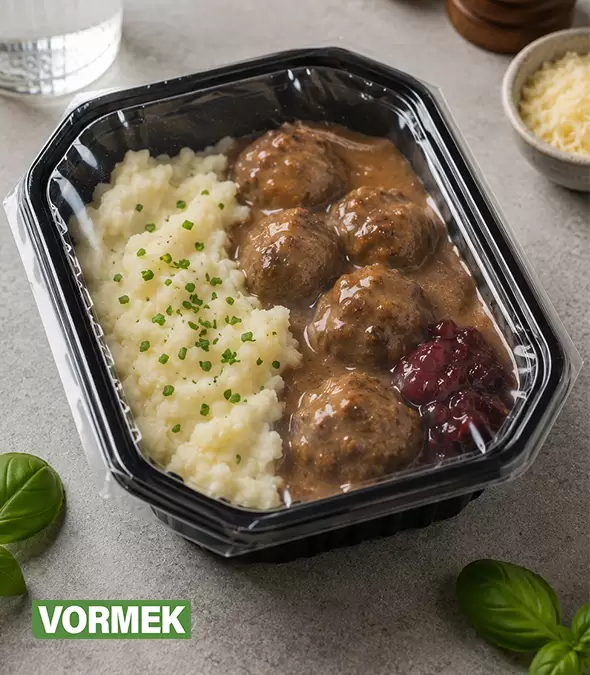
The global shift in consumer behavior toward convenience without compromising quality has transformed the ready meal landscape. No longer satisfied with simple single-component offerings, today’s market demands sophisticated meal solutions featuring distinct components protein, starch, and vegetables each requiring individual preservation while maintaining visual separation on the retail shelf. This evolution presents significant engineering challenges that extend far beyond standard packaging operations.
Multi-compartment tray sealing has emerged as the critical enabling technology for complex meal kit production, addressing the fundamental tension between product integrity and operational efficiency. Unlike traditional single-compartment formats, these systems must accommodate varying ingredient densities, moisture levels, and thermal properties within a single package. The engineering precision required extends from mold design through seal integrity verification, with implications for shelf life, food safety, and brand perception.
For food processors scaling production of premium ready meals, understanding the technical requirements of multi-compartment tray sealing has become essential. This comprehensive guide examines the engineering considerations, equipment selection criteria, and operational best practices that define success in this rapidly growing segment.
The ready meal market has witnessed remarkable transformation over the past decade. Consumer expectations have evolved from simple, homogeneous products toward sophisticated culinary experiences that can be prepared quickly. This trend has driven innovation in both product formulation and packaging technology. Multi-compartment trays address the consumer desire for meal variety while accommodating different cooking requirements for various components.
From a manufacturing perspective, these packages present considerable engineering challenges. Each compartment may contain products with different water activity levels, pH values, and thermal properties. The packaging system must accommodate these variations while maintaining product integrity throughout the supply chain. Additionally, the visual appeal of clearly separated components influences consumer purchasing decisions, making aesthetic considerations integral to packaging design.
The economic implications of effective multi-compartment sealing are substantial. Package failures lead to product waste, recalls, and brand damage. Conversely, reliable sealing enables extended distribution reach, reduced returns, and enhanced consumer confidence. For manufacturers, investing in appropriate sealing technology represents both a risk mitigation strategy and a competitive differentiator.
The Engineering Challenge: Why Multi-Compartment Trays Demand Precision
The Complexity of Mixed Ingredients
Multi-compartment tray sealing addresses a fundamental packaging requirement: maintaining ingredient separation while ensuring hermetic closure. When a meal features distinct components such as protein, sauce, and vegetables, each presents unique challenges during the sealing process.
The primary engineering challenge stems from thermal property variations. A protein-rich component with higher density responds differently to heat transfer than a sauce with higher moisture content or vegetables with higher porosity. This disparity creates non-uniform heating during the sealing process, potentially compromising seal integrity at the boundaries between compartments where film must conform to complex geometries.
Furthermore, ingredient loading directly impacts seal quality. Sauces and marinades can migrate onto sealing flanges during filling operations, creating contamination points that compromise hermetic closure. Even minute amounts of product residue on sealing surfaces can create microchannels, permitting gas exchange and accelerating product degradation.
The interaction between different ingredients within a multi-compartment tray introduces additional complexity. Moisture migration between compartments, flavor transfer, and textural changes all influence product quality and consumer acceptance. The packaging system must function as an effective barrier against these undesirable interactions while maintaining the distinct identity of each component.
Temperature management during sealing becomes particularly critical when dealing with ingredients that have significantly different initial temperatures. Components loaded at different temperatures can create uneven heat distribution across the sealing flange, affecting seal quality in specific areas. This challenge is often addressed through controlled filling temperatures or extended dwell times that allow thermal equilibrium before sealing occurs.
Product density variations also affect the sealing process. Dense products such as cooked meats or rice tend to retain heat longer than lighter components like vegetables or sauces. This differential cooling can create localized temperature variations at the sealing flange, potentially affecting seal consistency. Careful control of filling temperatures and line speeds helps mitigate these effects.
The rheological properties of sauce components present another consideration. High-viscosity sauces may not spread evenly during filling, creating localized contamination risks on sealing flanges. Conversely, low-viscosity sauces can migrate more readily, increasing the contamination potential. Equipment design must accommodate these variations through appropriate filling systems and flange protection measures.
The Hermetic Seal Mandate
Premium ready meal production demands consistent hermetic seal performance. This requirement is particularly critical for modified atmosphere packaging applications, where maintaining the gas composition within the package is essential for quality preservation.
The seal must withstand:
Thermal cycling during distribution and storage
Pressure differentials during transport
Mechanical stresses from handling and stacking
Temperature extremes during consumer preparation
In multi-compartment formats, these requirements intensify because seal integrity must be maintained across multiple sealing planes and intersections where film must conform to the tray’s geometry.
Hermetic sealing serves multiple functions beyond simple containment. It prevents microbial ingress, maintains the modified atmosphere environment, preserves product moisture, and prevents contamination from external sources. Each of these functions is essential for achieving the shelf life required by modern distribution channels.
The integrity of the hermetic seal depends on several interrelated factors: the compatibility of film and tray materials, the precision of sealing equipment, the cleanliness of sealing surfaces, and the consistency of sealing parameters. Any compromise in these factors can lead to seal failure, with corresponding consequences for product quality and food safety.
Testing seal integrity requires appropriate verification methods. Destructive testing through peel strength measurement provides quantitative data on seal performance. Non-destructive techniques such as vacuum decay or pressure differential testing enable in-line verification. The choice of testing methods depends on production volume, risk profile, and regulatory requirements.
The relationship between seal integrity and shelf life is well-established in food packaging science. Maintaining hermetic conditions throughout distribution ensures that the product reaches the consumer in optimal condition. For complex multi-compartment meals, this relationship is particularly significant because different compartments may have different susceptibility to quality deterioration.
Challenges at Sharp Corners and Geometric Transitions
One of the most demanding aspects of multi-compartment tray sealing occurs at sharp corners and geometric transitions. These areas present unique engineering challenges that significantly impact seal integrity.
Film behavior at corners: During sealing, film must conform to the tray’s internal corners where compartment walls meet. The sealant layer must flow into these transitions without thinning excessively, which would compromise the hermetic barrier. Sharp corners create stress concentrations that can result in:
Incomplete sealant flow leading to microchannels
Excessive film thinning at critical stress points
Seal failure initiation sites during distribution
Engineering solutions for corner challenges: Modern sealing technology addresses these challenges through:
Corner radii optimization: Tray designers incorporate generous radii at internal corners to facilitate uniform film conformation. Typical recommendations suggest minimum internal radii of 2-3mm for effective sealing performance.
Seal bar geometry compensation: Sealing tooling incorporates relief features and pressure-distributing elements that ensure consistent contact force even at transitions.
Temperature profiling: Independent heating zones around corners compensate for increased heat loss at geometric transitions, maintaining sealing temperatures.
Practical implications for producers: Tray design must balance consumer appeal (sharp, defined compartments) with sealing feasibility (adequate radii). Engaging packaging engineers early in tray development prevents costly production problems later.
The physics of film deformation at corners involves complex stress distributions. The film stretches in multiple directions simultaneously, creating localized thinning that can compromise barrier properties. Advanced finite element analysis can model these deformations and predict potential failure points, enabling design optimization before tooling fabrication.
Material selection significantly influences corner performance. Films with higher extensibility can better conform to complex geometries without thinning excessively. Conversely, high-barrier films with limited extensibility may require more generous geometries to achieve adequate conformation.
The thermal history of the film also affects corner performance. Films that have been pre-heated or preconditioned may exhibit different conformation behavior than films sealed at ambient temperature. Understanding these relationships enables process optimization that balances seal quality with production efficiency.
The Role of Thermal Expansion in Seal Integrity
Understanding thermal expansion coefficients is essential for maintaining seal integrity across temperature variations during processing and distribution.
Material-specific expansion characteristics:
Polypropylene exhibits a coefficient of thermal expansion (CTE) of approximately 100-150 µm/(m·°C), meaning significant dimensional change occurs across the temperature range encountered during sealing
CPET demonstrates lower expansion rates (approximately 50-70 µm/(m·°C)), offering better dimensional stability at elevated temperatures
Aluminum shows the lowest CTE (approximately 23 µm/(m·°C)), providing excellent dimensional stability during sealing operations
Practical implications for seal performance: When a PP tray is heated to sealing temperature, the flange may expand differently than the sealing tooling. This expansion mismatch can create pressure distribution issues at the sealing interface. The cooling phase presents an additional challenge as the tray cools and contracts, stress develops at the seal interface. Sealing systems must compensate for these dynamic dimensional changes through:
Controlled cooling cycles that allow gradual stress relaxation
Spring-loaded or pneumatic tooling that maintains pressure during the entire sealing cycle
Temperature-adaptive sealing parameters that account for material-specific expansion behavior
Failure modes related to thermal expansion: Inadequate compensation for thermal expansion creates several seal failure mechanisms:
Cold seals at the center of flanges where pressure dropped as expansion occurred
Excessive stress at seal edges where differential contraction creates peel force
Micro-cracking in rigid barrier films unable to accommodate expansion stresses
The thermal expansion challenge extends beyond the sealing process itself. Temperature fluctuations during distribution and storage also create thermal stresses that can compromise seal integrity over time. Package designs that accommodate these stresses through appropriate geometry and material selection demonstrate superior long-term reliability.
Multi-material packages present particular challenges due to different expansion coefficients between components. The interface between tray and film must accommodate differential expansion during thermal cycling. Selecting materials with compatible expansion characteristics or designing compliant interfaces helps manage these stresses.
The relationship between thermal expansion and seal performance has been extensively studied in packaging science. Research has shown that the cooling rate after sealing significantly influences final seal properties. Rapid cooling can lock in stresses that later lead to seal failure, while controlled cooling allows stress relaxation and improved seal performance.
Material Science in Multi-Compartment Tray Design
Barrier Film Selection
High-barrier films play an indispensable role in multi-compartment tray sealing performance. These engineered materials incorporate multiple functional layers, each contributing specific performance characteristics:
Oxygen barrier layers impede gas permeation, maintaining modified atmosphere conditions
Moisture barriers prevent dehydration or moisture migration between compartments
Sealant layers ensure reliable bonding at sealing temperatures
Printed layers enable branding and consumer information
The interaction between film characteristics and tray material significantly influences seal performance. Film selection must account for tray composition polypropylene, CPET, aluminum, or emerging sustainable materials each presenting distinct thermal properties that affect the sealing window.
Barrier film technology has advanced considerably in recent years. High-barrier films incorporating ethylene vinyl alcohol (EVOH) or polyvinylidene chloride (PVDC) layers provide exceptional oxygen barrier properties. These materials are typically combined with other layers that contribute mechanical strength, sealability, and printability.
The sealant layer is particularly critical for seal performance. Common sealant materials include polyethylene, polypropylene, and various copolymers. Each has distinct sealing characteristics including temperature requirements, dwell time sensitivity, and compatibility with different tray materials.
Film thickness selection requires balancing barrier performance with sealability. Thicker films generally provide better barrier properties but may require higher sealing temperatures or pressures. Conversely, thinner films may seal more readily but could compromise barrier performance. The optimal film thickness depends on the specific product requirements and sealing equipment capabilities.
Environmental sustainability considerations increasingly influence film selection. Manufacturers are exploring mono-material films that can be readily recycled, bio-based materials, and films with reduced material usage. These options must meet the same performance requirements as conventional films, presenting ongoing development challenges.
Tray Material Considerations
Multi-compartment trays demand careful material selection based on application requirements:
Polypropylene (PP) offers excellent microwave compatibility and moisture barrier properties. When engineered with suitable barrier layers, PP trays can support extended ambient shelf life while maintaining structural integrity.
Crystalline PET (CPET) provides superior thermal resistance, enabling dual-ovenable applications that tolerate both microwave and conventional oven heating.
Aluminum offers exceptional barrier performance for long shelf life requirements but presents sealing challenges due to rapid heat dissipation.
Sustainable alternatives including mono-material PP and paperboard-based solutions are gaining traction, though each requires specific sealing parameters to achieve reliable performance.
The choice of tray material affects multiple aspects of the packaging operation. Material cost, availability, and regulatory compliance are fundamental considerations. Processing characteristics including thermoformability, dimensional stability, and sealing behavior are equally important for production efficiency.
Tray design must consider the material’s behavior during the sealing process. Materials with higher thermal conductivity require more careful temperature management to prevent overheating. Materials with lower conductivity may require extended dwell times to achieve adequate seal formation.
The interaction between tray material and modified atmosphere conditions deserves particular attention. Some tray materials are more permeable to gases, affecting the maintenance of modified atmosphere conditions. Barrier coatings or laminations can address this limitation but may affect sealing behavior.
Regulatory compliance for food contact materials imposes additional requirements. Tray materials must meet applicable food safety standards, including those for extraction limits and migration testing. Documentation of compliance is essential for product approval and export to regulated markets.
The mechanical properties of tray materials influence their performance in distribution. Impact resistance, stack strength, and temperature tolerance all affect package integrity. These properties must be verified through appropriate testing programs.
Flange Thickness and Seal Quality
Flange thickness variation represents a commonly overlooked factor affecting seal quality in multi-compartment applications.
The geometry challenge: In multi-compartment trays, flange thickness may vary by 15-30% between outer edges and internal compartment walls. Injection molding constraints often result in thicker sections near the tray perimeter and thinner sections at internal compartment intersections.
Impact on heat transfer: Thicker flanges require more thermal energy to reach sealing temperature. Without compensation, sections with thinner flanges may overheat while thicker sections remain below sealing temperature:
Overheated thin flanges exhibit degraded sealant, reducing bond strength
Underheated thick flanges fail to achieve adequate melt flow, creating cold seals
Engineering compensation strategies:
Zone-independent temperature control: Individual heating zones over specific flange areas permit temperature adjustment based on local thickness
Extended sealing time for thick sections: Dwell time optimization that accounts for heat-up requirements
Heating element profiling: Custom-designed heater patterns that provide concentrated heat to thicker sections
Quality verification: Statistical process control (SPC) systems monitor seal thickness and peel strength as indirect indicators of sealing consistency. Trending data identifies drift in parameters before seal quality compromises product integrity.
The relationship between flange thickness and seal quality is particularly significant in thermoformed trays. The thermoforming process creates inherent thickness variations that can affect sealing performance. Understanding these variations and their impact on sealing enables appropriate process compensation.
Flange contamination can worsen the effects of thickness variation. Contaminated areas require additional thermal energy to achieve seal formation, making already-difficult thick sections even more challenging to seal effectively. Proper contamination prevention is therefore essential for consistent performance.
Tooling design must account for flange thickness variations. Compliant tooling that accommodates thickness differences while maintaining sealing pressure is preferable to rigid designs. The tooling should also facilitate cleaning and maintenance to prevent contamination buildup.
Seal quality monitoring provides real-time verification of sealing effectiveness. Optical inspection, pressure decay testing, and visual checking are common approaches. The choice of monitoring method depends on production volume, risk profile, and product requirements.
Surface Energy and Sealant Compatibility
Surface energy considerations significantly influence seal performance in multi-compartment applications. The sealant layer must form an intimate molecular bond with the tray surface, requiring appropriate wetting characteristics.
Tray materials exhibit varying surface energy values that affect sealant adhesion. Higher surface energy generally promotes better adhesion, while lower surface energy may require surface treatment or specific sealant formulations. Understanding these relationships enables appropriate material selection.
Corona treatment is commonly applied to improve tray surface energy. This treatment creates surface oxidation that promotes sealant adhesion. The treatment level must be carefully controlled to achieve consistent sealing performance without degrading the tray material.
Sealant formulation compatibility extends beyond simple adhesion. The sealant must also withstand the chemical environment of the packaged food. Interactions between food components and the sealant interface can affect long-term seal performance.
Ageing of the seal interface can occur during extended storage. Oxidation, hydrolysis, and other degradation mechanisms can gradually reduce seal strength. Accelerated testing methods help predict long-term seal performance and verify product shelf life.
The combination of sealant and tray material must also accommodate the product’s thermal history. Freezing, refrigeration, and reheating impose thermal stresses on the seal interface. Appropriate material selection ensures seal integrity throughout these processes.
Sealing Technology Fundamentals
Heat Seal Mechanisms
Heat sealing operates on the principle of controlled thermal activation of thermoplastic sealant layers. The process requires precise management of three interdependent variables:
Temperature must exceed the sealant’s melting point while remaining below the degradation threshold of both film and tray materials. This thermal window is particularly narrow in multi-compartment applications where varying wall thicknesses create non-uniform heat distribution.
Pressure ensures intimate contact between film and tray sealing surfaces. Inconsistent pressure distribution across complex geometries compromises seal integrity at contact points.
Time determines the duration of thermal exposure. Sufficient time must be allowed for molecular chain entanglement, which creates the mechanical bond responsible for seal strength.
The heat seal process involves several sequential stages. Initial heating raises the sealant temperature above its melting point, enabling flow and wetting of the substrate. Pressure application forces the molten sealant into intimate contact with the tray surface. Cooling below the solidification temperature locks the sealant in place, creating the mechanical bond.
Each stage requires careful optimization for specific applications. The heating stage must achieve adequate temperature without overheating the sealant. The pressure stage must maintain sufficient force without distorting the tray. The cooling stage must allow solidification without creating excessive stress.
The physics of heat transfer during sealing involves both conduction and convection. The sealing tool transfers heat through direct contact (conduction), while air circulating in the sealing area contributes convection losses. Understanding these heat transfer mechanisms enables proper equipment design and parameter selection.
Seal quality is typically evaluated through peel testing, which measures the force required to separate the seal. The failure mode (adhesive or cohesive) provides insight into seal mechanisms and potential improvement areas. Consistent peel strength and failure mode indicate stable sealing performance.
Servo-Controlled Precision
Modern multi-compartment tray sealing systems employ servo-controlled technology to maintain consistent sealing force across the entire sealing zone. This precision is essential because:
Multi-compartment trays present varying flange widths and geometries
Different tray materials exhibit distinct thermal properties
Production speeds demand repeatable cycle-to-cycle performance
Servo control enables real-time force monitoring and adjustment, ensuring that the required sealing pressure is applied uniformly across all sealing surfaces. This capability directly impacts seal integrity and, consequently, product shelf life and consumer acceptance.
Servo systems provide advantages over pneumatic systems in terms of precision, repeatability, and adaptability. The ability to profile sealing parameters throughout the cycle enables optimization for different tray formats and materials. Additionally, servo systems can adapt to changing conditions, compensating for thermal expansion and tooling wear.
The integration of sensors with servo control enables feedback systems that maintain quality. Position sensors, force transducers, and temperature sensors provide data for real-time adjustment. These systems can detect parameter drift and compensate before seal quality is compromised.
Servo control also supports energy efficiency and reduced maintenance. Operating only when required, servo systems consume less energy than continuously running pneumatic systems. The reduced mechanical stress on components extends equipment life and decreases maintenance frequency.
The transition from pneumatic to servo systems in tray sealing has been driven by quality requirements. The superior accuracy of servo control supports the demanding requirements of multi-compartment applications. As product complexity increases, the value of precise control becomes more apparent.
Temperature Management and Control
Temperature control is arguably the most critical factor in multi-compartment tray sealing. Variations of just a few degrees can significantly affect seal quality and product safety.
Modern sealing systems incorporate multiple temperature zones, each independently controlled. This zoning enables compensation for varying flange geometries, material thicknesses, and heat transfer characteristics. Each zone is monitored and adjusted based on real-time feedback to maintain the required temperature profile.
The selection and placement of temperature sensors requires careful consideration. Sensor response time, accuracy, and placement all affect control effectiveness. Heat distribution and thermal lag must be accounted for when designing control strategies.
Heating element design significantly influences temperature distribution. Uniform heating across the sealing surface is essential for consistent seal quality. Common approaches include cartridge heaters, heated platens, and inductive heating. Each approach offers distinct advantages depending on the specific application.
Heat losses to the environment must be managed through appropriate equipment design. Insulation, reflectors, and other measures reduce losses and improve energy efficiency. Effective thermal management also protects operators and surrounding equipment from excessive temperatures.
The selection of sealing temperature depends on the thermal properties of both the tray material and film. The sealant must reach its melting point without exceeding the degradation temperature of any component. This thermal window is determined through material characterization and testing.
Pressure Application and Distribution
Pressure distribution during sealing is as important as temperature control. Irregular pressure distribution creates variation in seal quality and potential failure points.
Traditional sealing systems used pneumatic pressure applied through rigid platen structures. While effective for simple geometries, this approach creates uneven pressure distribution over complex multi-compartment trays. The pressure at the center of the sealing area may differ significantly from that at the edges.
Modern systems use advanced pressure application mechanisms:
Spring-loaded tooling: Provides localized pressure control through independently spring-loaded elements that conform to tray geometry
Hydraulic compensation: Adjusts pressure based on real-time feedback from force sensors
Pneumatic profiling: Controls pressure profile throughout the cycle to accommodate thermal expansion and material behavior
The tooling that transfers pressure to the sealing surface requires careful design. Conformity to tray geometry, wear resistance, and cleaning accessibility are essential considerations. The tooling material must have appropriate thermal properties to support temperature management.
Pressure distribution can be verified through pressure-sensitive film analysis, direct measurement with force sensors, and visual inspection. These methods identify areas of pressure variation that may affect seal quality. Regular verification ensures continued performance consistency.
The relationship between pressure and dwell time is important for process optimization. Higher pressure may enable shorter dwell times, while lower pressure requires extended dwell to achieve seal formation. Finding the optimal combination for each application requires systematic testing and evaluation.
Hygiene and Safety Engineering
Cleanability Standards
Multi-compartment tray sealing equipment must meet stringent hygiene requirements in food production environments. Equipment design considerations include:
Stainless steel construction (typically 304 grade or higher) in product contact areas
Sloped surfaces that prevent liquid pooling
Minimal crevices where food particles could accumulate
Quick-release components for efficient cleaning access
The IP65 washdown rating has become a de facto standard for ready meal packaging equipment, enabling thorough cleaning without ingress of water or cleaning agents into sensitive components.
Hygiene engineering extends beyond surface design to include internal component protection. The equipment’s internal mechanisms must be sealed against water and cleaning agents. This protection reduces maintenance requirements and extends equipment life.
Material selection for hygiene applications involves consideration of corrosion resistance, surface finish, and cleaning compatibility. Stainless steel is the preferred material due to its corrosion resistance and cleanability. However, other materials may be appropriate for specific components.
The design for cleanability should consider all surfaces that could contact product or be exposed during cleaning. Accessibility for cleaning tooling and visual verification is essential. Smooth surfaces with minimal seams and crevices reduce cleaning complexity.
Validation of cleanability through microbiological testing provides confidence in hygiene design. Testing should simulate worst-case conditions for soil loading and cleaning difficulty. Regular verification ensures continued cleaning effectiveness.
Prevention of Cross-Contamination
Multi-compartment lines often produce multiple meal variants within a single production run. Engineering controls must prevent cross-contamination:
Dedicated filling zones for different meal types
Sanitation protocols between product changeovers
Allergen segregation through physical barriers or dedicated equipment sections
Transfer systems that minimize product contact surfaces
Cross-contamination prevention requires a comprehensive approach from ingredient receiving through finished packaging. Each step in the process must consider contamination risks and appropriate controls.
Allergen management is particularly important in food production. Even trace amounts of allergens can cause serious reactions in sensitive individuals. Multi-compartment production lines handling different allergen-containing products require dedicated control measures.
In-process controls such as color-coded tooling, distinct cleaning schedules, and air handling systems reduce contamination risks. Employee training and procedural controls support effective cross-contamination prevention.
Verification through testing and auditing ensures the effectiveness of cross-contamination controls. Testing should target known contamination risks and validate the prevention measures. Regular audits identify opportunities for improvement.
Production Flexibility and Scalability
Programmatic Changeover
Multi-compartment ready meal production typically involves frequent format changes to accommodate diverse product lines. Advanced sealing systems address this through recipe-driven controls that manage:
Sealing parameters (temperature, time, pressure)
Film registration and indexing
Tooling configuration
Gas composition (where applicable)
Programmatic changeover significantly reduces downtime compared to manual die changes, enabling producers to maintain high overall equipment effectiveness while offering extensive product variety.
Recipe management systems store optimization parameters for each product and tray format. Changes are executed through software rather than manual adjustment, reducing human error and improving consistency. Integration with production planning systems enables automatic recipe selection based on production schedules.
The benefits of programmatic changeover extend beyond downtime reduction. Consistent application of optimized parameters improves seal quality and reduces variability. The reproducibility enabled by recipe management supports quality assurance and product safety.
Tooling changeover systems are essential for format flexibility. Quick-change tooling with standardized mounting and interfaces reduces changeover time and mechanical complexity. Cart-based systems that pre-stage tooling for future changeovers further improve efficiency.
Training requirements for changeover operations are reduced through automation. Operators must understand the process and be able to troubleshoot, but the need for specialized skills is minimized.
Scalability Considerations
Equipment selection must align with production requirements and growth projections. Key factors include:
Throughput capacity relative to current and planned volumes
Changeover speed for format flexibility
Integration capability with upstream and downstream equipment
Automation potential for labor optimization
Producers should evaluate both standalone equipment and integrated line solutions based on their specific operational context.
The scalability of a sealing system depends on its ability to accommodate increased output without fundamental redesign. Modular equipment architectures that enable incremental capacity addition are preferable for growth-oriented operations.
Integration with upstream and downstream equipment is essential for line efficiency. Filling equipment, film feed systems, and downstream handling must be coordinated with the sealing system. Interface complexity and compatibility should be evaluated during equipment selection.
Automation options should be considered based on labor availability and cost. Fully automated lines reduce labor requirements but require higher capital investment. Semi-automated approaches may offer flexibility for lower-volume operations.
Future expansion possibilities should be evaluated in terms of physical space, utility capacity, and technical compatibility. Equipment that can be upgraded or expanded offers more flexibility than fixed-capacity solutions.
Operational Excellence and Maintenance
Preventing Seal Failures
Seal failure in multi-compartment tray sealing can result from multiple factors:
Flange contamination remains the most common cause. Product residue on sealing surfaces prevents film adhesion, creating leak paths. Solutions include:
Optimizing filling operations to minimize spillage
Implementing flange wiping systems
Using engineered sealing systems with contamination-tolerant performance
Parameter drift occurs when temperature, pressure, or time variables shift from specified settings. Regular monitoring and calibration maintain consistency:
Thermocouple verification for temperature accuracy
Pressure transducer calibration for force measurement
Cycle timing validation for duration control
Material variability affects seal performance. Incoming material inspection and traceability systems ensure consistent quality:
Film thickness verification
Tray dimensional inspection
Material certification for critical properties
The prevention of seal failures requires a holistic approach addressing all potential failure modes. Root cause analysis of failures identifies systemic issues that require correction. Continuous improvement programs address the identified issues and prevent recurrence.
Statistical process control (SPC) provides early warning of developing issues. Monitoring key parameters and analyzing trends enables correction before failures occur. The implementation of SPC requires appropriate measurement systems and data analysis capabilities.
Supplier quality management is essential for consistent performance. Material specifications should be clearly defined and verified through incoming inspection. Supplier audits ensure ongoing compliance with quality requirements.
Preventive Maintenance Programs
Structured preventive maintenance extends equipment life and ensures consistent seal quality. Comprehensive programs include:
Daily inspections focusing on:
Seal bar condition and cleanliness
Film tracking and tension
Tray indexing accuracy
Safety system verification
Periodic maintenance addressing:
Mechanical component wear (bearings, seals, actuators)
Electrical system verification (sensors, controllers, heaters)
Pneumatic system integrity (fittings, cylinders, valves)
Scheduled overhauls for:
Seal bar replacement
Guide rail refurbishment
Control system updates
The benefits of preventive maintenance extend beyond equipment reliability. Consistent machine condition supports consistent seal quality, reducing defects and waste. The total cost of ownership is optimized through balanced maintenance programs.
Maintenance planning should consider production schedules to minimize downtime. Overhauls and major maintenance are best scheduled during planned shutdown periods. Spare parts availability and technician training support effective maintenance execution.
Maintenance documentation and record-keeping support continuous improvement. Analysis of maintenance history identifies recurring issues and opportunities for improvement. Predictive maintenance programs that use machine data to anticipate failures provide additional optimization.
Sustainability Implications
Material Reduction
Multi-compartment tray sealing technology enables significant material reduction compared to alternative formats. Film sealing eliminates the need for snap closure mechanisms while providing superior hermetic performance. The ability to use thinner tray materials without compromising structural integrity contributes to:
Reduced plastic consumption per package
Lower transportation weight and associated carbon emissions
Decreased packaging waste at end of life
The material reduction achieved through optimized tray design is significant. Thinner flanges, minimized wall sections, and efficient compartment geometries reduce material usage while maintaining structural performance.
Packaging weight reduction has cascading benefits through the supply chain. Lighter packages reduce transportation weight and associated fuel consumption. The reduction in material usage also decreases end-of-life waste.
Lightweighting must be balanced against performance requirements. Reduced material strength must be compensated through appropriate design. Testing verifies that lightweighted packages maintain required distribution performance.
The trend toward sustainable packaging continues to drive innovation in tray materials and design. New materials and manufacturing processes offer opportunities for further environmental impact reduction.
Food Waste Reduction
Perhaps the most significant sustainability contribution of multi-compartment tray sealing lies in shelf life extension. By maintaining product quality over extended periods, these systems reduce food waste at multiple points:
Retail waste from spoiled products
Consumer waste from unused portions
Production waste from packaging failures
Extended shelf life enables more efficient distribution and inventory management, further reducing waste throughout the supply chain.
The environmental impact of food production is substantial. When food is wasted, all of the resources used in its production (water, energy, land, fertilizers) are also wasted. Packaging that extends shelf life thus contributes to comprehensive resource conservation.
The economic value of shelf life extension is significant. Reduced waste increases available product for sale and reduces costs for disposal. These economic benefits support investment in improved packaging technology.
Consumer behavior influences food waste patterns. Packaging that enables convenient portioning and storage reduces waste from unused portions. Clear labeling and visual appeal also support consumer acceptance and consumption.
The relationship between packaging and sustainability is complex, with multiple factors to consider. Environmental life cycle assessment provides a comprehensive framework for evaluating packaging alternatives. These assessments consider resource extraction, manufacturing, distribution, use, and end-of-life stages.
Equipment Selection Considerations
Tray Sealing or Thermoforming?
Selecting between tray sealing and thermoforming technologies for multi-compartment ready meals requires careful evaluation of operational requirements.
Tray Sealing
Tray sealing equipment processes pre-formed trays, offering:
Flexibility across diverse tray formats
Smaller equipment footprint
Lower initial investment
Rapid changeover capability
Thermoforming
Thermoforming systems produce trays from roll-stock film, providing:
Lower unit material costs at volume
Complete control over tray geometry
Potential for higher throughput
Integration of forming, filling, and sealing operations
The choice depends on production volume, format variety, and integration requirements.
Tray sealing offers particular advantages for producers with extensive product portfolios. The ability to switch between tray formats through tooling changeovers supports product variety without significant downtime. Investment is lower due to the elimination of the thermoforming section.
Thermoforming offers advantages for high-volume, limited-variant operations. The integration of tray formation with filling and sealing creates efficient production. Material costs per package are lower, partially offsetting higher capital costs.
The decision between these technologies should be based on thorough analysis of production requirements, volumes, and growth projections. Both technologies offer advantages in appropriate applications.
Multi-Compartment Tooling
Multi-compartment sealing tooling represents a significant engineering investment. Key considerations include:
Seal bar geometry must match tray contours precisely to ensure uniform pressure distribution across all sealing surfaces. This becomes increasingly critical as compartment count increases.
Temperature distribution across the seal bar must remain consistent. Multi-zone heating and independent temperature control ensure uniform thermal input despite varying tray thickness.
Maintenance accessibility for tooling components simplifies cleaning and replacement procedures, minimizing downtime.
Tooling design for multi-compartment trays requires specialized engineering expertise. The geometry of the compartment walls, the transition areas between compartments, and the sealing flange all influence tooling requirements.
The thermal mass of tooling affects cycle time and productivity. Lighter tooling heats and cools more rapidly, enabling higher throughput. However, lighter tooling may be more prone to deformation and wear.
Tooling wear occurs through repeated cycling and cleaning operations. The wear pattern is influenced by pressure distribution and thermal cycling. Regular inspection and refurbishment maintain performance.
Technical Comparison: Sealing Approaches
Tray Sealing vs. Thermoforming for Multi-Compartment Meals
Critical Insight: For producers managing extensive SKU portfolios with frequent product changes, tray sealing offers superior operational flexibility. Thermoforming excels in high-volume, limited-variant production scenarios where material efficiency drives the business case.
Sealing Technology Comparison: Parameter Considerations
FAQ Section
Why do multi-compartment meals present unique sealing challenges compared to single-compartment formats?
Multi-compartment trays require uniform sealing force and heat distribution across varied geometries and different ingredient depths. Each compartment may contain ingredients with different thermal properties for instance, protein and vegetables which affect heat transfer to the sealing flange. Additionally, sealing must occur where compartment walls intersect, creating complex geometries that demand precision tooling and consistent pressure application.
How does tray material selection affect sealing performance in multi-compartment applications?
Tray material directly influences the thermal sealing window. Polypropylene, CPET, and aluminum each have distinct thermal properties affecting how they conduct heat to the sealing flange. Thicker sections create temperature gradients that must be compensated through appropriate heating parameters. Multi-layer constructions incorporating specific sealant layers enhance compatibility with film sealants.
What role does flange thickness variation play in seal quality?
Flange thickness in multi-compartment trays can vary by 15-30% between outer edges and internal compartment walls. Thicker flanges require more thermal energy to reach sealing temperature, creating the risk that thinner sections overheat while thicker sections remain underheated. Modern sealing systems compensate through zone-independent temperature control and extended dwell times where needed.
How do sharp corners affect sealing integrity in multi-compartment trays?
Sharp corners create stress concentrations and require film to conform to abrupt geometric transitions. This can result in incomplete sealant flow, excessive film thinning, and potential failure initiation sites. Engineering solutions include generous corner radii (2-3mm minimum), seal bar compensation, and temperature profiling around corners.
What role does hygiene engineering play in multi-compartment tray sealing equipment?
Hygiene engineering ensures cleanability to prevent cross-contamination between production batches. Key design elements include stainless steel construction, sloped surfaces preventing liquid pooling, minimal crevices where food particles accumulate, and quick-release components facilitating thorough cleaning. Washdown capability (typically IP65) enables sanitary maintenance without equipment damage.
How can producers manage frequent product changes on multi-compartment sealing lines?
Programmatic changeover systems store recipe parameters for different meal formats, adjusting sealing temperature, pressure, time, and tooling configuration through software rather than manual intervention. This approach significantly reduces downtime, enabling efficient switching between product variants while maintaining consistent seal quality.
What causes seal failures in multi-compartment tray sealing?
Seal failures typically result from flange contamination during filling operations, parameter drift in sealing temperature or pressure, material variability in films or trays, or mechanical issues with sealing tooling. Consistent monitoring and preventive maintenance programs help minimize failure rates and maintain product quality.
How does thermal expansion impact seal integrity?
Different materials exhibit varying coefficients of thermal expansion. As trays heat during sealing, flanges expand differently than sealing tooling, potentially creating pressure distribution issues. During cooling, contraction creates stress at the seal interface. Compensation through controlled cooling cycles and spring-loaded tooling maintains seal integrity across temperature variations.
What are the advantages of servo-controlled sealing compared to pneumatic systems?
Servo-controlled sealing provides superior precision, repeatability, and adaptability compared to pneumatic systems. The ability to profile sealing parameters throughout the cycle enables optimization for different tray formats and materials. Additionally, servo systems can adapt to changing conditions, compensating for thermal expansion and tooling wear.
How does surface energy affect seal performance?
Surface energy influences how well the sealant layer wets the tray surface during sealing. Higher surface energy generally promotes better adhesion, while lower surface energy may require surface treatment or specific sealant formulations. Corona treatment is commonly used to increase surface energy and promote sealant adhesion.
Conclusion
Multi-compartment tray sealing represents a convergence of engineering disciplines addressing the growing demand for sophisticated prepared meals. Success requires integrated consideration of material science, equipment engineering, operational processes, and quality control systems. Producers must balance flexibility for diverse product portfolios with automation for consistent quality, while maintaining rigorous hygiene standards and cost efficiency.
The technology continues to evolve, with advances in servo-controlled sealing, hygienic design, and sustainable materials enabling improved performance across production environments. For food processors, understanding these technical fundamentals provides the foundation for equipment selection and process optimization that delivers competitive advantage in the premium ready meal market.
The economics of multi-compartment tray sealing increasingly favor sophisticated systems that combine precision, flexibility, and reliability. While initial investment may be higher, the long-term benefits of reduced waste, improved quality, and extended shelf life provide strong returns.
Looking ahead, developments in smart manufacturing and digitalization will further enhance sealing system capabilities. Real-time monitoring and control, predictive maintenance, and integrated quality management will become standard features. These advances will enable even greater production efficiency and product quality.
For food processors evaluating technology options, collaboration with experienced packaging equipment manufacturers is recommended. Vormek’s engineering expertise and understanding of multi-compartment applications can support equipment selection and implementation. Our precision sealing systems are designed to meet the demanding requirements of modern ready meal production.