Introduction
Poultry meat represents one of the most widely consumed protein sources globally, valued for its nutritional profile, culinary versatility, and economic accessibility. Chicken meat offers high biological value protein, essential amino acids, and important micronutrients including B-complex vitamins, phosphorus, selenium, and iron. Its relatively low fat content and favorable fatty acid profile contribute to its reputation as a health-conscious protein choice.
However, the inherent perishability of poultry meat and its susceptibility to microbial contamination demand rigorous attention to processing methods, hygiene practices, and packaging technologies. The shift from traditional processing methods toward industrial systems represents a fundamental transformation in how poultry reaches consumers. This evolution has been driven by food safety requirements, consumer expectations for convenience and quality, retail chain standards, and the need for operational efficiency at scale.
Packaging technology plays a central role in this transformation. Modern poultry packaging systems preserve product quality, extend shelf life, enhance food safety, and enable broader distribution networks. This comprehensive guide examines poultry processing and packaging from an engineering perspective, addressing the technical considerations that define operational success.
Understanding the Poultry Supply Chain
From Farm to Consumer
The journey from live bird to packaged poultry product involves multiple stages, each presenting unique challenges and quality control requirements. Poultry processing has evolved from small-scale traditional operations to sophisticated industrial systems capable of handling thousands of birds per hour.
Pre-slaughter handling significantly influences meat quality. Birds subjected to stress before processing produce meat with inferior texture, reduced water-holding capacity, and compromised shelf life. Industrial operations implement controlled transport, appropriate stocking densities, temperature management, and scheduled rest periods to minimize stress and its effects on meat quality.
Stunning and slaughter occur in controlled conditions designed to ensure animal welfare and meat quality while enabling efficient processing. Stunning methods typically involve electrical or gas systems that render birds unconscious before slaughter, reducing stress and improving blood drainage.
Processing stages follow a carefully orchestrated sequence: exsanguination, scalding, mechanical feather removal, evisceration, washing, chilling, and portioning. Each step requires precision equipment and strict hygiene controls to prevent contamination and maintain product quality.
Chilling reduces carcass temperature rapidly to inhibit microbial growth. Industrial chilling systems typically employ immersion or air chilling methods, each with distinct advantages for product quality and processing efficiency.
Portioning and further processing transform whole carcasses into consumer-preferred formats including whole birds, breast fillets, thighs, drumsticks, and value-added products like marinated portions, nuggets, and schnitzels.
The Quality Challenge: Traditional vs. Industrial Processing
Traditional poultry processing methods persist in many regions, particularly for home consumption and local markets. However, these approaches present significant quality and safety limitations.
Traditional processing typically occurs in small facilities with manual operations. Birds may be slaughtered with simple tools, scalded in hot water, plucked by hand, and eviscerated without sterile equipment. Washing with ordinary water, storage in household refrigeration, and minimal packaging result in short shelf life and elevated contamination risk.
Industrial processing implements controlled environments, mechanized operations, sanitary design principles, and comprehensive quality management systems. Equipment constructed from stainless steel facilitates cleaning and sanitation. Process monitoring ensures consistent conditions. Packaging protects against contamination and extends shelf life.
Critical differences between approaches include microbiological control, consistency, traceability, and packaging quality. Industrial systems substantially reduce the risk of pathogens like Salmonella and Campylobacter that represent significant public health concerns.
Meat Quality and Safety in Poultry Processing
Understanding PSE Meat
The term PSE (pale, soft, exudative) meat describes quality defects occurring in poultry and other meat species. PSE meat exhibits reduced water-holding capacity, pale color, soft texture, and compromised processing characteristics.
Pre-slaughter stress is the primary cause of PSE in poultry. Elevated cortisol levels during stressful handling accelerate post-mortem acidification, leading to protein denaturation and water loss. The resulting meat appears pale, releases moisture during storage, and produces unsatisfactory processed products.
Preventive measures include gentle handling, controlled transport conditions, adequate rest periods, appropriate stunning methods, and rapid chilling after slaughter. Monitoring programs that track stress indicators help processors identify and address conditions contributing to PSE development.
Economic impact of PSE meat includes reduced yield, inferior processing performance, compromised consumer acceptance, and shortened shelf life. For processors producing further-processed poultry products, PSE meat presents particular challenges for formulated products.
Managing pH and Water-Holding Capacity
Muscle pH affects multiple quality attributes including color, water-holding capacity, texture, and shelf life. Normal post-mortem pH decline occurs as glycogen converts to lactic acid. However, excessive acidification produces PSE characteristics.
Optimal pH range for poultry meat varies by type and processing conditions. Monitoring pH provides a valuable quality indicator and identifies potential issues requiring corrective action.
Water-holding capacity influences yield, texture, and consumer perception. Meat with reduced water-holding capacity loses moisture during storage and cooking, decreasing weight and impairing texture. Processing parameters that influence pH and protein functionality affect water-holding capacity.
Measurement and monitoring of pH and water-holding capacity should be integrated into quality assurance programs. Trending data identifies processing issues and supplier quality variations.
Microbiological Considerations
Pathogenic microorganisms pose significant food safety risks in poultry. The primary pathogens of concern include Salmonella, Campylobacter, and Listeria monocytogenes. Effective control requires comprehensive prevention throughout the supply chain.
Processing interventions that reduce pathogen loads include antimicrobial treatments in washing systems, temperature management, employee hygiene practices, and facility sanitation protocols. Process design should incorporate multiple hurdles that collectively reduce contamination risk.
Cold chain management is essential for limiting pathogen growth after processing. Maintaining appropriate temperatures from slaughter through distribution slows microbial growth and extends product shelf life.
Packaging protection through hermetic sealing prevents contamination after processing. Appropriate packaging materials and sealing processes maintain product integrity throughout distribution.
Poultry Packaging Technologies
Vacuum Packaging
Vacuum packaging removes air from the package before sealing, creating an oxygen-depleted environment that inhibits aerobic microorganisms. This technology extends shelf life compared to conventional packaging while preserving product quality.
Process principles involve placing the product in a barrier film bag or tray, evacuating air using vacuum pumps, and sealing the package. Complete evacuation removes oxygen while maintaining product integrity.
Applications in poultry include whole birds, portions, further-processed products, and bulk packs. Vacuum packaging is particularly effective for frozen poultry and products with extended distribution requirements.
Equipment types range from chamber vacuum sealers suitable for batch operations to continuous vacuum packaging systems for high-volume production. Equipment selection depends on production volume, package format, and integration requirements.
Modified Atmosphere Packaging (MAP)
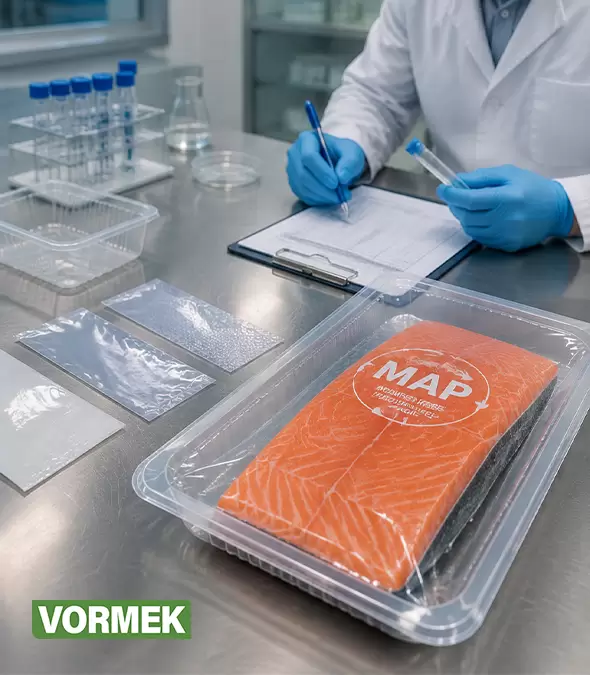
Modified atmosphere packaging replaces the package atmosphere with a controlled gas mixture tailored to product requirements. For poultry, typical gas mixtures reduce oxygen while incorporating carbon dioxide for antimicrobial effects.
Gas composition should match product respiration characteristics and preservation goals. The specific gas mixture appropriate for each product type must be determined through testing.
Preservation mechanisms in MAP include reduced oxygen slowing oxidative degradation and carbon dioxide inhibiting microbial growth. The combined effects extend shelf life while maintaining product appearance and quality.
Film selection is critical for MAP success. Appropriate gas permeability maintains the desired atmosphere composition while preventing package collapse. Multilayer barrier films with tailored permeabilities support MAP applications.
Skin Packaging
Skin packaging uses vacuum to draw film tightly around the product, creating a “second skin” appearance. This technology enhances product presentation while providing oxygen barrier properties.
Process characteristics involve placing product on a rigid base, applying a film, and evacuating air between the film and product. Heat-softened film conforms to the product shape, creating a tight, wrinkle-free seal.
Benefits for poultry include superior presentation, extended shelf life, and enhanced consumer appeal. The tight packaging resembles a skin over the product, highlighting natural shape and quality.
Material requirements include appropriate extensibility for conformation to product shapes, sufficient barrier properties for shelf life extension, and compatible sealing characteristics for reliable closure.
Tray Sealing Technology
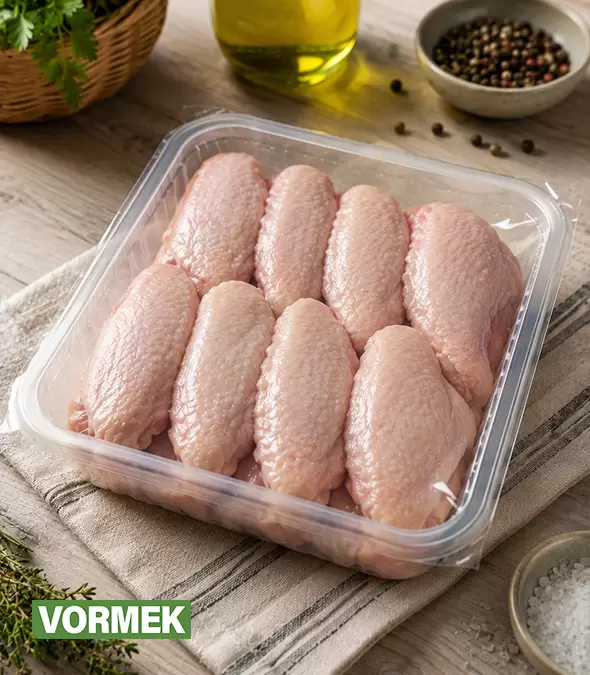
Tray sealing systems seal film to pre-formed trays, creating hermetically sealed packages suitable for retail and foodservice applications. This versatile technology accommodates diverse product formats and packaging requirements.
Process operation involves placing filled trays in the sealing machine, positioning film over the tray, applying heat and pressure to seal the film to the tray flange, and indexing sealed packages for downstream handling.
Applications for poultry include tray-packed fresh portions, marinated products, and retail-ready formats. Tray sealing provides superior product presentation while maintaining quality throughout distribution.
Container and film selection must be matched to product requirements. Factors include chemical compatibility with poultry juices, appropriate barrier properties, clarity for product visibility, and mechanical properties for distribution protection.
Thermoforming Systems
Thermoforming systems form packages directly from roll stock film, fill the formed containers with product, and seal them in a continuous process. This integrated approach offers material efficiency and high throughput for large-scale operations.
Process flow includes unwinding film, heating and forming containers, filling with product, applying lid film, sealing, and indexing finished packages. Automated controls manage each stage for consistent quality.
Value proposition for thermoforming includes material savings through reduced film usage, high production speed, complete automation, and package consistency. The higher initial investment is justified by substantial per-unit cost reductions at volume.
Poultry applications range from whole birds to portions and further-processed products. Package designs can be customized to product dimensions, enhancing presentation and protection.
Packaging Performance Considerations
Barrier Properties and Shelf Life
Packaging barrier properties determine shelf life potential by controlling oxygen, moisture, and light transmission. Appropriate barrier selection balances preservation requirements with cost considerations.
Oxygen barrier is particularly important for poultry products susceptible to oxidative degradation. Reduced oxygen environments minimize color changes, flavor deterioration, and nutrient loss.
Moisture barrier prevents dehydration and maintains product quality. Appropriate moisture transmission rates preserve product appearance and juiciness.
Light barrier protects against photochemical reactions that can affect color and flavor. Opaque or light-blocking packaging is appropriate for light-sensitive products.
Seal Integrity and Leak Prevention
Package sealing is perhaps the most critical aspect of poultry packaging. Seal failures result in leakage, contamination, and product loss, with consequences ranging from customer returns to food safety issues.
Common failure modes in poultry packaging include incomplete seals, contaminated sealing flanges, parameter drift, and material incompatibilities. Each requires specific prevention through process control and equipment maintenance.
Quality verification through seal integrity testing provides assurance that packaging meets requirements. Testing methods include visual inspection, destructive testing, and non-destructive techniques such as vacuum decay monitoring.
Process optimization should identify sealing parameters that consistently produce reliable seals. Factors include temperature, pressure, dwell time, and film compatibility with container materials.
Contamination Control and Hygiene
Poultry packaging operations must prevent contamination that could compromise product safety. Effective hygiene systems incorporate equipment design, sanitation procedures, and employee practices.
Equipment design principles include stainless steel construction, smooth surfaces without crevices, appropriate slopes for drainage, and accessibility for cleaning. Design that facilitates cleaning reduces contamination risk.
Sanitation protocols should specify cleaning frequencies, procedures, and verification methods. Validated sanitation programs are essential for maintaining hygienic conditions in poultry packaging operations.
Personnel hygiene requirements include appropriate protective clothing, hand washing, and health monitoring. Employee training in hygiene principles and practices supports effective contamination prevention.
The Economics of Poultry Packaging Equipment
Cost Considerations for Equipment Investment
Poultry packaging equipment represents a significant capital investment that must be justified through operating cost analysis. Understanding the total cost of ownership informs purchasing decisions and supports business case development.
Initial capital cost varies widely based on equipment type, automation level, capacity, and features. Simple vacuum chamber sealers for small operations may cost a few thousand dollars, while integrated thermoforming lines can exceed six figures .
Operating costs include energy consumption, maintenance, consumables, and labor. More automated equipment typically has higher initial cost but lower operating costs per unit.
Return on investment calculations should consider production volume, labor savings, reduced product giveaway, and quality improvements. Higher volumes generally support greater automation investment through shorter payback periods.
Hidden Costs and Lifecycle Analysis
Beyond purchase price, several factors affect total cost of ownership:
Installation and commissioning costs include site preparation, utility connections, and initial setup. These costs can be substantial for complex equipment requiring specialized installation.
Training and changeover costs reflect operator training requirements and the time needed to change between product formats. Equipment designed for rapid changeover reduces this cost.
Maintenance and spare parts costs should be evaluated based on equipment reliability and service availability. Equipment with reliable operation and good parts availability offers lower lifecycle costs.
Upgrade and expansion costs should be considered for equipment designed for future capacity additions. Modular designs that allow incremental expansion can reduce future capital requirements.
Suppliers with strong after-sales support including responsive technical assistance, available spare parts, and training can reduce downtime and lifecycle costs. Supplier selection should consider support capabilities .
Operational Excellence in Poultry Packaging
Maintenance and Reliability
Equipment reliability directly affects production efficiency and packaging quality. Comprehensive maintenance programs support consistent performance.
Preventive maintenance programs scheduled regular inspections, servicing, and component replacement. Following manufacturer recommendations for lubrication, calibration, and parts replacement extends equipment life and reduces unexpected failures.
Predictive maintenance uses condition monitoring techniques to anticipate maintenance needs. Vibration analysis, temperature monitoring, and performance trending identify developing issues before they cause failures.
Spare parts management ensures critical components are available when needed. Appropriate spare parts inventory balances availability against carrying costs.
Operator training contributes to maintenance effectiveness. Operators who understand equipment operation and basic troubleshooting can identify issues and perform minor corrective actions.
Production Efficiency and Waste Reduction
Optimizing poultry packaging operations improves efficiency and reduces waste:
Changeover reduction through appropriate equipment selection and procedures minimizes downtime. Quick-change tooling and programmatic parameter adjustment support efficient format switching.
Defect reduction through quality control and process monitoring minimizes product waste from packaging defects. Statistical process control identifies variations requiring correction.
Product giveaway reduction through precise weighing and portioning reduces product waste. Accurate weighing systems minimize overfill while ensuring legal compliance .
Material usage optimization through appropriate packaging design reduces material consumption and associated costs. Lightweighting and material reduction maintain performance while lowering cost.
Automation and Labor Considerations
Poultry packaging offers substantial opportunities for automation given the repetitive nature of many operations. Labor availability and cost influence appropriate automation levels.
Manual operations remain common in small-scale production and for handling irregular products. Manual stations offer flexibility but require significant labor and have consistency limitations.
Semi-automated systems combine manual product handling with automated sealing. These systems reduce labor requirements while maintaining flexibility for varied products.
Fully automated lines integrate product handling, weighing, packaging, and downstream operations. Automated systems offer maximum throughput, consistency, and labor savings.
Labor savings from automation must be weighed against capital costs. Higher labor costs in developed economies generally support greater automation investment.
Regulatory and Compliance Considerations
Food Safety Standards
Poultry packaging operations must comply with applicable food safety regulations and standards. These requirements vary by market and should be incorporated into equipment and process design.
HACCP principles should guide process design. Critical control points for poultry packaging include sealing integrity, packaging material compatibility, and contamination prevention.
Codex Alimentarius provides international food safety standards relevant to poultry processing and packaging. Compliance supports market access and regulatory acceptance.
Export requirements may specify particular packaging standards for imported poultry. Equipment and materials should meet export market specifications.
Labeling and Traceability
Modern poultry packaging incorporates labeling that provides product information and enables traceability:
Net weight labeling accuracy is required by law in most markets. Verification that packaging accurately reflects declared weight is essential for regulatory compliance .
Date coding enables shelf life management and consumer information. Legible, permanent coding on each package supports inventory management and recall capability.
Lot identification provides traceability in case of quality issues. Lot codes should enable tracking from production to consumption.
Nutritional information may be required on poultry packaging. Labeling should provide accurate product composition information.
FAQ Section
What are the main packaging technologies for poultry?
The primary packaging technologies for poultry include vacuum packaging, modified atmosphere packaging (MAP), skin packaging, tray sealing, and thermoforming. Each has distinct advantages for specific product types and applications. The choice depends on product requirements, shelf life expectations, distribution channels, and production volume.
How does packaging affect poultry shelf life?
Packaging significantly influences poultry shelf life through its barrier properties, gas composition, and integrity. Vacuum packaging removes oxygen, slowing oxidative degradation. MAP replaces oxygen with antimicrobial gases, extending shelf life. Skin packaging reduces moisture loss and improves presentation. Each approach has appropriate applications based on product type and distribution requirements.
What is the impact of packaging on poultry quality?
Packaging preserves poultry quality by preventing contamination, controlling moisture, managing atmosphere, and protecting against physical damage. Appropriate packaging maintains color, texture, and flavor throughout distribution. Improper packaging can accelerate quality deterioration and reduce consumer acceptance.
How does automation affect poultry packaging economics?
Automation typically improves poultry packaging economics through reduced labor requirements, increased throughput, improved consistency, and reduced waste. Higher automation levels involve greater capital investment but lower per-unit costs at sufficient volumes. The optimal automation level balances capital cost against labor savings and operational efficiency gains.
What are the hygiene requirements for poultry packaging equipment?
Poultry packaging equipment must meet stringent hygiene requirements including stainless steel construction in product contact areas, appropriate slope for drainage, minimal crevices where contamination can accumulate, and accessibility for cleaning. Equipment design should facilitate thorough sanitation and prevent contamination.
How does packaging material selection affect poultry quality?
Packaging material selection affects poultry quality through barrier properties, compatibility with product components, mechanical protection, and sealing characteristics. Materials must resist poultry juices, provide appropriate oxygen and moisture barrier, and seal reliably. Inappropriate materials can lead to quality deterioration and package failure.
What is the role of seal integrity in poultry packaging?
Seal integrity is essential for poultry packaging as it prevents leakage, contamination, and atmosphere loss. Incomplete seals allow oxygen ingress, compromising shelf life. Contaminated sealing surfaces prevent proper adhesion. Quality verification through seal integrity testing provides assurance that packages meet requirements.
How can producers optimize poultry packaging costs?
Poultry packaging cost optimization involves material reduction through design optimization, appropriate automation for labor efficiency, waste reduction through quality control, and strategic sourcing of packaging materials and equipment. Regular review of packaging operations identifies opportunities for improvement.
Conclusion
Poultry packaging has evolved substantially from simple containment to sophisticated preservation systems that protect product quality and extend shelf life. Modern packaging technologies including vacuum packaging, MAP, tray sealing, and thermoforming enable processors to meet consumer expectations for convenience, quality, and safety.
The engineering considerations underlying poultry packaging equipment selection include product characteristics, production requirements, hygiene standards, and operational objectives. Understanding these fundamentals supports informed equipment decisions that deliver value throughout the equipment lifecycle.
For processors evaluating poultry packaging equipment options, collaboration with experienced packaging equipment manufacturers is recommended. Vormek’s engineering expertise and understanding of poultry applications can support equipment selection and implementation. Our precision sealing and packaging systems are designed to meet the demanding requirements of modern poultry processing operations.