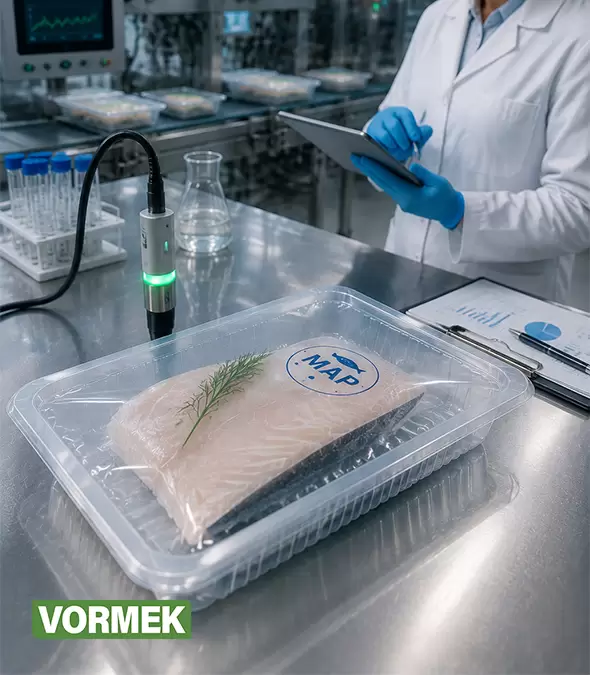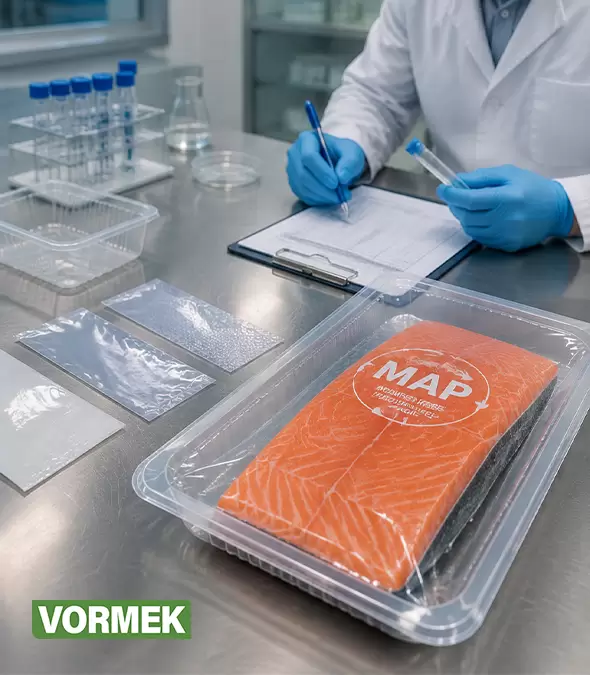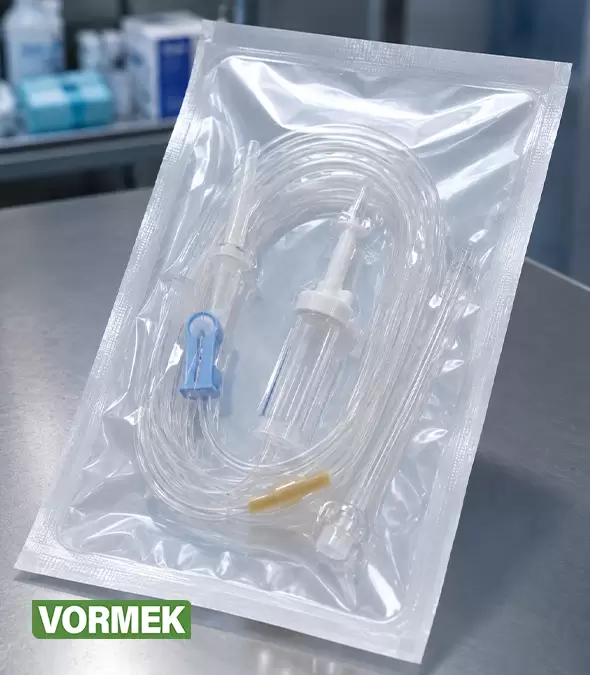
Medical device packaging is far more than a protective enclosure—it is an integral part of the device’s safety, performance, and regulatory compliance. A properly designed package preserves sterility, protects the product from physical and microbial contamination, and ensures that healthcare professionals receive a safe, functional device at the point of use.
Because packaging directly affects patient safety, regulatory authorities require manufacturers to validate every critical stage of the packaging process. Packaging equipment must consistently produce reliable seals, maintain process repeatability, and generate documented evidence that each package meets predefined quality requirements.
Whether manufacturing surgical instruments, implantable devices, diagnostic kits, wound care products, or single-use medical consumables, compliance with international packaging regulations is essential for market approval and long-term business success.
Modern packaging machines are therefore expected to deliver more than productivity. They must support process validation, electronic traceability, controlled production parameters, and comprehensive documentation that withstands inspections by regulatory bodies such as the U.S. FDA, European notified bodies, and other global health authorities.
This guide explains the international standards governing medical device packaging machines, outlines validation and documentation requirements, and highlights the equipment features that help manufacturers achieve consistent regulatory compliance.
Recommended Internal Links
- Medical & Sterile Industry Landing Page
- Smart Sealer Product Page
- UV-Clean Product Page
Why Regulatory Compliance Matters in Medical Device Packaging
Packaging is considered part of the medical device system because it protects product integrity from the end of manufacturing until clinical use. Even when the device itself is manufactured flawlessly, a packaging failure can compromise sterility and render the product unsuitable for patient care.
Common causes of packaging-related nonconformities include:
- Inconsistent heat sealing
- Inadequate seal strength
- Damaged sterile barriers
- Incorrect packaging materials
- Poor process control
- Missing production records
- Insufficient validation
The consequences can be severe, including product recalls, regulatory observations, shipment delays, financial losses, and reputational damage.
To minimize these risks, regulatory frameworks require manufacturers to validate packaging processes, monitor critical parameters, maintain complete documentation, and implement effective quality management systems.
The Role of Packaging Machines in Regulatory Compliance
Today’s medical packaging equipment plays a critical role in maintaining regulatory compliance. Beyond forming and sealing packages, modern systems must operate as validated manufacturing equipment capable of delivering repeatable, measurable, and fully traceable processes.
A regulatory-ready packaging machine should provide:
- Precise temperature control
- Stable sealing pressure
- Accurate dwell-time management
- Continuous process monitoring
- Electronic batch records
- Alarm and event logging
- Recipe management
- User access control
- Data export for validation
- Full production traceability
These capabilities reduce process variability, simplify validation activities, and support compliance with international quality standards.
Key International Standards to Know
Selecting compliant packaging equipment begins with understanding the regulatory framework that governs sterile medical device packaging.
The following standards form the foundation of global compliance.
ISO 11607: The Cornerstone of Sterile Medical Device Packaging
ISO 11607 is the most widely recognized international standard for packaging terminally sterilized medical devices. It establishes requirements for sterile barrier systems, packaging materials, process validation, and ongoing quality control.
The standard is divided into two complementary parts.
ISO 11607-1: Packaging System Requirements
Part 1 defines the requirements for:
- Sterile barrier systems
- Protective packaging
- Material performance
- Package design
- Distribution testing
- Shelf-life evaluation
- Package integrity
Manufacturers must demonstrate that the packaging system maintains sterility throughout transportation, storage, and the product’s intended shelf life.
ISO 11607-2: Packaging Process Validation
Part 2 focuses on validating the packaging process itself. It requires documented evidence that packaging equipment consistently produces acceptable seals under controlled operating conditions.
Core validation activities include:
- Installation Qualification (IQ)
- Operational Qualification (OQ)
- Performance Qualification (PQ)
- Process validation
- Equipment calibration
- Routine monitoring
- Revalidation after significant changes
These requirements ensure that packaging performance is repeatable rather than dependent on operator experience.
Why ISO 11607 Influences Equipment Selection
Compliance with ISO 11607 depends not only on packaging materials but also on the capabilities of the packaging machine.
When evaluating equipment, manufacturers should look for features such as:
- Uniform heat distribution
- Consistent sealing pressure
- Repeatable sealing cycles
- PID temperature control
- Automated parameter recording
- Electronic production records
- Audit-ready software
- Calibration support
Machines designed with these capabilities simplify validation, improve consistency, and reduce regulatory risk throughout the product lifecycle.
ISO 13485: Quality Management for Medical Device Manufacturing
While ISO 11607 focuses on packaging systems, ISO 13485 establishes the quality management framework that governs medical device manufacturing.
For packaging operations, ISO 13485 requires manufacturers to maintain controlled, documented, and repeatable processes supported by effective quality management.
Packaging-related requirements include:
- Controlled production procedures
- Equipment maintenance and calibration
- Documented work instructions
- Personnel training
- Supplier qualification
- Risk-based decision-making
- Change control
- Internal audits
- Corrective and Preventive Actions (CAPA)
Packaging machines that support electronic traceability, standardized production recipes, and comprehensive documentation integrate more effectively into ISO 13485-certified quality management systems.
FDA, EU MDR, and Other Regulatory Requirements for Medical Device Packaging
While ISO 11607 and ISO 13485 establish the core framework for sterile packaging, manufacturers selling medical devices internationally must also comply with regional regulations and complementary standards. These requirements ensure that packaging systems consistently protect the device, preserve sterility, and generate objective evidence of process control.
A packaging machine should therefore be viewed as a regulated manufacturing asset—not simply production equipment.
FDA Quality System Requirements for Packaging Equipment
Manufacturers supplying the U.S. market must comply with the FDA’s Quality Management System requirements for medical devices. Packaging processes are expected to be controlled, validated, and supported by documented evidence demonstrating consistent performance.
During inspections, FDA auditors commonly review whether manufacturers can demonstrate:
- Validated packaging processes
- Controlled sealing parameters
- Current calibration records
- Preventive maintenance programs
- Complete batch documentation
- Traceable production records
- Effective nonconformance management
- Corrective and Preventive Actions (CAPA)
Packaging machines that automatically record process parameters significantly reduce documentation errors and simplify regulatory inspections.
EU MDR 2017/745 and Packaging Compliance
The European Medical Device Regulation (EU MDR 2017/745) places strong emphasis on patient safety, product traceability, and risk management throughout the device lifecycle.
Packaging must ensure that medical devices remain protected from manufacture until clinical use while preserving the sterile barrier whenever required.
To satisfy MDR expectations, manufacturers should demonstrate that packaging systems:
- Maintain sterile barrier integrity
- Protect products during transportation
- Support unique device identification (UDI)
- Preserve product performance
- Remain effective throughout the validated shelf life
- Are manufactured using validated and controlled processes
Packaging equipment capable of producing consistent, repeatable seals plays an essential role in meeting these requirements.
Good Manufacturing Practice (GMP) in Packaging Operations
Good Manufacturing Practice (GMP) establishes the operational principles required for reliable medical device production.
Within packaging departments, GMP focuses on:
- Clean manufacturing environments
- Controlled operating procedures
- Equipment maintenance
- Personnel training
- Documentation accuracy
- Prevention of contamination
- Continuous quality monitoring
To support GMP, packaging machines should feature hygienic construction with smooth stainless-steel surfaces, easy-to-clean components, and designs that minimize contamination risks.
ISO 14971: Risk Management and Packaging
ISO 14971 requires manufacturers to identify, evaluate, and control risks throughout the medical device lifecycle, including packaging-related hazards.
Typical packaging risks include:
- Seal failure
- Microbial contamination
- Incorrect labeling
- Barrier degradation
- Material incompatibility
- Transportation damage
- Human error during packaging
Modern packaging equipment helps reduce these risks through automated process control, monitored sealing parameters, and reduced operator dependence.
Sterilization Standards That Influence Packaging Design
Packaging systems must also be compatible with the selected sterilization method.
Common international sterilization standards include:
| Standard | Primary Purpose |
|---|---|
| ISO 11135 | Ethylene Oxide (EtO) Sterilization |
| ISO 11137 | Radiation Sterilization |
| ISO 17665 | Moist Heat Sterilization |
| ISO 11737 | Bioburden and Sterility Testing |
| ISO 14644 | Cleanroom Classification |
| ASTM F88 | Seal Strength Testing |
| ASTM F1929 | Dye Penetration Testing |
| ASTM F2096 | Bubble Leak Testing |
Packaging equipment should consistently produce seals capable of maintaining integrity before, during, and after sterilization.
Validation & Documentation Requirements
Validation demonstrates that a packaging process consistently produces packages meeting predefined quality specifications.
Regulatory authorities expect validation to be documented and maintained throughout the equipment lifecycle.
The validation process generally consists of:
- Installation Qualification (IQ)
- Operational Qualification (OQ)
- Performance Qualification (PQ)
- Routine process monitoring
- Revalidation after significant changes
Installation Qualification (IQ)
IQ confirms that the packaging machine has been installed correctly according to the manufacturer’s specifications.
Typical activities include:
- Electrical verification
- Pneumatic and vacuum checks
- Utility confirmation
- Safety inspection
- Calibration verification
- Equipment identification
- Documentation review
Successful IQ provides the foundation for all subsequent validation activities.
Operational Qualification (OQ)
OQ demonstrates that the equipment performs correctly throughout its validated operating range.
Testing normally includes:
- Minimum and maximum sealing temperatures
- Pressure variation
- Dwell-time variation
- Different package sizes
- Approved packaging materials
- Alarm verification
The objective is to establish validated operating limits that consistently produce acceptable packages.
Performance Qualification (PQ)
PQ confirms that routine production can repeatedly manufacture compliant packages under normal operating conditions.
Typical PQ activities include:
- Multiple production batches
- Different operators
- Various production shifts
- Seal strength testing
- Visual inspection
- Statistical process evaluation
Successful PQ demonstrates that the validated process performs reliably during everyday manufacturing.
Essential Validation Documentation
Documentation is one of the most important elements of regulatory compliance.
Manufacturers should maintain comprehensive records throughout the equipment lifecycle.
| Required Document | Purpose |
|---|---|
| User Requirement Specification (URS) | Defines operational needs |
| Factory Acceptance Test (FAT) | Confirms machine performance before delivery |
| Site Acceptance Test (SAT) | Verifies installation on site |
| IQ Protocol | Installation qualification |
| OQ Protocol | Operational qualification |
| PQ Protocol | Performance qualification |
| Validation Report | Final validation evidence |
| Calibration Records | Demonstrate equipment accuracy |
| Maintenance Records | Confirm equipment reliability |
| SOPs | Standardized operating procedures |
| Change Control Records | Document approved modifications |
| Training Records | Verify operator competency |
| Risk Assessment | Identify and mitigate hazards |
Well-organized documentation not only supports regulatory inspections but also improves internal quality management and simplifies future revalidation.
Why Comprehensive Validation Reduces Business Risk
Validation is often viewed as a regulatory obligation, but it also provides significant operational benefits. A validated packaging process reduces production variability, minimizes product recalls, decreases investigation time, and strengthens customer confidence.
Manufacturers that invest in validation-ready packaging equipment typically experience smoother audits, faster product approvals, and more consistent production performance.
Equipment Features That Support Compliance
Regulatory compliance depends not only on documented procedures but also on the capabilities of the packaging machine. Modern medical device packaging equipment should deliver precise, repeatable performance while automatically recording production data and minimizing operator intervention.
When evaluating packaging equipment, manufacturers should focus on features that directly support validation, traceability, and process consistency.
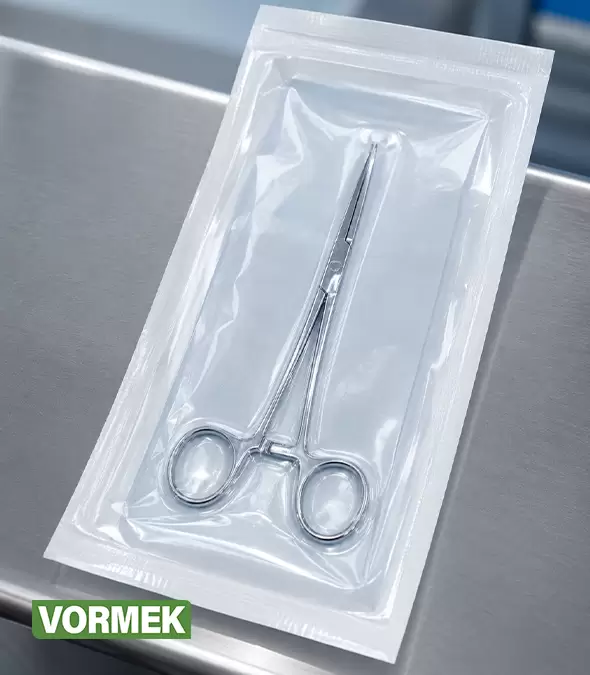
Why Process Control Is Critical
Heat sealing is one of the most critical operations in sterile medical packaging. Variations in temperature, pressure, or dwell time can compromise seal integrity and jeopardize the sterile barrier.
Advanced packaging machines use closed-loop control systems to continuously monitor and adjust critical process parameters, ensuring that every sealing cycle remains within validated limits.
Critical parameters include:
- Sealing temperature
- Sealing pressure
- Dwell time
- Cooling time
- Vacuum level (if applicable)
- Cycle time
- Package positioning
Maintaining stable process parameters improves seal consistency and supports ISO 11607 validation requirements.
Essential Equipment Features That Support Regulatory Compliance
Selecting the right packaging machine requires evaluating more than production speed. Compliance-related engineering features are equally important.
| Equipment Feature | Compliance Benefit |
|---|---|
| PLC-controlled process management | Repeatable production cycles |
| PID temperature control | Stable sealing performance |
| Servo-driven positioning | Accurate package alignment |
| Electronic batch records | Improved traceability |
| Alarm and event logging | Faster investigations |
| Password-protected access | Prevents unauthorized changes |
| Recipe management | Consistent production settings |
| Data export capability | Simplifies audits |
| Hygienic stainless-steel construction | Supports GMP compliance |
| Validation-ready software | Faster IQ/OQ/PQ execution |
Electronic Traceability and Production Records
Regulatory inspections increasingly focus on data integrity and production traceability.
Packaging equipment should automatically generate production records without relying on manual documentation.
Typical recorded information includes:
- Batch number
- Production date and time
- Operator ID
- Machine identification
- Selected recipe
- Sealing temperature
- Sealing pressure
- Dwell time
- Alarm history
- Production quantity
- Reject quantity
Electronic records improve accuracy, simplify audits, and accelerate root-cause investigations when deviations occur.
User Access Control and Recipe Management
Validated production parameters should only be modified by authorized personnel.
Modern packaging machines therefore include user-level permissions that restrict access according to responsibility.
Typical user levels include:
- Operator
- Supervisor
- Maintenance Engineer
- Validation Engineer
- System Administrator
Recipe management further improves consistency by allowing validated production settings to be stored and recalled instantly.
A validated recipe may include:
- Temperature
- Pressure
- Dwell time
- Cooling time
- Package dimensions
- Packaging material
- Alarm limits
- Production speed
Using predefined recipes minimizes setup errors and reduces production downtime.
Hygienic Machine Design for Regulated Manufacturing
Medical packaging equipment should be designed to minimize contamination risks and facilitate routine cleaning.
Key hygienic design features include:
- Stainless-steel construction
- Smooth, crevice-free surfaces
- Rounded frame geometry
- Easy access for cleaning
- Corrosion-resistant components
- Enclosed electrical cabinets
- Minimal particle generation
These design principles support GMP compliance while reducing maintenance time.
Selecting the Right Packaging Technology
Different medical products require different packaging solutions depending on product geometry, sterilization method, barrier requirements, and production volume.
| Medical Device | Recommended Packaging Technology |
|---|---|
| Surgical instruments | Tray sealing |
| Diagnostic kits | Tray sealing |
| Syringes | Thermoforming |
| Catheters | Thermoforming |
| Wound dressings | Tray sealing |
| Implantable devices | High-barrier thermoforming |
| Disposable medical accessories | Tray sealing or pouch sealing |
The packaging technology should always be selected based on validated product requirements rather than equipment speed alone.
Smart Equipment for Regulatory Compliance
Advanced automation significantly improves regulatory performance by reducing manual intervention and increasing process repeatability.
For manufacturers operating under ISO 11607 and ISO 13485, features such as automated parameter control, electronic production records, and integrated alarm management simplify validation and routine quality monitoring.
The Smart Sealer platform is designed to provide precise control over sealing temperature, pressure, and dwell time, helping manufacturers maintain repeatable sealing performance across production batches. Validation-friendly software, recipe management, and electronic process records further support regulatory compliance while improving production efficiency.
To strengthen contamination-control strategies, UV-Clean systems can be integrated before the sealing process. UV surface treatment is not a substitute for terminal sterilization, but it can help reduce surface bioburden on packaging components as part of a broader contamination-control program.
Internal Linking Opportunities
- Medical & Sterile Industry Landing Page
- Smart Sealer Product Page
- UV-Clean Product Page
Common Compliance Mistakes When Choosing Packaging Equipment
Selecting equipment based only on purchase price or production capacity can create significant compliance challenges.
The most common mistakes include:
1. Prioritizing Speed Over Validation
High output offers little value if the sealing process cannot be validated or maintained within approved operating limits.
2. Ignoring Data Recording Capabilities
Machines without electronic production records increase manual documentation and make audits more time-consuming.
3. Overlooking Calibration Requirements
Packaging equipment should allow straightforward calibration with documented verification to maintain process accuracy.
4. Choosing Equipment Without Future Flexibility
Regulatory expectations evolve over time. Equipment should support software updates, additional monitoring functions, and integration with digital manufacturing systems.
5. Underestimating Supplier Support
An experienced equipment supplier should provide technical documentation, validation assistance, training, spare parts, and long-term service support throughout the machine’s lifecycle.
Compliance Evaluation Checklist
Before investing in a medical device packaging machine, manufacturers should confirm that the equipment can answer “Yes” to the following questions:
| Question | ✓ |
|---|---|
| Is the sealing process fully repeatable? | □ |
| Are critical process parameters continuously monitored? | □ |
| Does the system automatically record production data? | □ |
| Can the machine support IQ, OQ, and PQ validation? | □ |
| Are validated recipes protected against unauthorized changes? | □ |
| Is the equipment designed for hygienic cleaning? | □ |
| Can calibration activities be documented? | □ |
| Does the machine generate audit-ready reports? | □ |
| Is complete production traceability available? | □ |
| Can the equipment integrate with the facility’s Quality Management System (QMS)? | □ |
Using this checklist during equipment selection helps reduce implementation risks and supports long-term regulatory compliance.
Future Trends in Medical Device Packaging Regulations
Medical device packaging regulations continue to evolve alongside advances in manufacturing technology, digital quality management, and sustainability. Manufacturers that invest in future-ready packaging equipment can adapt more easily to regulatory updates while maintaining operational efficiency.
Several trends are expected to shape the next generation of medical packaging systems:
- Increased adoption of digital quality management systems (QMS)
- Greater integration with Manufacturing Execution Systems (MES)
- Enhanced electronic traceability and data integrity
- Wider use of predictive maintenance and machine diagnostics
- Stronger cybersecurity requirements for connected equipment
- Sustainable packaging initiatives without compromising sterile barrier performance
Packaging equipment designed with flexibility and software upgrade capabilities is better positioned to meet future regulatory expectations.
Best Practices for Maintaining Regulatory Compliance
Regulatory compliance is an ongoing process rather than a one-time validation project. Organizations should combine qualified equipment with disciplined quality management practices.
The following best practices help maintain long-term compliance:
| Best Practice | Benefit |
|---|---|
| Validate all packaging processes | Demonstrates consistent performance |
| Maintain preventive maintenance schedules | Reduces unexpected downtime |
| Calibrate equipment regularly | Ensures process accuracy |
| Monitor critical process parameters | Detects deviations early |
| Train operators periodically | Reduces human error |
| Perform internal audits | Identifies compliance gaps |
| Review risk assessments | Supports continuous improvement |
| Control process changes | Protects validated conditions |
| Maintain complete production records | Simplifies inspections |
| Partner with experienced equipment suppliers | Improves long-term support |
Medical Device Packaging Machine Selection Checklist
Before purchasing a packaging machine, manufacturers should evaluate both technical performance and regulatory readiness.
Technical Requirements
- Accurate sealing temperature control
- Uniform sealing pressure
- Stable cycle repeatability
- Reliable mechanical construction
- Hygienic machine design
- Production scalability
Compliance Requirements
- IQ, OQ, and PQ support
- Electronic batch records
- Alarm history
- Recipe management
- User access control
- Audit-ready reporting
- Calibration support
- Process traceability
- Validation-friendly software
- Integration with Quality Management Systems (QMS)
A structured evaluation helps manufacturers select equipment that supports both operational performance and regulatory compliance.
Frequently Asked Questions (FAQ)
1. What is the primary international standard for medical device packaging?
ISO 11607 is the globally recognized standard for packaging terminally sterilized medical devices. It covers sterile barrier systems, package design, validation, and process control.
2. Why is process validation required?
Validation demonstrates that the packaging process consistently produces packages meeting predefined quality specifications. It reduces variability and provides documented evidence for regulatory inspections.
3. What are IQ, OQ, and PQ?
- IQ (Installation Qualification): Confirms correct installation.
- OQ (Operational Qualification): Verifies operation within approved limits.
- PQ (Performance Qualification): Confirms consistent performance during routine production.
4. What machine features simplify regulatory compliance?
Features such as automatic parameter monitoring, electronic batch records, recipe management, alarm logging, audit trails, and user access control significantly improve compliance and traceability.
5. How often should packaging equipment be revalidated?
Revalidation is typically required after major repairs, software upgrades, replacement of critical components, significant process changes, or changes in packaging materials. Periodic review should also be part of the manufacturer’s quality management program.
6. How can manufacturers prepare for regulatory audits?
Manufacturers should maintain complete validation reports, calibration records, preventive maintenance logs, training records, SOPs, risk assessments, and traceable production documentation. Well-organized records help audits proceed efficiently and demonstrate effective process control.
Conclusion
Medical device packaging is a critical element of product quality and patient safety. Regulatory standards such as ISO 11607, ISO 13485, EU MDR 2017/745, FDA quality management requirements, and ISO 14971 require packaging processes to be validated, documented, and consistently controlled throughout the product lifecycle.
Selecting the right packaging machine is therefore a strategic decision. Equipment should deliver precise process control, repeatable sealing performance, electronic traceability, and validation-ready functionality while integrating seamlessly into a manufacturer’s quality management system.
Manufacturers that invest in compliance-oriented packaging solutions reduce regulatory risk, improve production consistency, simplify audits, and strengthen customer confidence.
At VORMEK, we design packaging solutions that help medical device manufacturers build reliable, validation-ready production processes. Our Smart Sealer technology supports accurate sealing control and process repeatability, while UV-Clean systems can be incorporated into contamination-control workflows as part of a comprehensive quality strategy. Combined with robust documentation and ongoing quality management, these solutions help manufacturers meet international regulatory expectations while supporting efficient, reliable production.