Introduction: Choosing the Right Chicken Packaging Technology for Poultry Processors
The poultry industry is continuously evolving as consumers demand fresher products, longer refrigerated shelf life, attractive presentation, and convenient packaging formats. For chicken processors, packaging is no longer only a protective layer; it is a critical technology that influences product quality, food safety, logistics efficiency, retail performance, and profitability.
Among modern poultry packaging solutions, skin packaging and tray sealing are two of the most important technologies used for fresh chicken products. Although both systems provide improved protection compared with traditional overwrap packaging, they are designed for different production goals and market requirements.
The decision between skin pack vs tray seal chicken packaging requires a technical evaluation of several factors:
- Shelf life extension
- Oxygen control
- Microbial growth management
- Product appearance
- Drip loss reduction
- Packaging speed
- Material cost
- Equipment investment
- Retail positioning
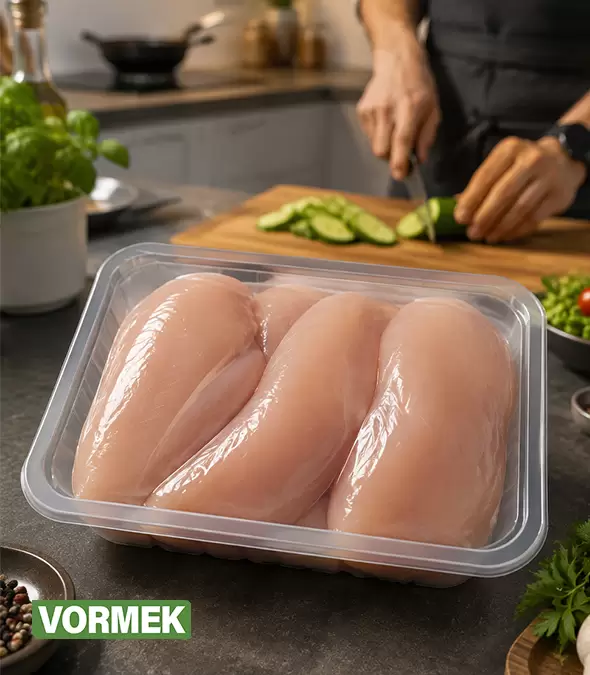
Skin packaging creates a vacuum-tight package where a flexible high-barrier film forms directly around the chicken product. The film follows the product shape closely, reducing free air space and creating a premium three-dimensional appearance. This technology is especially suitable for high-value chicken cuts where visual presentation and product stability are major purchasing factors.
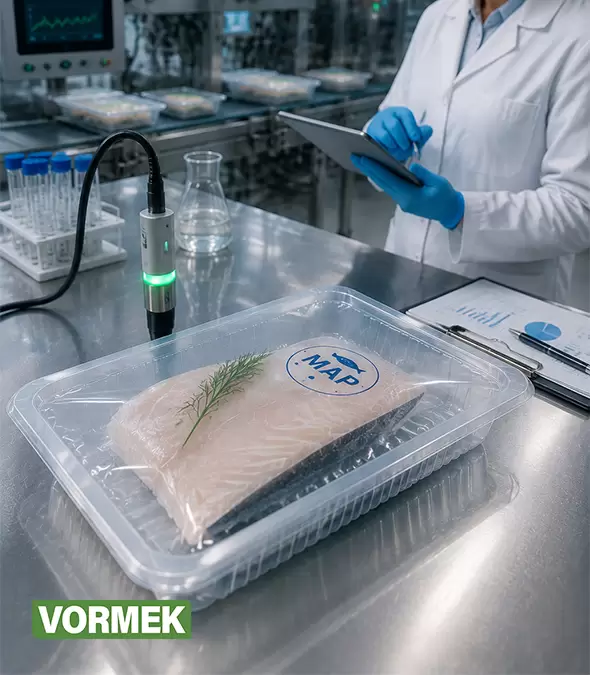
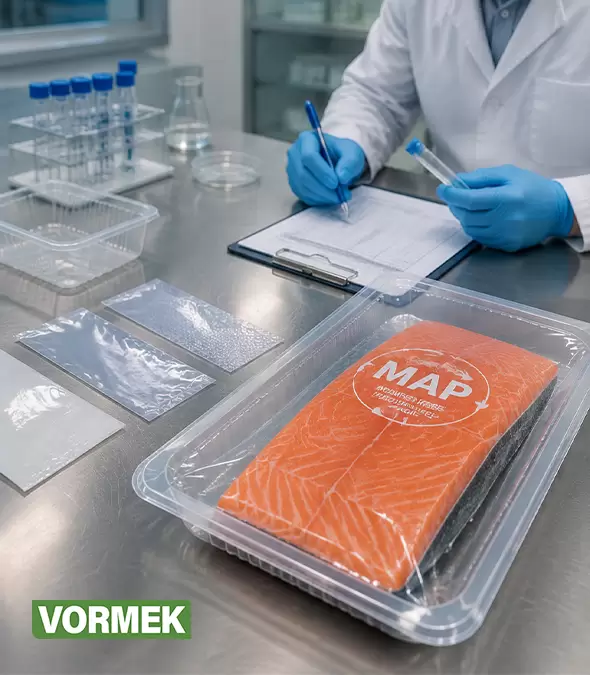
Tray sealing, particularly when combined with Modified Atmosphere Packaging (MAP), uses a rigid tray sealed with a high-barrier top film. By controlling the internal atmosphere through gas replacement, processors can optimize freshness, microbial stability, and refrigerated shelf life. This method is widely used for chicken breast, thighs, wings, marinated poultry, ready-to-cook products, and large-scale retail packaging.
For industrial poultry manufacturers, selecting the correct packaging method is not simply a question of choosing the newest technology. The ideal solution depends on:
- Product category
- Production volume
- Distribution distance
- Retail requirements
- Target shelf life
- Packaging cost strategy
This guide provides a technical comparison of skin pack and tray seal packaging for chicken products, helping poultry processors select the most suitable solution for their production needs.
Quick Comparison: Skin Pack vs Tray Seal Chicken Packaging
Before reviewing each technology in detail, the following comparison provides a practical overview.
| Category | Skin Packaging | Tray Sealing (MAP) |
|---|---|---|
| Main principle | Vacuum film forms tightly around chicken product | Tray sealed with controlled atmosphere |
| Best suited products | Premium chicken cuts | High-volume poultry products |
| Product appearance | Premium 3D presentation | Clean retail presentation |
| Air control | Excellent reduction of free air | Controlled gas replacement |
| Shelf life potential | Very good | Excellent with optimized MAP |
| Drip loss management | Very good | Good with suitable absorbent solutions |
| Production speed | Moderate | High to very high |
| Packaging flexibility | Moderate | Excellent |
| Material cost | Higher | Generally lower |
| Automation capability | Available | Extensive |
| Ideal market | Premium retail products | Supermarkets and industrial production |
What Is Skin Packaging for Chicken Products?
How Does Skin Packaging Work in Poultry Applications?
Skin packaging is an advanced vacuum packaging technology where a specially designed top film is heated and formed directly over the chicken product. During the process, air is removed from the package, allowing the softened film to closely follow the shape of the product and tray.
Unlike traditional vacuum packaging, skin packaging does not apply excessive compression to the chicken portion. Instead, the film creates a protective “second skin” that maintains the original product shape, thickness, and appearance.
The typical skin packaging process includes:
- Placing chicken products into a rigid support tray.
- Positioning a high-barrier skin film above the product.
- Heating the film to achieve the required flexibility.
- Applying vacuum to remove trapped air.
- Forming the film around the chicken surface.
- Creating a secure airtight seal.
The final package provides:
- Minimal headspace
- Excellent product visibility
- Reduced product movement
- Premium retail appearance
Why Is Skin Packaging Used for Fresh Chicken Products?
Fresh poultry products are highly sensitive to oxygen exposure, temperature fluctuations, and microbial contamination. Excess oxygen can accelerate:
- Lipid oxidation
- Quality deterioration
- Unwanted color changes
- Spoilage microorganism growth
Skin packaging helps reduce these risks by minimizing free air around the product and creating a stable protective environment.
The main benefits include:
Reduced Product Movement
Because the film tightly follows the chicken surface, the product remains fixed during:
- Transportation
- Storage
- Retail handling
This reduces package deformation and improves shelf presentation.
Premium Shelf Appearance
One of the strongest advantages of skin packaging is its visual impact.
Consumers can clearly observe:
- Natural meat structure
- Product thickness
- Portion size
- Product quality
This creates a premium perception, especially for:
- Chicken breast fillets
- Boneless portions
- Specialty poultry products
- High-value retail cuts
For premium poultry brands, packaging becomes part of the product experience.
Better Drip Loss Control
Fresh chicken naturally releases moisture during storage. Excess liquid accumulation inside a package can negatively influence consumer perception.
Skin packaging helps control visible liquid movement because the film remains closely attached to the product surface.
However, processors should understand that packaging alone cannot eliminate purge formation. Final performance depends on:
- Raw material quality
- Processing hygiene
- Storage temperature
- Product handling
- Absorbent pad selection
Skin Packaging Shelf Life Performance for Chicken
Skin packaging can improve refrigerated chicken stability by reducing oxygen exposure and limiting external contamination risks.
Typical shelf-life performance depends on:
| Factor | Impact on Shelf Life |
|---|---|
| Product freshness at packaging | High |
| Refrigeration temperature | Very high |
| Film barrier properties | High |
| Processing hygiene | Very high |
| Distribution conditions | High |
For fresh chicken products, skin packaging can provide significant shelf-life improvement compared with conventional air packaging, especially when combined with excellent cold-chain management.
However, the final shelf life should always be validated through microbiological testing under actual production conditions.
What Is Tray Sealing for Chicken Products?
How Does Tray Sealing Technology Work in Poultry Packaging?
Tray sealing is one of the most widely used packaging technologies in the poultry industry because it provides an effective combination of production efficiency, packaging flexibility, product protection, and compatibility with Modified Atmosphere Packaging (MAP).
In tray sealing systems, fresh chicken products are placed inside rigid trays manufactured from materials such as:
- Polypropylene (PP)
- Polyethylene (PE)
- PET-based barrier structures
- Multilayer food packaging materials
After filling, a high-barrier top film is applied and heat-sealed to the tray flange, creating a secure package that protects the product during storage, transportation, and retail display.
Depending on the packaging objective, the process can include:
- Tray loading with chicken products.
- Removal of existing air from the sealing chamber (vacuum option).
- Injection of a controlled gas mixture.
- Heat sealing of the top barrier film.
- Film cutting and package discharge.
Modern industrial tray sealing systems can integrate:
- Automatic tray denesting
- Product positioning
- MAP gas control
- Film registration
- Coding systems
- Checkweighing
- Conveyor integration
For poultry processors requiring automated packaging lines, solutions such as TrayFlow can improve tray handling efficiency and support consistent high-speed production.
How Does MAP Tray Sealing Improve Chicken Shelf Life?
The Role of Modified Atmosphere Packaging in Poultry Products
One of the most important advantages of tray sealing is the ability to combine it with MAP technology.
MAP works by replacing normal atmospheric air inside the package with a controlled gas mixture designed for the specific product.
For chicken products, the packaging atmosphere is selected according to:
- Microbial control requirements
- Product type
- Storage temperature
- Distribution time
- Retail conditions
- Desired shelf life
The main gases used in poultry MAP include:
Carbon Dioxide (CO₂): Microbial Growth Control
Carbon dioxide is widely used in MAP because it has antimicrobial effects against many spoilage microorganisms.
When CO₂ dissolves into the moisture phase of the product, it can reduce microbial growth rates and help extend refrigerated shelf life.
However, excessive CO₂ absorption may create:
- Package collapse
- Increased drip formation
- Changes in product appearance
Therefore, gas balance must be carefully selected.
Nitrogen (N₂): Package Stability
Nitrogen is an inert gas mainly used to:
- Replace oxygen
- Maintain package volume
- Reduce package collapse caused by CO₂ absorption
N₂ does not significantly control microorganisms, but it plays an important structural role in MAP packaging.
Oxygen (O₂): Different Role Compared With Red Meat
Unlike fresh red meat, where high oxygen levels are often used to maintain bright red color, poultry packaging strategies usually focus more strongly on:
- Microbial control
- Oxidation reduction
- Shelf-life stability
The optimal atmosphere depends on the specific chicken product and storage requirements.
A properly designed MAP system can significantly improve freshness compared with conventional air packaging.
Typical Shelf Life Comparison: Skin Pack vs MAP Tray Seal Chicken
The actual shelf life of poultry products depends on processing conditions, hygiene, temperature control, and packaging materials. The following values represent typical industrial expectations under refrigerated conditions and should always be validated by product testing.
| Packaging Method | Typical Refrigerated Shelf Life Potential | Main Advantage |
|---|---|---|
| Traditional air packaging | Short shelf life | Low packaging complexity |
| Skin packaging | Extended shelf life potential | Premium appearance and product fixation |
| MAP tray sealing | Extended shelf life potential | Gas control and industrial scalability |
For many commercial poultry applications, MAP tray sealing provides strong shelf-life performance because the internal atmosphere can be optimized according to microbial and quality requirements.
Tray Sealing Advantages for Industrial Poultry Production
High Production Efficiency
Large poultry processors often require packaging systems capable of handling thousands of packs per hour.
Automatic tray sealing machines provide:
- High output capacity
- Reduced manual labor
- Consistent sealing quality
- Better production control
This makes tray sealing suitable for:
- Chicken breast portions
- Chicken thighs
- Chicken wings
- Marinated products
- Ready-to-cook meals
Packaging Flexibility
One of the strongest differences between skin packaging and tray sealing is flexibility.
Tray sealing allows processors to manage:
- Different tray sizes
- Different product weights
- Multiple packaging formats
- Retail and food-service requirements
This flexibility is especially important for poultry companies producing multiple product categories.
Seal Integrity and Leak Prevention in Chicken Tray Packaging
Why Is Sealing Quality Critical?
A package can only maintain freshness when the seal remains completely reliable.
Important sealing parameters include:
- Correct sealing temperature
- Proper sealing pressure
- Clean tray flange
- Compatible tray and film materials
- Accurate machine adjustment
Poor sealing conditions may result in:
- Gas leakage
- Reduced shelf life
- Film separation
- Product complaints
Advanced tray sealing systems such as the Smart Sealer product page solution focus on accurate temperature control, repeatable sealing performance, and reliable operation for industrial poultry applications.
Skin Pack vs Tray Seal Chicken Packaging: Technical Comparison
| Parameter | Skin Packaging | Tray Sealing (MAP) |
|---|---|---|
| Packaging principle | Vacuum film forms directly around product | Film heat-sealed onto rigid tray |
| Oxygen control | Excellent reduction of free air | Controlled through gas replacement |
| Microbial control | Good through reduced oxygen exposure | Excellent when MAP is optimized |
| Product appearance | Premium three-dimensional presentation | Clean retail presentation |
| Product movement | Almost completely fixed | Moderate stability |
| Gas injection capability | Limited | Excellent |
| Product flexibility | Moderate | High |
| Production speed | Moderate | High to very high |
| Material cost | Higher | Generally lower |
| Automation options | Available | Extensive |
Barrier Film Structure in Chicken Packaging
Why Film Selection Matters
The performance of both skin packaging and tray sealing depends heavily on film structure.
A poultry packaging film usually requires:
- High oxygen barrier properties
- Good sealing performance
- Mechanical strength
- Anti-fog characteristics
- Food-contact compliance
Common multilayer structures may include:
Barrier Layer
Materials such as EVOH are used to reduce oxygen transmission and protect product quality.
Sealing Layer
Polyethylene-based layers are commonly used to create reliable heat seals with trays.
Support Layers
PET, PP, or other polymers may provide:
- Mechanical strength
- Transparency
- Forming properties
Selecting the correct film structure is essential for achieving the desired shelf life, appearance, and sealing reliability.
Shelf Appeal & Shelf Life Differences Between Skin Pack and Tray Seal Chicken Packaging
Which Packaging Technology Provides Better Consumer Appeal?
In the poultry market, packaging appearance has a direct influence on consumer purchasing decisions. Fresh chicken products are often evaluated within seconds at the retail shelf, meaning the package must communicate:
- Freshness
- Quality
- Hygiene
- Product value
- Convenience
Both skin packaging and tray sealing provide attractive retail solutions, but they create different consumer perceptions.
Skin Packaging Appearance: Premium Presentation for Chicken Products
Skin packaging creates a distinctive premium appearance because the top film closely follows the natural shape of the chicken product.
The result is a package with:
- Minimal empty space
- Three-dimensional product visibility
- Reduced product movement
- High-quality retail presentation
This format allows consumers to clearly observe:
- Chicken texture
- Product thickness
- Portion size
- Natural appearance
For premium poultry categories, this visual advantage can support higher product positioning and stronger brand perception.
Typical applications include:
- Premium chicken breast
- Organic poultry
- Specialty cuts
- High-value retail portions
Tray Sealing Appearance: Efficient Retail Packaging
Tray-sealed chicken products provide a familiar and practical supermarket format.
Advantages include:
- Clear product visibility
- Standardized package dimensions
- Easy stacking
- Efficient transportation
- Space for labels and branding
Tray sealing is particularly effective for supermarkets and industrial retailers that require:
- Consistent pack sizes
- High production volumes
- Efficient shelf management
For large poultry processors, tray sealing often provides the best balance between appearance, speed, and cost.
Shelf Life Comparison: Skin Pack vs MAP Tray Seal Chicken
Which Packaging Method Extends Chicken Freshness Longer?
Packaging technology plays an important role in shelf life, but it must work together with:
- Raw material quality
- Processing hygiene
- Refrigeration conditions
- Film barrier properties
- Gas composition
- Distribution management
A packaging system cannot compensate for poor temperature control or inadequate processing conditions.
Shelf Life Performance Comparison
| Factor | Skin Packaging | MAP Tray Sealing |
|---|---|---|
| Oxygen exposure reduction | Excellent | Excellent when gas is optimized |
| Microbial growth control | Good | Excellent with suitable MAP conditions |
| Product stability | Very good | Very good |
| Drip loss management | Very good | Good with proper absorbent solutions |
| Long-distance distribution | Suitable | Highly suitable |
| Retail display performance | Excellent | Excellent |
Skin Pack vs MAP Tray Seal: Which Is Better for Chicken Shelf Life?
The answer depends on the product strategy.
Skin Packaging Advantages for Shelf Life
Skin packaging performs well when processors require:
- Reduced air around the product
- Strong product fixation
- Premium appearance
- Reduced package movement
It is particularly effective for products where maintaining the original shape and visual quality is important.
MAP Tray Seal Advantages for Shelf Life
MAP tray sealing provides additional control because the internal atmosphere can be adjusted.
Benefits include:
- Gas composition optimization
- Better microbial management
- Adaptation to different chicken products
- Compatibility with industrial distribution
For high-volume poultry supply chains, MAP tray sealing is often selected because it combines shelf-life performance with production efficiency.
Equipment & Cost Differences Between Skin Pack and Tray Seal Chicken Packaging
Comparing Machinery Requirements for Poultry Processors
Equipment selection is one of the most important investment decisions for poultry manufacturers.
The ideal packaging system should balance:
- Production capacity
- Product requirements
- Labor efficiency
- Maintenance needs
- Material cost
- Long-term operational performance
Although both technologies create attractive packages, their machinery requirements are significantly different.
Skin Packaging Equipment: Investment and Operational Considerations
How Does Skin Packaging Equipment Work?
Skin packaging systems require precise control of:
- Vacuum level
- Film heating temperature
- Film forming behavior
- Sealing pressure
- Cycle timing
The machine must accurately heat and stretch the film so it can follow the chicken product surface without damaging product quality.
Typical equipment components include:
- Heating system
- Vacuum chamber
- Film transport system
- Sealing station
- Temperature control system
- Product-specific tooling
Advantages of Skin Packaging Equipment
Premium Product Capability
Skin packaging equipment is ideal for companies focusing on premium poultry products where appearance creates commercial value.
Applications include:
- Premium chicken breast
- Specialty poultry cuts
- Retail products requiring strong visual impact
Reduced Product Movement
Because the film closely holds the product, it reduces:
- Product shifting
- Package deformation
- Handling damage
This improves appearance throughout the supply chain.
Limitations of Skin Packaging Equipment
Despite its advantages, processors should consider:
Higher Investment Cost
Skin packaging systems generally require:
- Specialized equipment
- Specific films
- More precise operation
This can increase initial investment.
Lower Format Flexibility
Changing between different product sizes may require:
- New tooling
- Additional adjustments
- More setup time
For companies producing many different chicken products, this may become a limitation.
Tray Sealing Equipment: Efficiency and Scalability
Why Are Tray Sealers Widely Used in Poultry Processing?
Tray sealing equipment provides a strong balance between:
- Performance
- Flexibility
- Cost efficiency
- Automation capability
Modern tray sealers are available in different configurations:
- Semi-automatic systems
- Automatic inline machines
- High-speed MAP packaging lines
Advantages of Tray Sealing Equipment
High Production Speed
Industrial poultry processors require high throughput.
Automatic tray sealers provide:
- Reduced labor dependency
- Consistent sealing quality
- Continuous production capability
Greater Product Flexibility
Tray sealers can handle:
- Chicken breast
- Chicken thighs
- Chicken wings
- Marinated products
- Ready-to-cook meals
The same packaging platform can often support multiple product categories.
Better MAP Integration
The ability to integrate gas flushing systems makes tray sealing highly suitable for companies targeting:
- Longer shelf life
- Retail distribution
- Large-scale production
Equipment Comparison: Skin Pack vs Tray Seal Chicken Packaging
| Equipment Factor | Skin Packaging | Tray Sealing |
|---|---|---|
| Machine complexity | High | Medium to high |
| Initial investment | Higher | Flexible depending on automation level |
| Production speed | Moderate | High to very high |
| Product flexibility | Moderate | Excellent |
| MAP capability | Limited | Excellent |
| Format changes | More complex | Easier |
| Automation options | Available | Extensive |
| Industrial scalability | Moderate | Excellent |
Cost Comparison: Skin Pack vs Tray Seal Chicken Packaging
Which Packaging Method Is More Cost-Effective?
The true packaging cost is determined by more than machine price.
Processors should evaluate:
- Film cost
- Tray cost
- Gas consumption
- Labor requirements
- Maintenance
- Production speed
- Product losses
- Shelf-life benefits
Skin Packaging Cost Considerations
Skin packaging generally has higher costs because of:
- Specialized barrier films
- Higher equipment complexity
- More specific operating requirements
However, these additional costs may be justified when the product is positioned as premium.
Tray Sealing Cost Advantages
Tray sealing often provides better cost efficiency for industrial poultry production because of:
- Higher throughput
- Lower cost per package
- Easier automation
- Wider material availability
For supermarkets and large poultry suppliers, tray sealing is frequently the preferred economic solution.
Final Recommendation: Skin Pack or Tray Seal for Chicken Products?
Selecting the Right Packaging Solution for Poultry Processors
Choosing between skin pack and tray seal packaging for chicken products is a strategic decision that directly affects product quality, shelf life, production efficiency, and market positioning.
There is no single packaging technology that is the best solution for every poultry processor. The correct choice depends on:
- Product type
- Production volume
- Target market
- Distribution conditions
- Required shelf life
- Packaging investment strategy
Both technologies provide significant advantages compared with traditional poultry packaging methods, but they serve different purposes.
Skin packaging is primarily a premium presentation solution. It provides excellent product visibility, strong product fixation, reduced package movement, and an attractive retail appearance. It is particularly suitable for poultry products where consumers make purchasing decisions based on visual quality.
Tray sealing, especially with MAP technology, is primarily an industrial efficiency solution. It provides excellent production flexibility, high packaging speed, controlled atmosphere management, and compatibility with large-scale poultry distribution.
Practical Selection Guide: Which Packaging Method Is Better for Chicken?
| Production Requirement | Recommended Solution |
|---|---|
| Premium retail appearance | Skin Packaging |
| High-volume chicken production | Tray Sealing |
| Multiple poultry product formats | Tray Sealing |
| Premium chicken breast portions | Skin Packaging |
| Long distribution channels | MAP Tray Sealing |
| Maximum product visibility | Skin Packaging |
| Lower cost per package | Tray Sealing |
| Automated industrial production | Tray Sealing |
| Strong product fixation | Skin Packaging |
| Flexible retail packaging | Tray Sealing |
When Should Poultry Processors Choose Skin Packaging?
Skin packaging is recommended when the main objective is to maximize product value through presentation and protection.
It is a suitable choice when processors require:
Premium Shelf Appeal
The close-fitting film creates a high-quality appearance that helps differentiate products from standard retail packs.
Suitable applications include:
- Premium chicken breast
- Specialty cuts
- Organic poultry
- High-value retail products
Better Product Presentation
Skin packaging allows consumers to clearly evaluate:
- Meat quality
- Product structure
- Portion size
- Fresh appearance
This can support stronger brand positioning and premium pricing strategies.
Improved Product Stability
The vacuum effect keeps the chicken portion fixed inside the package, reducing:
- Product movement
- Package deformation
- Transportation damage
When Should Poultry Processors Choose Tray Sealing?
Tray sealing is generally the preferred option when the focus is industrial production efficiency.
It is suitable when companies require:
High Production Capacity
Large poultry processors benefit from:
- Faster packaging cycles
- Reduced labor requirements
- Automated production lines
MAP Shelf-Life Control
The ability to adjust the internal atmosphere provides processors with greater control over:
- Microbial growth
- Product freshness
- Refrigerated shelf life
Maximum Flexibility
Tray sealing can support a wide range of products:
- Chicken breast
- Chicken thighs
- Chicken wings
- Marinated chicken
- Ready-to-cook meals
- Retail poultry portions
For companies serving supermarkets and large retail chains, tray sealing often provides the best balance between cost and performance.
Advanced FAQ: Skin Pack vs Tray Seal Chicken Packaging
Is skin packaging better than tray sealing for chicken?
Skin packaging is not universally better than tray sealing. Each technology has a different purpose.
Skin packaging is usually better for premium products where appearance and product fixation are priorities.
Tray sealing is usually better for industrial poultry production where speed, flexibility, MAP capability, and cost efficiency are more important.
Does skin packaging extend chicken shelf life?
Yes, skin packaging can improve chicken shelf life by reducing free air around the product and limiting oxygen exposure.
However, final shelf life depends on:
- Initial product quality
- Processing hygiene
- Refrigeration temperature
- Film barrier properties
- Distribution conditions
Packaging technology should always be evaluated together with complete cold-chain management.
Is MAP tray sealing suitable for fresh chicken?
Yes. MAP tray sealing is one of the most common solutions for fresh poultry packaging.
By replacing normal air with a controlled gas mixture, processors can improve product stability and extend refrigerated storage performance.
The correct MAP conditions depend on:
- Chicken product type
- Target shelf life
- Storage temperature
- Retail requirements
What is the best packaging machine for chicken products?
The best packaging machine depends on the production objective.
For industrial poultry processors, important evaluation factors include:
- Required production speed
- Automation level
- Tray format flexibility
- MAP capability
- Sealing accuracy
- Hygiene design
- Maintenance requirements
For automated tray handling applications, TrayFlow can support efficient tray movement and packaging line integration.
For reliable industrial tray sealing performance, the Smart Sealer product page solution is designed for processors requiring consistent sealing quality and production reliability.
Which packaging method has lower operating costs?
In most large-scale poultry operations, tray sealing provides lower operating costs because it offers:
- Higher production speed
- Better automation potential
- Lower cost per package
- Greater material flexibility
Skin packaging usually involves higher film and equipment costs but can create additional product value in premium markets.
Can skin pack and tray seal be used in the same poultry business?
Yes. Many successful poultry companies use a combination of packaging technologies.
A practical strategy may include:
- Skin packaging for premium chicken products
- MAP tray sealing for high-volume retail products
- Vacuum packaging for specific applications
The best packaging portfolio depends on product segmentation and customer requirements.
Choosing the Right Poultry Packaging Partner
Selecting packaging technology is only one part of building an efficient poultry packaging operation.
Processors should also consider:
- Machine reliability
- Technical support
- Spare parts availability
- Packaging trials
- Production scalability
- Future automation requirements
Working with an experienced packaging technology provider helps companies select the correct combination of equipment, materials, and process parameters.
For poultry manufacturers evaluating modern packaging solutions, Vormek provides packaging technologies designed around industrial performance, product quality, and production efficiency.
Explore solutions for the Poultry industry landing page to understand packaging options for fresh chicken applications.
Conclusion: Skin Pack vs Tray Seal Chicken Packaging
The comparison between skin pack vs tray seal for chicken products shows that both technologies have an important role in modern poultry processing.
Skin packaging provides:
- Premium appearance
- Strong product fixation
- Excellent retail presentation
- Reduced product movement
It is the preferred solution for processors targeting high-value poultry products where appearance influences purchasing decisions.
Tray sealing with MAP technology provides:
- High production efficiency
- Greater packaging flexibility
- Controlled atmosphere management
- Cost-effective industrial performance
It is usually the preferred choice for large-scale poultry processors supplying supermarkets and retail chains.
The ideal packaging solution should be selected based on:
- Product characteristics
- Production capacity
- Shelf-life requirements
- Market positioning
- Investment strategy
By selecting the correct packaging technology, poultry processors can improve freshness, reduce waste, strengthen brand value, and achieve more efficient production.