Dairy Packaging Machines
The dairy industry is one of the most demanding sectors in food manufacturing. Unlike many packaged food categories, dairy products are highly perishable, microbiologically sensitive, and strongly influenced by oxygen, moisture, temperature fluctuations, and contamination during production and distribution. For dairy manufacturers, packaging is therefore much more than a final production step—it is a critical component of food safety, shelf life management, operational efficiency, and brand value.
Whether producing yogurt, cheese, butter, cream, labneh, cottage cheese, dairy desserts, or ready-to-eat dairy meals, processors require packaging systems capable of delivering consistent sealing quality, hygienic operation, production flexibility, and reliable long-term performance. As consumer expectations continue to evolve toward fresher products, extended shelf life, sustainable packaging, and attractive presentation, dairy processors must invest in packaging technologies that meet today’s technical requirements while remaining adaptable for future market demands.
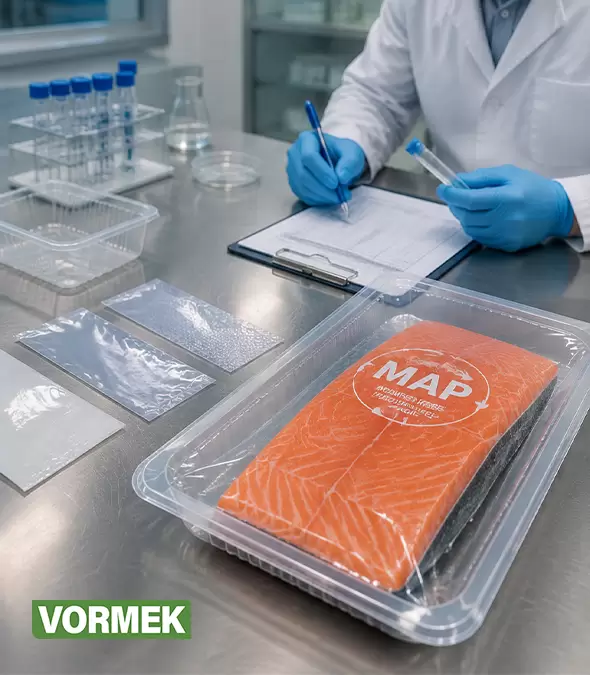
Modern dairy packaging combines several engineering disciplines, including hygienic machine design, modified atmosphere packaging (MAP), vacuum technology, precision filling, thermoforming, automation, and quality inspection. The success of a dairy production line increasingly depends on how effectively these technologies work together.
Vormek develops industrial packaging machinery specifically designed to support dairy manufacturers in meeting these challenges. From compact tray sealers for artisan producers to fully automatic MAP packaging lines for high-volume factories, Vormek solutions are engineered to protect product quality, reduce production downtime, and improve packaging consistency across a wide variety of dairy applications.
This guide explains the major packaging requirements of dairy products, the most common production challenges, and the packaging technologies that help processors improve efficiency while maintaining the highest food safety standards.
Dairy Packaging Solutions
Packaging requirements vary significantly across dairy products because each product has unique physical characteristics, moisture content, fat composition, microbial sensitivity, and expected shelf life. A packaging solution suitable for hard cheese may not provide adequate protection for fresh yogurt or dairy desserts. Selecting the appropriate packaging technology requires understanding both product characteristics and production objectives.
Why Packaging Matters in Dairy Production
Dairy products contain proteins, fats, carbohydrates, vitamins, minerals, and water in ideal proportions for microbial growth. Without proper packaging, these products rapidly deteriorate due to contamination, oxidation, moisture loss, flavor changes, and physical damage during transportation.
An effective dairy packaging system performs several critical functions simultaneously:
- Protects products from microbial contamination
- Prevents oxygen penetration
- Maintains product freshness
- Extends shelf life
- Preserves texture and flavor
- Improves logistics performance
- Enhances retail appearance
- Supports regulatory compliance
- Reduces food waste
- Builds consumer confidence
Packaging is therefore not simply a protective container but an essential part of the overall food preservation strategy.
Key Requirements of Dairy Packaging
Successful dairy packaging systems must satisfy multiple technical requirements throughout production, storage, transportation, retail display, and consumer use.
Excellent Seal Integrity
Seal quality directly influences shelf life.
Even microscopic seal defects may allow oxygen, bacteria, molds, or yeast to enter the package, significantly reducing product quality.
High-quality tray sealing equipment must deliver:
- Uniform sealing pressure
- Accurate temperature control
- Stable sealing time
- Consistent sealing across every package
- Reliable operation throughout continuous production
Modern servo-controlled tray sealers help maintain repeatable sealing performance while minimizing operator intervention.
Hygienic Machine Design
Food safety begins with machine design.
Packaging equipment used in dairy facilities should incorporate hygienic engineering principles such as:
- Stainless steel construction
- Smooth welds
- Easy-to-clean surfaces
- Minimal product accumulation areas
- Open-frame construction
- Wash-down compatibility
- Corrosion resistance
- Food-grade contact materials
These design principles reduce cleaning time while lowering contamination risks.
Shelf Life Extension
Many dairy manufacturers seek to increase distribution range without relying on additional preservatives.
Packaging technologies such as Modified Atmosphere Packaging (MAP), vacuum packaging, and high-barrier materials significantly slow spoilage mechanisms by controlling oxygen exposure and microbial growth.
The resulting benefits include:
- Longer distribution windows
- Reduced product returns
- Lower food waste
- Improved export opportunities
- Better inventory management
Attractive Retail Presentation
Consumers often evaluate dairy products visually before making purchasing decisions.
Professional packaging enhances:
- Product visibility
- Brand perception
- Freshness appearance
- Consumer trust
- Premium positioning
Clear trays, anti-fog films, clean seals, and accurate label positioning all contribute to stronger shelf appeal.
Dairy Products Suitable for Industrial Packaging
Industrial dairy packaging machinery supports a wide range of products across different production capacities.
| Dairy Product | Recommended Packaging |
|---|---|
| Yogurt | MAP Tray Sealer |
| Greek Yogurt | Automatic Tray Sealer |
| Cottage Cheese | MAP Tray Sealer |
| Cream Cheese | Tray Sealer |
| Labneh | Tray Sealer + Piston Filler |
| Butter Portions | Thermoforming Machine |
| Dairy Desserts | Tray Sealer + Piston Filler |
| Sour Cream | Tray Sealer |
| Fresh Cheese | MAP Packaging |
| Mozzarella | Vacuum Packaging |
| Processed Cheese | Thermoforming |
| Cheese Slices | Thermoforming Machine |
| Cheese Cubes | MAP Tray Sealer |
| Feta Cheese | Vacuum Chamber |
| Ricotta | MAP Packaging |
The Growing Demand for MAP in Dairy Packaging
Modified Atmosphere Packaging (MAP) has become one of the most important preservation technologies in modern dairy production.
Unlike conventional air packaging, MAP replaces atmospheric air with a carefully controlled gas mixture that slows spoilage while maintaining product quality.
For many dairy products, reducing oxygen concentration helps preserve:
- Fresh flavor
- Natural color
- Texture
- Nutritional quality
- Microbiological stability
The exact gas composition depends on product type, moisture content, microbial risk, and desired shelf life.
When combined with high-barrier packaging materials and reliable tray sealing equipment, MAP enables dairy manufacturers to distribute products over greater distances while maintaining freshness.
Packaging Materials for Dairy Applications
Selecting the correct packaging material is just as important as choosing the packaging machine.
Common materials include:
- PET trays
- PP trays
- Multi-layer barrier films
- EVOH barrier structures
- Peelable lidding films
- Recyclable mono-material solutions
- High-barrier thermoforming films
Material selection depends on:
- Oxygen transmission rate (OTR)
- Moisture barrier
- Product acidity
- Filling temperature
- Distribution conditions
- Storage duration
- Retail presentation requirements
Compatibility between the packaging machine and packaging materials is essential for achieving consistent sealing performance.
Automation Improves Dairy Production Efficiency
Automation has transformed dairy packaging by reducing labor dependency while improving consistency.
Modern automated packaging lines provide:
- Continuous production
- Higher output
- Better repeatability
- Lower product waste
- Reduced operator errors
- Improved traceability
- Stable package quality
Integrated systems can combine filling, tray denesting, sealing, MAP gas flushing, date coding, inspection, and outfeed handling into one synchronized production process.
This integrated approach helps manufacturers increase productivity while maintaining high hygienic standards.
Why Dairy Producers Choose Specialized Packaging Equipment
General-purpose packaging equipment often struggles to meet the demanding requirements of dairy processing.
Specialized dairy packaging machines are designed to handle:
- High sanitation requirements
- Frequent washdowns
- Sensitive dairy textures
- Temperature-controlled production
- High production volumes
- Precise filling accuracy
- Reliable MAP performance
- Continuous industrial operation
Investing in machinery specifically engineered for dairy applications helps reduce maintenance costs, improve uptime, and deliver consistent packaging quality throughout the product lifecycle.
Packaging Challenges in Dairy Processing
Packaging dairy products is considerably more demanding than packaging many other food categories. Milk-derived products contain high levels of moisture, proteins, fats, and nutrients that create an ideal environment for microbial growth. Even minor failures in packaging quality can shorten shelf life, increase food waste, trigger product recalls, and damage consumer trust.
Today’s dairy manufacturers must balance food safety, production efficiency, sustainability, and retail appeal while complying with increasingly strict food regulations. This requires packaging equipment that consistently delivers hygienic performance, accurate sealing, and stable operation under continuous production conditions.
The following sections examine the most common packaging challenges in dairy processing and the technologies used to overcome them.
Oxygen Exposure and Product Oxidation
Oxygen is one of the primary factors responsible for quality deterioration in many dairy products. Exposure to oxygen accelerates oxidation of milk fats, causing unpleasant flavors, color changes, and nutrient degradation. Oxidative reactions also shorten shelf life and reduce consumer acceptance.
Products such as cheese, butter, cream cheese, dairy desserts, and cultured dairy products are particularly sensitive to oxygen ingress.
Technical Solution
Reducing residual oxygen inside the package significantly slows oxidation. This is commonly achieved through:
- Modified Atmosphere Packaging (MAP)
- High-barrier packaging films
- Precision tray sealing
- Leak-free package design
- Continuous seal quality monitoring
A well-designed MAP system minimizes oxygen concentration while maintaining consistent gas composition throughout production.
Microbial Contamination
Foodborne microorganisms remain one of the greatest risks in dairy manufacturing.
Packaging areas may become contaminated through:
- Airborne microorganisms
- Operator handling
- Poor sanitation
- Equipment design
- Improper cleaning procedures
- Packaging material contamination
Fresh dairy products such as yogurt, labneh, cottage cheese, ricotta, and fresh mozzarella require particularly strict hygienic control.
Technical Solution
Packaging equipment should incorporate hygienic engineering principles including:
- Stainless steel construction
- Smooth surface finishes
- Easy access for sanitation
- Minimal horizontal surfaces
- Hygienic conveyor design
- Wash-down compatibility
- Food-grade components
Regular sanitation protocols combined with hygienically designed machinery significantly reduce contamination risks.
Seal Integrity Failures
A package is only as reliable as its seal.
Poor sealing remains one of the leading causes of premature dairy spoilage. Even microscopic defects may allow oxygen, moisture, bacteria, molds, or yeast to enter the package.
Seal failures commonly result from:
- Incorrect sealing temperature
- Uneven sealing pressure
- Inconsistent dwell time
- Contaminated sealing areas
- Film incompatibility
- Worn sealing tools
Technical Solution
Modern tray sealers use precise electronic control of:
- Temperature
- Pressure
- Sealing time
- Film positioning
Servo-controlled systems maintain repeatable sealing parameters even during long production runs, ensuring every package meets quality requirements.
Maintaining Product Freshness During Distribution
Many dairy products travel hundreds or even thousands of kilometers before reaching consumers.
Throughout transportation they may experience:
- Temperature fluctuations
- Mechanical vibration
- Compression loads
- Warehouse storage
- Retail display conditions
Packaging must preserve product quality throughout the entire cold chain.
Technical Solution
An effective packaging system combines:
- High-barrier materials
- Reliable sealing
- Proper gas composition
- Strong tray design
- Stable package geometry
These factors work together to maintain freshness from production to retail shelf.
Moisture Management
Moisture plays a dual role in dairy packaging.
Excess moisture may promote microbial growth and create condensation inside packages, while moisture loss can dry out cheese surfaces, alter texture, and reduce product weight.
Condensation inside transparent packages also negatively affects shelf appearance.
Technical Solution
Moisture management depends on selecting packaging materials with appropriate water vapor transmission characteristics while maintaining stable refrigeration conditions.
Anti-fog lidding films are widely used to improve product visibility by preventing condensation droplets from forming on package lids.
Packaging Different Dairy Products on One Production Line
Many dairy manufacturers package multiple products using a single production line.
Examples include:
- Yogurt
- Greek yogurt
- Labneh
- Cottage cheese
- Cream desserts
- Butter portions
- Cheese cubes
Each product may require different:
- Tray dimensions
- Filling volumes
- Packaging atmospheres
- Sealing parameters
Frequent changeovers can reduce productivity if equipment lacks flexibility.
Technical Solution
Flexible packaging machines provide:
- Quick mold changes
- Recipe management
- Adjustable sealing parameters
- Automatic format selection
- Tool-free adjustments
This minimizes downtime while supporting product diversification.
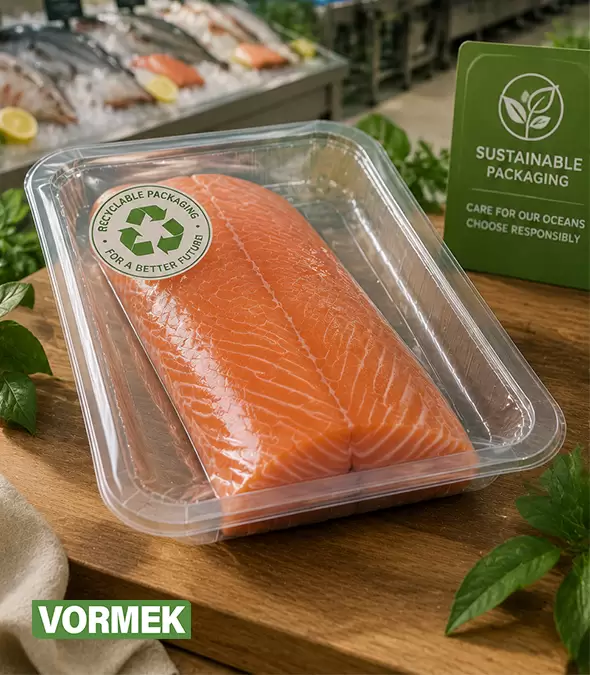
Packaging Sustainability
Consumers increasingly expect environmentally responsible packaging without compromising food safety.
Dairy manufacturers therefore seek packaging systems compatible with:
- Recyclable materials
- Mono-material packaging
- Reduced plastic consumption
- Lightweight trays
- Improved material utilization
However, sustainability initiatives must not reduce package performance.
Technical Solution
Modern packaging equipment should accommodate both conventional multilayer structures and newer recyclable materials while maintaining seal quality and production speed.
Production Downtime
Unexpected machine stoppages are costly in dairy production because products often have limited processing windows.
Downtime may lead to:
- Product waste
- Cleaning requirements
- Missed deliveries
- Labor inefficiencies
- Increased operational costs
Reliable packaging equipment plays a major role in maintaining continuous production.
Technical Solution
Industrial packaging systems should include:
- Robust mechanical design
- Preventive maintenance programs
- Easy access for servicing
- High-quality components
- Intelligent diagnostics
- Remote technical support where applicable
Reducing unplanned downtime directly improves overall equipment effectiveness (OEE).
Packaging Consistency
Consumers expect every package to look identical.
Variations in sealing quality, filling accuracy, film alignment, or package appearance reduce brand credibility.
Consistency is especially important for products displayed in refrigerated supermarket shelves where visual presentation influences purchasing decisions.
Technical Solution
Automation improves packaging consistency through:
- Accurate motion control
- Servo positioning
- Automated quality control
- Repeatable production parameters
- Reduced operator dependency
Packaging Challenges and Recommended Solutions
| Packaging Challenge | Potential Risk | Recommended Solution |
|---|---|---|
| Oxygen exposure | Oxidation and flavor deterioration | Modified Atmosphere Packaging (MAP) with high-barrier films |
| Microbial contamination | Reduced food safety and shelf life | Hygienic machine design and validated sanitation procedures |
| Seal defects | Package leakage and spoilage | Precision tray sealing with automatic control of temperature, pressure, and dwell time |
| Moisture imbalance | Condensation or product dehydration | Barrier materials combined with anti-fog lidding films |
| Multiple product formats | Frequent production interruptions | Flexible machinery with rapid tool change and recipe management |
| Temperature fluctuations | Shelf-life reduction during distribution | High-integrity packaging supported by continuous cold-chain management |
| Sustainability requirements | Material compatibility challenges | Packaging systems compatible with recyclable and mono-material packaging |
| Production downtime | Reduced productivity and increased operational cost | Reliable industrial equipment supported by preventive maintenance |
| Packaging inconsistency | Reduced retail appearance and consumer confidence | Automated packaging systems with repeatable process control |
Why Choosing the Right Packaging Machine Matters
Many packaging problems originate not from the packaging material itself but from selecting equipment that is not optimized for dairy production.
An appropriately engineered packaging machine should provide:
- Hygienic construction for food-contact environments
- Stable sealing performance throughout continuous operation
- Compatibility with MAP technology
- Support for a wide range of dairy products
- Flexible changeovers between packaging formats
- Reliable long-term operation with minimal maintenance requirements
- Consistent package quality that protects both product integrity and brand reputation
For dairy manufacturers seeking to improve efficiency, reduce waste, and extend product shelf life, investing in specialized packaging technology is often one of the most impactful decisions within the production process.
Recommended Vormek Machines
Selecting the right packaging equipment is one of the most important investment decisions for any dairy producer. The ideal machine depends on several factors, including product type, production capacity, shelf-life objectives, packaging format, automation level, and future expansion plans.
A modern dairy facility rarely relies on a single machine. Instead, manufacturers often integrate filling, tray sealing, thermoforming, vacuum packaging, quality inspection, and product handling into one efficient production line. This integrated approach improves productivity while ensuring consistent package quality and food safety.
Vormek develops industrial packaging solutions that support both small-scale dairy processors and high-capacity manufacturing facilities. Each machine is designed to provide hygienic construction, reliable operation, and compatibility with modern packaging materials and preservation technologies.
Automatic Tray Sealers
Automatic tray sealers are among the most versatile packaging solutions for dairy products. They package pre-formed trays by applying a heat-sealed lidding film, creating attractive, hygienic, and tamper-evident packages suitable for refrigerated distribution.
These machines are widely used for:
- Yogurt
- Greek yogurt
- Cottage cheese
- Cream cheese
- Sour cream
- Dairy desserts
- Labneh
- Fresh cheese
- Cheese cubes
- Ready-to-eat dairy meals
Advantages
Automatic tray sealers provide several operational benefits:
- Continuous production
- Consistent seal quality
- Reduced labor requirements
- High production efficiency
- Easy product changeover
- Accurate tray positioning
- Excellent retail presentation
Servo-controlled film transport and programmable sealing parameters ensure repeatable performance throughout long production runs.
MAP Tray Sealers
Modified Atmosphere Packaging (MAP) tray sealers represent the preferred solution for dairy manufacturers seeking extended shelf life while maintaining product quality.
The packaging cycle generally includes:
- Vacuum extraction
- Gas flushing
- Tray sealing
- Seal verification
Replacing atmospheric air with a controlled gas mixture slows oxidation and microbial growth, helping maintain freshness during refrigerated storage.
Typical Dairy Applications
MAP technology is commonly used for:
- Fresh mozzarella
- Cottage cheese
- Ricotta
- Cheese portions
- Dairy snack packs
- Fresh cheese
- Cheese cubes
- Premium yogurt products
Benefits
Compared with conventional air packaging, MAP offers:
- Longer refrigerated shelf life
- Improved product freshness
- Better flavor preservation
- Reduced oxidation
- Lower food waste
- Greater distribution flexibility
- Improved retail appearance
Thermoforming Packaging Machines
For large-scale dairy production, thermoforming machines provide one of the most efficient packaging solutions.
Unlike tray sealers that use pre-made trays, thermoforming machines create packages directly from rollstock film before filling and sealing.
The process includes:
- Film heating
- Package forming
- Product loading
- Vacuum or MAP packaging
- Heat sealing
- Cutting
- Finished package discharge
Suitable Dairy Products
Thermoforming systems are particularly effective for:
- Cheese slices
- Processed cheese
- Butter portions
- Portion-controlled dairy products
- Dairy snack packs
- Cheese blocks
- Industrial cheese packaging
Advantages
Thermoforming technology offers:
- High production capacity
- Reduced packaging material costs
- Flexible package design
- Excellent package consistency
- Efficient material utilization
- Automated production
- Premium shelf presentation
For manufacturers operating multiple shifts, thermoforming systems can significantly increase packaging throughput while lowering packaging cost per unit.
Vacuum Chamber Machines
Vacuum packaging removes air from the package before sealing, helping reduce oxidation and preserve product quality.
Although not suitable for every dairy product, vacuum packaging is widely used for products requiring compact, oxygen-free packaging.
Typical Applications
Vacuum chamber machines are commonly used for:
- Hard cheese
- Semi-hard cheese
- Feta cheese
- Parmesan
- Aged cheese
- Cheese blocks
- Bulk cheese for food service
- Industrial cheese ingredients
Benefits
Vacuum packaging provides:
- Excellent oxygen removal
- Reduced oxidation
- Compact package size
- Improved transportation efficiency
- Longer refrigerated shelf life
- Lower freezer burn risk
- Enhanced product protection
Heavy-duty vacuum pumps ensure stable vacuum performance throughout continuous production.
Piston Fillers
Many dairy products require accurate dosing before packaging.
Piston fillers are specifically designed for viscous and semi-viscous dairy products that cannot be filled efficiently using gravity alone.
Typical Products
Piston filling systems are ideal for:
- Yogurt
- Greek yogurt
- Labneh
- Cream cheese
- Dairy desserts
- Puddings
- Custards
- Thick cream
- Flavored yogurt
- Fruit yogurt
Advantages
Servo-controlled piston fillers provide:
- High filling accuracy
- Adjustable filling volume
- Clean product handling
- Minimal product waste
- Excellent repeatability
- Easy cleaning
- Hygienic construction
When integrated with automatic tray sealers, piston fillers create fully automated dairy packaging lines.
Gravity Fillers
Certain dairy products exhibit relatively low viscosity and flow easily under gravity.
Gravity fillers provide an efficient and economical solution for these applications.
Typical Applications
Gravity fillers are suitable for:
- Drinking yogurt
- Kefir
- Ayran
- Milk beverages
- Whey drinks
- Flavored milk
- Functional dairy beverages
Benefits
Gravity filling systems offer:
- Gentle product handling
- Simple operation
- High filling consistency
- Low maintenance requirements
- Cost-effective operation
- Hygienic filling process
These systems are particularly effective where product foaming must be minimized.
Integrated Dairy Packaging Lines
Modern dairy factories increasingly integrate multiple machines into a synchronized production line.
A complete packaging line may include:
- Cup or tray denester
- Automatic filler
- Tray sealer
- MAP system
- Date coding
- Checkweigher
- Metal detector
- Vision inspection
- Conveyor system
- Rotary accumulation table
Integration reduces manual handling while improving production speed and traceability.
Choosing the Right Machine for Each Dairy Product
| Dairy Product | Recommended Vormek Solution | Packaging Technology |
|---|---|---|
| Yogurt | Automatic Tray Sealer + Piston Filler | Tray Sealing |
| Greek Yogurt | Automatic Tray Sealer + Piston Filler | Tray Sealing |
| Drinking Yogurt | Gravity Filler | Liquid Filling |
| Kefir | Gravity Filler | Liquid Filling |
| Labneh | Piston Filler + Tray Sealer | Tray Sealing |
| Cream Cheese | Piston Filler + Tray Sealer | Tray Sealing |
| Cottage Cheese | MAP Tray Sealer | Modified Atmosphere Packaging |
| Ricotta | MAP Tray Sealer | Modified Atmosphere Packaging |
| Fresh Mozzarella | MAP Tray Sealer | Modified Atmosphere Packaging |
| Cheese Cubes | MAP Tray Sealer | Modified Atmosphere Packaging |
| Cheese Slices | Thermoforming Machine | Thermoforming |
| Butter Portions | Thermoforming Machine | Thermoforming |
| Processed Cheese | Thermoforming Machine | Thermoforming |
| Hard Cheese Blocks | Vacuum Chamber Machine | Vacuum Packaging |
| Feta Cheese | Vacuum Chamber Machine | Vacuum Packaging |
| Parmesan | Vacuum Chamber Machine | Vacuum Packaging |
Factors to Consider Before Selecting a Dairy Packaging Machine
Before investing in new equipment, dairy manufacturers should evaluate several technical and operational factors to ensure long-term performance and return on investment.
Production Capacity
The selected machine should match current production requirements while providing sufficient capacity for future growth. Oversized or undersized equipment can negatively impact efficiency and operating costs.
Product Characteristics
Viscosity, texture, fat content, acidity, filling temperature, and packaging format all influence machine selection. Equipment should be compatible with the physical properties of the dairy product being packaged.
Packaging Material Compatibility
Packaging machinery must support the barrier films, trays, lids, or rollstock materials required for the desired shelf life and distribution conditions.
Hygiene and Cleanability
Machines intended for dairy applications should feature hygienic stainless-steel construction, easy access for cleaning, and components designed to minimize contamination risks.
Automation and Integration
Manufacturers planning future expansion should consider equipment capable of integrating with fillers, conveyors, inspection systems, coding units, and automated handling equipment.
Service and Technical Support
Reliable after-sales service, spare parts availability, preventive maintenance programs, and technical training are essential for maximizing equipment uptime and long-term productivity.
By selecting packaging equipment that aligns with product requirements, production goals, and food safety standards, dairy manufacturers can improve operational efficiency, enhance product quality, and strengthen their competitive position in an increasingly demanding market.
Related Technical Guides
Choosing the right packaging technology involves more than selecting a machine. Dairy processors should also understand the technical principles that influence package performance, shelf life, hygiene, and production efficiency. The following resources provide additional guidance for manufacturers evaluating packaging solutions for dairy products.
Modified Atmosphere Packaging (MAP)
Modified Atmosphere Packaging is one of the most effective preservation technologies for refrigerated dairy products. By replacing atmospheric air with a carefully controlled gas mixture before sealing, MAP slows oxidation, inhibits microbial growth, and helps preserve flavor, texture, and appearance.
Recommended for:
- Cottage cheese
- Fresh cheese
- Mozzarella
- Ricotta
- Cheese cubes
- Premium yogurt products
Vacuum Packaging Technology
Vacuum packaging removes oxygen from the package before sealing, helping protect products that require extended refrigerated storage.
Ideal applications include:
- Hard cheese
- Parmesan
- Feta cheese
- Cheese blocks
- Industrial cheese ingredients
Hygienic Machine Design
Packaging equipment used in dairy production should comply with hygienic engineering principles that facilitate cleaning and minimize contamination risks.
Important design features include:
- Stainless steel construction
- Open-frame design
- Smooth welds
- Easy access for sanitation
- Food-grade product contact surfaces
- Corrosion resistance
High-Barrier Packaging Materials
Machine performance depends on selecting packaging materials compatible with product requirements.
Typical materials include:
- PET trays
- PP trays
- EVOH barrier films
- Peelable lidding films
- Thermoforming rollstock
- Recyclable mono-material structures
Selecting the correct barrier properties helps optimize oxygen transmission rate (OTR), moisture protection, and overall shelf life.
Preventive Maintenance
Reliable packaging performance depends not only on machine quality but also on proper preventive maintenance.
A preventive maintenance program helps:
- Reduce unexpected downtime
- Extend equipment lifespan
- Improve seal consistency
- Maintain production efficiency
- Lower long-term operating costs
Why Choose Vormek for Dairy Packaging?
Every dairy production facility has unique operational requirements. Vormek packaging solutions are engineered to provide the flexibility, reliability, and hygienic performance required by modern dairy manufacturers.
Industrial Engineering
Vormek machines are designed for continuous industrial operation with robust mechanical construction, precision components, and advanced control systems.
Hygienic Construction
Food-contact areas are manufactured using high-quality stainless steel and hygienic design principles that simplify cleaning and support food safety compliance.
Flexible Packaging Solutions
Whether packaging yogurt cups, cheese trays, butter portions, or dairy desserts, Vormek offers packaging technologies suitable for a broad range of production capacities and packaging formats.
Advanced Automation
Integrated automation options help manufacturers reduce labor dependency while improving production consistency and operational efficiency.
Technical Support
Comprehensive technical support, operator training, preventive maintenance programs, and spare parts availability help maximize equipment uptime throughout the machine lifecycle.
Get a Custom Quote
Every dairy production line has different packaging requirements based on product type, production capacity, packaging format, and shelf-life objectives.
Whether you are establishing a new dairy processing facility or upgrading an existing production line, selecting the appropriate packaging equipment requires careful technical evaluation.
The Vormek engineering team works closely with dairy manufacturers to recommend packaging solutions tailored to their production needs.
A technical consultation may include:
- Product evaluation
- Packaging method selection
- Machine recommendation
- Capacity analysis
- Production line layout suggestions
- Packaging material compatibility
- Automation options
- Future expansion planning
Contact the Vormek team to discuss your dairy packaging requirements and receive a customized proposal based on your production objectives.
Frequently Asked Questions (FAQ)
1. Which packaging machine is best for yogurt?
Automatic tray sealers combined with piston fillers are generally the preferred solution for yogurt because they provide accurate filling, hygienic sealing, and high production efficiency.
2. What is MAP in dairy packaging?
Modified Atmosphere Packaging (MAP) replaces the air inside the package with a controlled gas mixture to slow oxidation and microbial growth, helping extend refrigerated shelf life while maintaining product quality.
3. Which dairy products benefit most from vacuum packaging?
Vacuum packaging is commonly used for hard cheeses, Parmesan, feta, cheese blocks, and other products where oxygen removal helps preserve quality during storage and transportation.
4. Why is seal quality important?
Poor sealing can allow oxygen and microorganisms to enter the package, leading to spoilage, reduced shelf life, product waste, and customer complaints.
5. What packaging materials are commonly used for dairy products?
Common materials include PET trays, PP trays, EVOH barrier films, peelable lidding films, thermoforming rollstock, and recyclable mono-material packaging structures.
6. Can one packaging machine handle multiple dairy products?
Many modern packaging machines support multiple tray sizes, packaging formats, and production recipes, allowing manufacturers to package different dairy products on the same production line with minimal changeover time.
7. How does automation improve dairy packaging?
Automation improves consistency, reduces labor requirements, minimizes product waste, increases production capacity, and enhances traceability throughout the packaging process.
8. Which machine is suitable for butter portion packs?
Thermoforming machines are widely used for butter portions because they offer high production speeds, excellent package consistency, and efficient material utilization.
9. How can dairy manufacturers reduce packaging downtime?
Selecting reliable industrial equipment, implementing preventive maintenance programs, training operators, and using high-quality packaging materials all contribute to minimizing unplanned downtime.
10. What factors should be considered before purchasing a dairy packaging machine?
Manufacturers should evaluate product characteristics, production capacity, packaging format, shelf-life requirements, hygiene standards, automation needs, packaging materials, future expansion plans, and technical support availability.
Conclusion
Packaging plays a decisive role in the success of modern dairy manufacturing. Beyond protecting products during transportation, it directly influences food safety, shelf life, production efficiency, sustainability, and consumer confidence.
As dairy markets continue to evolve, manufacturers require packaging technologies that combine hygienic engineering, reliable sealing performance, flexible automation, and compatibility with advanced preservation methods such as Modified Atmosphere Packaging and vacuum packaging.
From yogurt and dairy desserts to cheese, butter, and cultured dairy products, selecting the appropriate packaging solution helps reduce waste, improve operational efficiency, and deliver consistently high product quality.
Vormek provides a comprehensive portfolio of industrial packaging machines—including automatic tray sealers, MAP systems, thermoforming machines, vacuum chamber machines, piston fillers, and gravity fillers—designed to meet the diverse requirements of dairy processors worldwide.
By combining advanced engineering, hygienic design, and dependable technical support, Vormek helps dairy manufacturers optimize production performance while delivering safe, attractive, and high-quality packaged products to consumers.