Explore Vormek packaging machines built for grains & cereals producers — MAP, vacuum and tray sealing solutions.
The grains and cereals industry requires packaging solutions that can maintain product quality, extend shelf life, and ensure consistent performance throughout distribution and retail operations. Although many grain-based products have relatively low moisture content and naturally longer shelf stability, they remain vulnerable to oxygen exposure, humidity, contamination, oxidation, and changes in texture.
This article provides a technical overview of modern grains and cereals packaging solutions, explaining the challenges faced by food manufacturers and introducing advanced packaging technologies such as MAP (Modified Atmosphere Packaging), vacuum packaging, tray sealing, and thermoforming systems.
The goal is to help grains and cereals producers understand how selecting the right packaging machine can improve product protection, optimize production efficiency, reduce waste, and create higher-value retail-ready products.
Introduction: The Importance of Advanced Packaging in the Grains & Cereals Industry
Grains and cereals represent one of the largest and most diverse segments of the global food industry. From rice, wheat-based products, and breakfast cereals to granola, seeds, pulses, and ready-to-eat cereal-based meals, manufacturers are continuously looking for better ways to preserve quality while meeting modern consumer expectations.
Today’s food market has changed significantly. Consumers no longer evaluate products only by price; they expect:
- Longer shelf life
- Safe and hygienic packaging
- Attractive presentation
- Convenient portion sizes
- Sustainable packaging formats
- Consistent product quality
For manufacturers, packaging has become much more than a protective layer. It is a critical part of the production process that directly influences product value, brand perception, logistics efficiency, and customer satisfaction.
A professional packaging system must protect cereals and grains against the main factors responsible for quality deterioration:
- Oxygen exposure
- Moisture absorption
- Loss of aroma and freshness
- Mechanical damage during transportation
- Microbial contamination
- Product oxidation
Modern packaging technologies allow producers to control these risks through precise sealing, controlled atmosphere solutions, and high-performance packaging materials.
Vormek develops advanced packaging machinery designed for food producers requiring reliable, efficient, and flexible solutions for grains and cereals applications. With technologies including Tray Sealing Machines, Vacuum Chamber Machines, Thermoforming Packaging Machines, and MAP systems, Vormek helps manufacturers achieve stable packaging quality and improved production performance.
Grains & Cereals Packaging Solutions
Selecting the correct packaging technology for grains and cereals depends on several important factors, including product characteristics, moisture level, fat content, expected shelf life, distribution conditions, and market requirements.
Different products require different packaging approaches. For example:
- Dry grains may require strong moisture and oxygen barriers.
- High-value cereals may require premium retail presentation.
- Products containing nuts, seeds, or oils may require protection against oxidation.
- Ready-to-eat cereal products may require MAP technology to maintain freshness.
A successful packaging solution should provide:
| Packaging Requirement | Importance for Grains & Cereals Products |
|---|---|
| Oxygen control | Prevents oxidation and quality loss |
| Moisture protection | Maintains texture and prevents spoilage |
| Strong sealing performance | Ensures package integrity during storage and transport |
| Attractive appearance | Improves retail visibility and consumer confidence |
| Production efficiency | Reduces downtime and increases output capacity |
MAP Packaging for Grains & Cereals Products
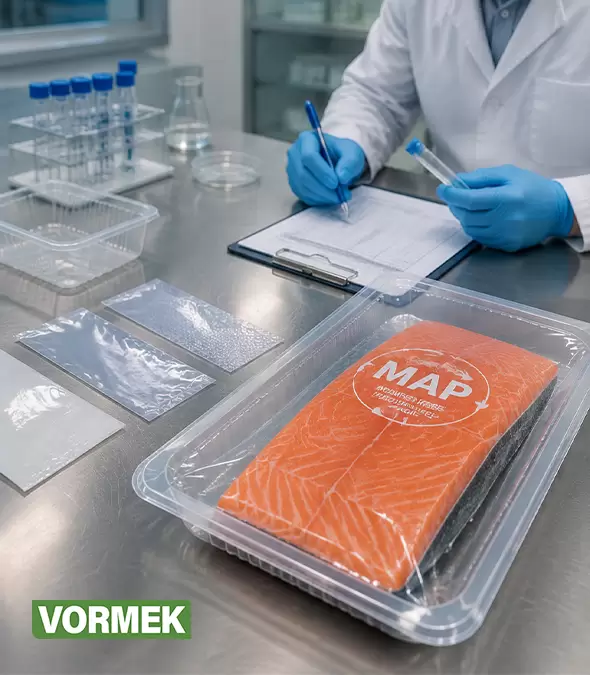
Modified Atmosphere Packaging (MAP) is one of the most effective technologies for controlling the internal environment of food packages.
During the MAP process, the air inside the package is replaced with a controlled gas mixture, typically including:
- Nitrogen (N₂)
- Carbon dioxide (CO₂)
- Controlled oxygen levels (O₂)
The objective is to slow down product deterioration and maintain quality during storage.
Although traditional dry grains often rely on conventional packaging methods, many modern cereal-based products can significantly benefit from MAP technology, including:
- Ready-to-eat cereal meals
- Fresh cereal mixes
- Grain-based salads
- Premium cereal products
- Mixed products containing seeds and nuts
The main advantages of MAP packaging include:
Extended Shelf Life
By reducing oxygen exposure and controlling the package atmosphere, MAP helps slow oxidation reactions and maintain product characteristics for a longer period.
Improved Product Quality
MAP can help preserve:
- Original flavor
- Fresh appearance
- Product texture
- Nutritional quality
Premium Retail Presentation
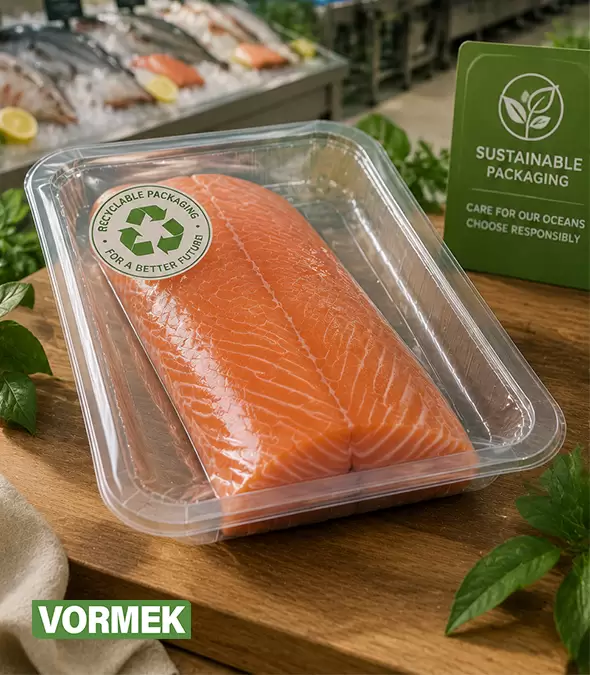
Tray-based MAP packaging provides a clean, professional appearance that supports premium positioning in supermarkets and export markets.
Vormek Tray Sealing Machines are designed to integrate MAP technology with precise sealing control, enabling manufacturers to produce reliable and attractive food packages.
Vacuum Packaging for Grains & Cereals
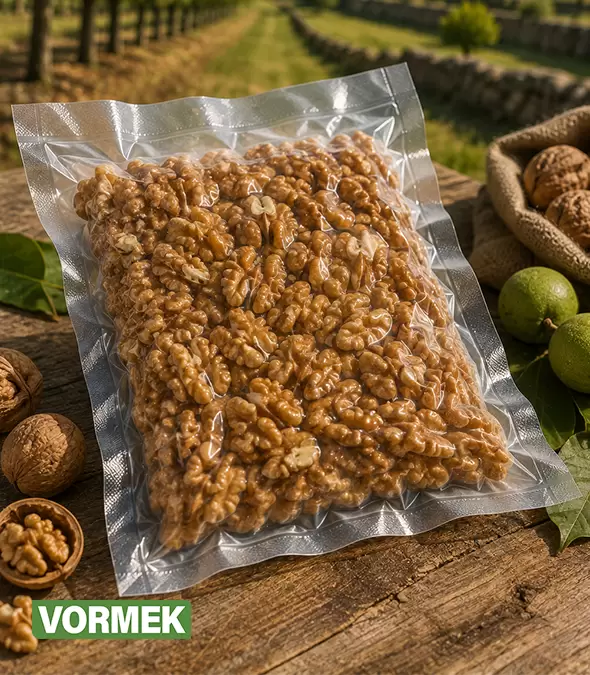
Vacuum packaging is another widely used solution for products requiring reduced oxygen exposure.
In a vacuum packaging process, air is removed from the package before sealing. This significantly reduces the presence of oxygen, helping protect products from oxidation and quality degradation.
Vacuum packaging is commonly used for:
- Rice products
- Premium grains
- Seeds
- Long-term storage products
- Export-oriented food products
The main benefits of vacuum packaging include:
| Benefit | Description |
|---|---|
| Reduced oxidation | Limits chemical reactions caused by oxygen |
| Longer shelf stability | Helps maintain product quality over extended periods |
| Better storage efficiency | Reduces package volume in many applications |
| Improved protection | Creates a controlled packaging environment |
For producers requiring flexibility and reliable performance, Vormek Vacuum Chamber Machines provide industrial vacuum solutions with accurate cycle control and consistent sealing results.
Tray Sealing Solutions for Grains & Cereals
Tray sealing has become increasingly popular in modern food packaging because it combines product protection with premium presentation.
Unlike traditional flexible packaging formats, tray packaging provides:
- Better product visibility
- Higher perceived value
- Convenient consumer handling
- Stronger protection during transportation
The tray sealing process includes several controlled stages:
- Product filling into the tray
- Tray positioning
- Film placement
- Heat sealing
- Optional vacuum or gas injection
- Finished package discharge
Tray sealing technology is suitable for various cereal and grain-based applications, such as:
- Ready-to-eat cereals
- Portion-sized cereal products
- Grain-based meals
- Premium food mixes
- Retail and export packages
Vormek Tray Sealer Machines offer manufacturers the ability to combine high-quality sealing with MAP technology, creating packages suitable for demanding food markets.
Packaging Challenges in Grains & Cereals Processing
The grains and cereals industry has unique packaging requirements because products can vary significantly in their physical structure, moisture content, fat composition, and storage requirements. A packaging solution that works effectively for dry rice may not provide the same performance for cereal mixes containing nuts, seeds, oils, or ready-to-eat grain products.
For food manufacturers, the main challenge is not only creating a sealed package but developing a complete packaging system that protects product quality from production until final consumption.
Modern packaging equipment must provide:
- Reliable sealing performance
- Consistent package quality
- Protection against environmental factors
- Compatibility with different packaging materials
- High production efficiency
- Easy integration with filling and automation systems
Moisture Control: The Key Challenge in Dry Grain Packaging
Moisture management is one of the most critical factors in grains and cereals packaging.
Most grain-based products require a controlled moisture environment because excessive humidity can negatively affect product quality.
Moisture migration may cause:
- Loss of crispness
- Product clumping
- Texture deterioration
- Mold growth
- Reduced shelf life
- Customer dissatisfaction
For example, breakfast cereals and crunchy cereal products require excellent moisture barrier properties because even a small amount of moisture absorption can reduce their characteristic texture.
To overcome this challenge, manufacturers must consider:
- High-barrier packaging films
- Proper sealing conditions
- Controlled storage environments
- Accurate packaging machine settings
A high-performance sealing system ensures that the package remains closed and protects the product throughout transportation and storage.
Vormek packaging machines are engineered with precise temperature control and sealing pressure management to achieve consistent package integrity across different production conditions.
Oxygen Exposure and Oxidation Control
Oxygen is another major factor affecting the quality of grains and cereal products.
Although many grains are naturally stable, products containing oils, seeds, nuts, or added ingredients are more sensitive to oxidation.
Oxidation can lead to:
- Development of off-flavors
- Loss of nutritional value
- Reduced freshness perception
- Shorter shelf life
Products particularly sensitive to oxidation include:
- Granola
- Muesli
- Seed-based mixes
- Cereal bars
- Multi-grain products
To reduce oxidation risks, manufacturers often use:
- MAP packaging
- Vacuum packaging
- High-barrier films
- Oxygen-controlled environments
MAP technology helps replace oxygen-rich air with protective gas mixtures, while vacuum packaging reduces the amount of oxygen remaining inside the package.
The correct solution depends on product characteristics, target shelf life, and distribution requirements.
Packaging Material Compatibility
Choosing the correct packaging material is essential for achieving successful grains and cereals packaging performance.
A packaging system must consider two important barrier properties:
Oxygen Transmission Rate (OTR)
OTR measures how much oxygen can pass through a packaging material over time.
Lower OTR values are preferred for products sensitive to oxidation.
Moisture Vapor Transmission Rate (MVTR)
MVTR indicates the ability of water vapor to penetrate packaging materials.
For dry products, maintaining low moisture transmission is essential to preserve:
- Crispness
- Texture
- Product stability
A packaging engineer must evaluate:
- Product characteristics
- Storage conditions
- Expected shelf life
- Distribution environment
- Packaging format
before selecting the final packaging material.
Maintaining Seal Quality and Package Integrity
A strong and reliable seal is one of the most important factors in food packaging performance.
Even when the correct packaging film is selected, poor sealing performance can result in:
- Air leakage
- Moisture penetration
- Reduced shelf life
- Product contamination
- Customer complaints
Common causes of poor sealing include:
| Problem | Possible Cause |
|---|---|
| Weak seal | Incorrect temperature or pressure |
| Film damage | Excessive sealing temperature |
| Leakage | Contaminated sealing area |
| Uneven sealing | Incorrect machine adjustment |
| Package deformation | Improper process parameters |
Professional packaging machines must maintain accurate control over:
- Sealing temperature
- Sealing time
- Pressure force
- Film feeding accuracy
Vormek Tray Sealing Machines use industrial control systems to maintain stable sealing performance and consistent output quality.
Production Speed and Automation Challenges
As food producers expand their markets, packaging speed becomes an important factor.
Traditional manual packaging processes may create several limitations:
- Higher labor dependency
- Inconsistent package quality
- Lower production capacity
- Increased operational costs
Modern manufacturers increasingly require automated packaging systems capable of handling:
- Continuous production
- Multiple package formats
- Different tray sizes
- Various film materials
- Integration with filling and inspection equipment
Automation solutions such as:
- Automatic Tray Sealers
- Thermoforming Packaging Machines
- Automated filling systems
- Conveyor integration
- Product handling systems
help producers achieve higher productivity while maintaining packaging consistency.
Product Variety and Flexible Packaging Requirements
One of the biggest challenges in grains and cereals production is product diversity.
Manufacturers may produce multiple products such as:
- Rice
- Lentils
- Beans
- Breakfast cereals
- Granola
- Seeds
- Grain-based snacks
- Ready-to-eat meals
Each product may require different packaging parameters.
For example:
| Product Type | Main Packaging Requirement | Recommended Technology |
|---|---|---|
| Rice | Long storage protection | Vacuum Packaging |
| Breakfast cereals | Moisture protection and presentation | Tray Sealing |
| Granola | Oxygen control | MAP Packaging |
| Grain salads | Freshness preservation | MAP Tray Sealing |
| Seeds and nuts mixes | Oxidation protection | Vacuum / MAP |
A flexible packaging machine allows manufacturers to adapt production according to market demand without investing in multiple independent systems.
Food Safety and Hygiene Requirements
Food safety is a fundamental requirement in modern grains and cereals processing.
Packaging equipment must support:
- Hygienic design
- Easy cleaning procedures
- Stainless steel construction
- Reduced contamination risk
- Stable production conditions
Industrial packaging machines used in food production are typically manufactured using materials such as:
- AISI 304 stainless steel
- AISI 316 stainless steel for specific applications
These materials provide:
- Corrosion resistance
- Easy sanitation
- Long service life
A well-designed packaging system reduces the risk of contamination while supporting compliance with international food safety expectations.
Choosing the Right Packaging Technology for Grains & Cereals
Selecting the correct packaging machine depends on several technical parameters:
Product Characteristics
Important considerations include:
- Moisture level
- Particle size
- Product density
- Fat content
- Sensitivity to oxygen
Production Requirements
Manufacturers should evaluate:
- Required output capacity
- Number of packaging formats
- Labor availability
- Future expansion plans
Market Requirements
Export and premium retail markets often require:
- Attractive packaging appearance
- Longer shelf life
- Strong package reliability
- Professional presentation
The right packaging technology should provide a balance between product protection, operational efficiency, and investment value.
Recommended Packaging Process for Different Grains & Cereals Applications
| Application | Main Challenge | Recommended Packaging Solution |
|---|---|---|
| Dry grains | Moisture protection | Vacuum Chamber Machine |
| Premium rice products | Long shelf life | Vacuum Packaging |
| Breakfast cereals | Texture preservation | Tray Sealer |
| Granola products | Oxidation control | MAP Packaging |
| Grain-based ready meals | Freshness maintenance | MAP Tray Sealing |
| Export products | Transportation protection | Vacuum / MAP Solutions |
Recommended Vormek Machines for Grains & Cereals Packaging
Choosing the right packaging machine is a critical decision for grains and cereals manufacturers because packaging performance directly affects product quality, production efficiency, and market competitiveness.
Vormek provides advanced food packaging solutions designed to meet the requirements of modern food processors, including:
- Tray Sealing Machines
- MAP Packaging Systems
- Vacuum Chamber Machines
- Thermoforming Packaging Machines
- Automated filling and handling solutions
Each technology is designed according to different product characteristics, production volumes, and shelf-life requirements.
1. Vormek Tray Sealing Machines for Grains & Cereals
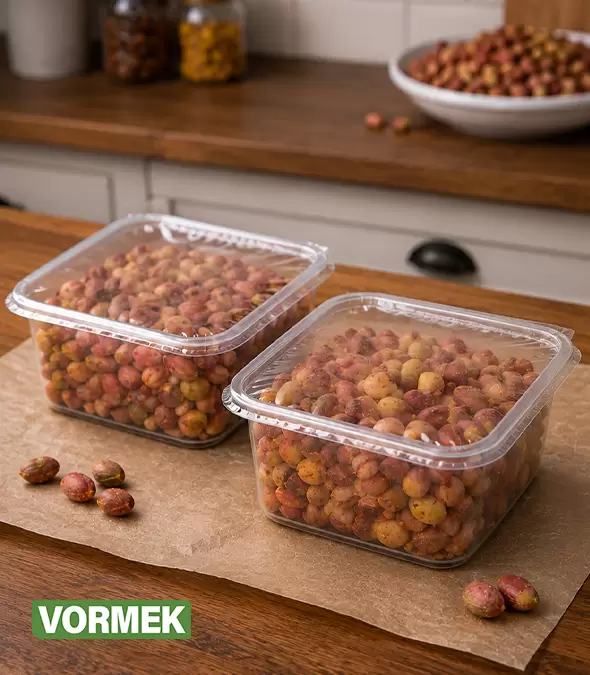
Tray sealing technology has become one of the preferred solutions for food manufacturers seeking premium packaging formats with reliable sealing performance.
A Tray Sealer creates a secure package by sealing a flexible film onto a rigid tray. Depending on the product requirements, the process can include:
- Heat sealing
- Vacuum packaging
- Modified Atmosphere Packaging (MAP)
- Printed or transparent films
- Automated tray handling
For grains and cereals producers, tray sealing is particularly suitable for:
- Premium cereal products
- Ready-to-eat grain meals
- Portion-controlled cereal packages
- Grain salads
- Food mixes containing seeds and nuts
Key Advantages of Vormek Tray Sealing Machines
Consistent Sealing Quality
A stable sealing process is essential for maintaining product freshness. Vormek machines provide accurate control of:
- Temperature
- Sealing pressure
- Cycle time
- Film movement
This ensures repeatable package quality throughout production.
MAP Integration Capability
For products requiring extended shelf life, Vormek Tray Sealers can integrate MAP technology by replacing internal air with controlled gas mixtures.
This solution helps manufacturers protect:
- Product freshness
- Flavor characteristics
- Texture
- Nutritional quality
Flexible Packaging Formats
Modern food producers often need to handle multiple products and package sizes.
Vormek Tray Sealers can be configured for:
- Different tray dimensions
- Various sealing films
- Multiple production requirements
- Semi-automatic or automatic operation
2. Vormek Vacuum Chamber Machines for Grain Products
Vacuum packaging remains one of the most effective solutions for products requiring strong protection against oxygen exposure.
Vormek Vacuum Chamber Machines remove air from the package before sealing, creating a controlled environment that helps maintain product quality during storage.
Suitable Applications
Vacuum packaging is commonly used for:
- Rice
- Premium grains
- Seeds
- Pulses
- Export-oriented dry food products
- Long-term storage products
Technical Benefits of Vacuum Packaging
| Feature | Benefit |
|---|---|
| Oxygen reduction | Helps prevent oxidation |
| Strong sealing system | Improves package reliability |
| Flexible bag sizes | Suitable for different products |
| Industrial construction | Designed for continuous operation |
| Controlled vacuum cycle | Provides consistent results |
For manufacturers producing high-value grains or export products, vacuum packaging can significantly improve product stability and reduce quality losses during transportation.
3. Vormek Thermoforming Packaging Machines for Advanced Cereal Applications
Thermoforming technology provides a highly flexible packaging solution for manufacturers requiring continuous production and customized packaging formats.
In thermoforming systems, packaging material is formed directly from film rolls, creating the package shape before filling and sealing.
This technology allows manufacturers to produce:
- Customized package designs
- Different tray depths
- Various product formats
- High-volume production runs
Thermoforming Applications in Grains & Cereals
Thermoforming machines are suitable for:
- Ready-to-eat cereal meals
- Grain-based prepared foods
- Multi-component food products
- Portion packaging
- Retail and export products
The main advantages include:
- Reduced packaging material waste
- High production efficiency
- Continuous operation
- Integration with automatic filling systems
4. Automated Packaging Solutions for High-Volume Producers
Large-scale grains and cereals manufacturers require packaging systems capable of maintaining high output while ensuring consistent quality.
Vormek automation solutions can include:
- Automatic tray loading
- Film feeding systems
- Gas injection units
- Product conveyors
- Denesting systems
- Checkweighing integration
- Automatic discharge systems
Automation provides several operational advantages:
Reduced Labor Dependency
Automated systems minimize manual handling and reduce the possibility of human errors.
Higher Production Stability
Continuous machine control ensures:
- Consistent package dimensions
- Stable sealing performance
- Predictable production output
Easier Production Expansion
A modular packaging system allows manufacturers to increase capacity as market demand grows.
Selecting the Right Vormek Machine Based on Product Type
The correct packaging solution depends on product characteristics and business objectives.
| Product | Main Packaging Challenge | Recommended Vormek Solution |
|---|---|---|
| Rice | Long-term storage and oxygen protection | Vacuum Chamber Machine |
| Breakfast cereals | Moisture protection and attractive presentation | Tray Sealer |
| Granola | Oxidation control | MAP Tray Sealer |
| Seeds and grain mixes | Protection against oxygen and humidity | Vacuum / MAP Packaging |
| Ready-to-eat cereal meals | Freshness and extended shelf life | Automatic Tray Sealer with MAP |
| Export grain products | Transportation durability | Vacuum Packaging |
Packaging Line Integration for Grains & Cereals Manufacturers
A modern packaging line is not only a single machine; it is an integrated production system designed to improve efficiency from product filling to final packaging.
A complete grains and cereals packaging solution may include:
- Product preparation
- Accurate dosing or filling
- Tray or package formation
- Vacuum or MAP process
- Sealing operation
- Quality inspection
- Final product handling
Vormek solutions can be adapted according to production requirements, allowing manufacturers to build efficient packaging lines for different product categories.
Why Packaging Machine Selection Matters for Food Producers
Investing in packaging equipment is a long-term decision. The selected machine affects:
- Production costs
- Product quality
- Customer satisfaction
- Brand reputation
- Export capability
A low-quality packaging system may create hidden costs through:
- Product returns
- Packaging failures
- Production downtime
- Increased maintenance requirements
A professionally engineered packaging solution provides greater reliability and supports sustainable business growth.
Key Factors Before Purchasing a Grains & Cereals Packaging Machine
Before selecting a packaging machine, manufacturers should evaluate:
1. Product Properties
Consider:
- Moisture content
- Product sensitivity
- Shelf-life target
- Packaging environment
2. Production Capacity
Important questions include:
- How many packages are required per hour?
- Is future expansion expected?
- Is automation required?
3. Packaging Format
Manufacturers should define:
- Tray packaging or flexible packaging
- Vacuum or MAP requirements
- Retail or industrial packaging needs
4. After-Sales Support
Reliable technical support is essential for maintaining continuous production.
A packaging machine supplier should provide:
- Installation support
- Operator training
- Spare parts availability
- Technical consultation
Vormek focuses on providing complete packaging solutions that support manufacturers throughout the entire equipment lifecycle.
Related Technical Guides
For manufacturers looking to improve their packaging processes, the following technical topics are highly relevant:
- MAP Packaging Technology for Food Products – Understanding gas mixtures, oxygen control, and packaging materials helps producers maximize shelf life and maintain product quality.
- Vacuum Packaging Principles – Vacuum technology plays an important role in reducing oxidation and improving storage stability.
- Food Packaging Film Selection – Choosing the correct film structure is essential for achieving proper barrier performance and reliable sealing.
- Tray Sealing Machine Selection Guide – Understanding production capacity, automation level, and packaging requirements helps manufacturers select the most suitable equipment.
- Shelf Life Extension Strategies – Combining suitable packaging technology with correct storage conditions creates better product performance.
Get a Custom Quote for Grains & Cereals Packaging Machines
Selecting the right packaging equipment is not only a technical decision; it is a strategic investment that directly influences production efficiency, product quality, and long-term business growth.
Every grains and cereals manufacturer has different requirements based on:
- Product characteristics
- Production capacity
- Packaging format
- Target market
- Shelf-life expectations
- Automation requirements
Vormek provides customized packaging solutions based on each producer’s specific needs. Our engineering approach focuses on developing reliable systems that combine:
- Advanced packaging technology
- Food-grade machine design
- Stable production performance
- Flexible configuration options
- Long-term operational reliability
Whether you require a Tray Sealing Machine for premium cereal products, a Vacuum Chamber Machine for long-term storage applications, or an automated MAP packaging solution, Vormek helps you select the right technology for your production goals.
Technical Comparison of Grains & Cereals Packaging Technologies
Different packaging technologies provide different advantages depending on product requirements.
| Packaging Technology | Best Suitable Products | Main Function | Key Advantages |
|---|---|---|---|
| Tray Sealing | Breakfast cereals, ready meals, grain mixes | Sealing products inside rigid trays | Premium appearance, reliable sealing, retail-ready packaging |
| MAP Packaging | Fresh cereal products, grain-based meals, premium mixes | Controlled atmosphere inside package | Extended shelf life, freshness protection |
| Vacuum Packaging | Rice, grains, seeds, export products | Oxygen removal before sealing | Oxidation reduction, longer storage stability |
| Thermoforming | High-volume cereal and food producers | Continuous package production | High efficiency, flexible formats |
Frequently Asked Questions (FAQ)
1. What is the best packaging machine for grains and cereals?
The best packaging machine depends on the product type, shelf-life requirements, and production capacity.
For dry grains such as rice and pulses, vacuum packaging is often an effective solution because it reduces oxygen exposure and improves storage stability.
For premium cereal products, ready-to-eat meals, and retail products, Tray Sealing Machines with MAP capability can provide better presentation and freshness protection.
2. Can MAP packaging be used for cereal products?
Yes. MAP technology can be used for several cereal-based products, especially those requiring freshness preservation and extended shelf life.
Applications include:
- Ready-to-eat cereal meals
- Grain-based salads
- Fresh cereal mixes
- Products containing seeds and nuts
MAP works by replacing normal air inside the package with a controlled gas mixture, reducing oxidation and improving product stability.
3. How does vacuum packaging improve grain shelf life?
Vacuum packaging removes air from inside the package before sealing, reducing oxygen availability.
This helps:
- Slow oxidation
- Protect product quality
- Reduce deterioration during storage
- Improve transportation performance
Vacuum packaging is particularly beneficial for high-value grains, rice products, and export applications.
4. What packaging materials are recommended for grains and cereals?
The correct packaging material depends on the product characteristics and required shelf life.
Important properties include:
- Low oxygen transmission rate (OTR)
- Low moisture vapor transmission rate (MVTR)
- Strong sealing compatibility
- Mechanical resistance
Products sensitive to oxidation typically require high-barrier films, while dry products require strong moisture protection.
5. What factors should be considered before buying a cereal packaging machine?
Manufacturers should evaluate:
- Product type
- Required production speed
- Packaging format
- Automation level
- Future expansion plans
- Technical support availability
Choosing the correct machine based only on initial price may lead to higher operational costs in the future.
A professional evaluation should consider total ownership cost, including:
- Maintenance
- Energy consumption
- Downtime risks
- Production reliability
6. Can Vormek packaging machines be customized for different cereal products?
Yes. Packaging solutions can be adapted according to specific production requirements.
Customization options may include:
- Different tray formats
- Various sealing films
- MAP integration
- Automatic feeding systems
- Conveyor systems
- Additional quality control equipment
This flexibility allows manufacturers to create packaging lines suitable for their current and future products.
7. What is the difference between Tray Sealing and Thermoforming packaging?
Tray Sealing uses pre-made trays that are filled and sealed with a film.
Advantages:
- Faster implementation
- Premium package appearance
- Suitable for many retail applications
Thermoforming creates the package directly from roll stock material.
Advantages:
- High production efficiency
- Reduced packaging material cost
- Suitable for large-scale production
The correct choice depends on production volume, packaging design, and investment strategy.
8. How can packaging equipment improve food production efficiency?
Modern packaging machines improve efficiency by:
- Reducing manual operations
- Increasing production speed
- Improving package consistency
- Reducing product waste
- Minimizing sealing failures
Automation also provides better production control and helps manufacturers maintain consistent quality standards.
Quality and Performance Checklist Before Selecting Packaging Equipment
Before investing in a grains and cereals packaging machine, manufacturers should review the following checklist:
| Evaluation Area | Important Questions |
|---|---|
| Product Analysis | Does the machine match product characteristics? |
| Packaging Method | Is vacuum, MAP, or sealing technology required? |
| Production Capacity | Can the machine meet current and future demand? |
| Material Compatibility | Does it support required packaging films? |
| Hygiene Design | Is the machine suitable for food production environments? |
| Maintenance | Are technical services and spare parts available? |
| Expansion Capability | Can additional automation be integrated later? |
The Future of Grains & Cereals Packaging
The future of food packaging is moving toward smarter, more efficient, and more sustainable solutions.
Key trends shaping the industry include:
Increased Automation
Manufacturers are adopting automated packaging systems to improve productivity and reduce operational dependency.
Longer Shelf Life Requirements
Global distribution and export markets require packaging technologies that maintain product quality for longer periods.
Premium Retail Packaging
Consumers increasingly associate packaging appearance with product quality and brand value.
Sustainable Packaging Development
Food producers are exploring packaging materials and technologies that reduce waste while maintaining product protection.
Smart Manufacturing
Integration of digital monitoring, automation, and production data analysis is becoming increasingly important for modern packaging lines.
Conclusion
The grains and cereals industry requires packaging solutions that combine product protection, operational efficiency, and market appeal.
From traditional grains such as rice and pulses to modern cereal products, manufacturers need packaging technologies capable of maintaining freshness, preventing quality deterioration, and supporting competitive growth.
Advanced solutions such as:
- MAP Packaging
- Vacuum Packaging
- Tray Sealing
- Thermoforming Packaging
provide manufacturers with the flexibility needed to meet different product and market requirements.
Vormek develops food packaging machines designed to support grains and cereals producers with reliable performance, precise packaging control, and scalable solutions.
By selecting the right packaging technology, manufacturers can achieve:
- Longer shelf life
- Improved product quality
- Reduced waste
- Higher production efficiency
- Stronger market positioning
For producers looking to upgrade their grains and cereals packaging process, Vormek provides customized engineering solutions designed around real production challenges and long-term business objectives.