Introduction
Grain products including rice, wheat, flour, cereals, pulses, seeds, and dry food ingredients require advanced packaging systems to maintain quality, safety, and commercial value throughout the supply chain.
Although grains are naturally considered stable products due to their relatively low moisture content, they remain sensitive to environmental conditions. Moisture migration, oxygen exposure, temperature fluctuations, and pest infestation are among the most important factors that can reduce shelf life and compromise product quality.
In modern food processing industries, packaging is no longer only a method of containing a product. It is a controlled protection system designed to maintain the physical, chemical, and microbiological stability of food products from production until final consumption.
A successful grain packaging solution must provide:
- Moisture barrier protection
- Pest resistance
- Oxygen control when required
- Mechanical protection
- Reliable sealing performance
- Consistent package quality
Moisture is one of the primary challenges in grain packaging because grains are hygroscopic materials. They naturally absorb water vapor from the surrounding environment. Even a small increase in moisture content can negatively influence texture, storage stability, microbial safety, and overall product quality.
For example:
- Cereals may lose crispness and develop undesirable texture changes.
- Flour may experience clumping and reduced processing performance.
- Seeds can lose quality due to oxidation and moisture absorption.
- Pulses may become more susceptible to microbial deterioration.
Pest contamination is another major concern in grain storage and distribution. Insects such as weevils, beetles, and moths can damage packaging structures, contaminate food products, and create significant economic losses.
Therefore, effective grain packaging requires a combination of:
- High-barrier packaging films
- Proper sealing technology
- Accurate filling systems
- Controlled storage conditions
- Continuous quality monitoring
This article explains the major causes of moisture and pest damage in grain packaging, evaluates suitable packaging materials, and describes how modern packaging technologies help grain and cereal processors improve shelf life, reduce waste, and maintain product consistency.
Why Moisture and Pest Protection Matter in Grain Packaging
The Importance of Moisture Control in Grain Products
Moisture control is one of the most important factors affecting grain quality during storage.
Grains are hygroscopic products, meaning they naturally exchange moisture with the surrounding environment. When the external humidity is higher than the moisture balance of the product, water vapor can gradually move through the packaging structure.
This moisture transfer can change the internal package environment and increase the risk of:
- Mold growth
- Microbial activity
- Texture deterioration
- Reduced shelf life
- Unpleasant odors
- Product quality loss
The stability of grain products depends not only on total moisture content but also on water activity (aw).
Water activity represents the amount of available water inside the product that can participate in biological and chemical reactions.
Lower water activity generally improves storage stability, while increased available moisture creates better conditions for:
- Microorganism growth
- Chemical reactions
- Insect development
For this reason, professional grain packaging systems are designed to control moisture migration by combining suitable barrier films with reliable sealing performance.
The Role of Packaging in Preventing Pest Damage
Grain products provide a highly attractive environment for storage insects because they contain nutrients required for pest development.
Common grain pests include:
- Weevils
- Grain beetles
- Moths
- Other storage insects
Pest contamination may occur through several pathways:
- Weak packaging films
- Micro holes in the package
- Poor sealing quality
- Mechanical damage during transportation
- Improper storage conditions
A properly designed package creates a physical protection barrier that reduces the possibility of insect penetration.
However, pest prevention depends on the complete packaging system, not only the film structure.
The main protection factors include:
- Packaging material strength
- Seal integrity
- Package handling quality
- Storage environment management
Even a high-performance barrier film cannot provide sufficient protection if the sealing process creates weak points.
Common Storage Risks That Affect Grain Quality
1. Moisture Migration Through Packaging Films
Moisture migration occurs when water vapor moves from a high-humidity environment toward a lower-humidity environment through the packaging material.
The speed of moisture transfer depends on:
- Water Vapor Transmission Rate (WVTR)
- Film structure
- Film thickness
- Storage temperature
- Relative humidity
- Seal quality
A packaging film with insufficient moisture barrier properties allows external humidity to enter the package over time.
The consequences may include:
- Loss of product texture
- Reduced shelf life
- Mold formation
- Changes in appearance
- Lower customer acceptance
For example:
Cereal products require excellent moisture protection because humidity can quickly reduce crispness and consumer quality perception.
Flour products require moisture control because absorption of water vapor can create clumping and affect production performance.
2. Temperature Fluctuations During Storage and Transportation
Temperature changes throughout the supply chain can significantly affect packaged grain products.
During transportation, packages may experience different environments:
- Production facilities
- Warehouses
- Distribution centers
- Retail storage areas
Rapid temperature changes can create condensation inside the package.
Internal condensation increases available moisture and may accelerate:
- Mold development
- Product degradation
- Packaging failure
- Pest activity
Therefore, packaging design must consider the complete distribution chain rather than only the filling operation.
3. Pest Infestation and Packaging Failure Points
Even when grains are processed under hygienic conditions, pests may enter through weak packaging areas.
Common failure points include:
- Damaged film surfaces
- Poor-quality seals
- Weak package edges
- Incorrect handling procedures
The sealing area is one of the most critical parts of the package because it represents the final barrier between the product and the external environment.
Consistent sealing performance is essential for maintaining long-term product protection.
4. Oxygen Exposure and Quality Reduction
Although moisture is usually the primary concern in grain packaging, oxygen exposure can also influence certain products.
Oxygen may contribute to:
- Oxidation of natural oils
- Flavor deterioration
- Reduced freshness
- Nutritional quality reduction
This is especially important for:
- Seeds
- Grain mixtures
- Cereals containing nuts
- Oil-rich dry food products
For these applications, oxygen barrier properties should be considered together with moisture protection requirements.
Barrier Film Requirements for Long-Term Grain Protection
Selecting the correct packaging film is one of the most important decisions in grain packaging design. A packaging material must provide sufficient protection against moisture, oxygen, light, and physical damage while maintaining mechanical strength during filling, transportation, and storage.
Unlike many short-life food products, grain and cereal products often require extended storage stability. They may remain in warehouses, distribution centers, and retail environments for weeks or months. Therefore, packaging materials must be selected based on:
- Product sensitivity
- Target shelf life
- Storage conditions
- Distribution climate
- Packaging machine compatibility
A high-performance packaging structure creates a controlled internal environment that reduces moisture migration, prevents contamination, and protects product quality.
The main barrier properties required for grain packaging include:
- Water Vapor Transmission Rate (WVTR)
- Oxygen Transmission Rate (OTR)
- Mechanical resistance
- Puncture resistance
- Heat sealing performance
- Light protection
- External contamination resistance
Understanding WVTR and Moisture Barrier Performance
What Is WVTR in Grain Packaging?
Water Vapor Transmission Rate (WVTR) is one of the most important indicators for evaluating moisture barrier performance.
WVTR measures the amount of water vapor that passes through a packaging film under controlled conditions over a specific period.
A lower WVTR value indicates better moisture protection.
For moisture-sensitive grain products, selecting a film with appropriate WVTR performance helps maintain:
- Stable moisture content
- Longer shelf life
- Better texture
- Reduced microbial risk
Moisture Barrier Requirements for Different Grain Products
Different grain products have different moisture sensitivity levels.
| Product Category | Main Moisture Risk | Recommended Packaging Approach |
|---|---|---|
| Cereals | Loss of crispness and texture changes | High moisture barrier laminated films |
| Flour | Clumping and processing problems | Strong moisture-resistant packaging structures |
| Rice | Quality deterioration during long storage | PE-based or laminated barrier films |
| Seeds | Moisture absorption and quality reduction | High barrier films with oxygen protection |
| Grain mixtures | Combined moisture and oxidation risks | Multi-layer barrier structures |
The correct packaging material should always be selected according to the specific product characteristics rather than using a single solution for all grain applications.
Understanding Oxygen Barrier Performance (OTR)
Why Oxygen Control Matters in Grain Packaging
Oxygen Transmission Rate (OTR) measures how easily oxygen passes through a packaging material.
Although moisture is usually the main concern in grain packaging, oxygen control becomes important for products containing natural oils.
Examples include:
- Seeds
- Granola products
- Cereal mixes with nuts
- Specialty grain products
High oxygen exposure may cause:
- Lipid oxidation
- Rancidity development
- Flavor deterioration
- Reduced nutritional value
For these products, a packaging structure must provide both moisture and oxygen protection.
Choosing the Right Packaging Materials for Cereals and Dry Foods
Grain packaging films are commonly produced using single-layer or multi-layer structures. Each material provides specific advantages depending on the application.
Polyethylene (PE)
Polyethylene is one of the most widely used materials in food packaging due to its flexibility, sealing performance, and moisture resistance.
Advantages:
- Excellent heat sealing capability
- Good moisture barrier properties
- Flexible structure
- Cost-effective solution
- Suitable for various packaging formats
PE is commonly used as a sealing layer in laminated structures because of its reliable heat-sealing performance.
However, standard PE films may require additional layers when higher oxygen or mechanical protection is required.
Polypropylene (PP)
Polypropylene provides higher stiffness and good visual appearance compared with many polyethylene structures.
Advantages:
- Good mechanical strength
- High clarity
- Improved package appearance
- Resistance to handling damage
Biaxially oriented polypropylene (BOPP) is frequently used as an external layer in dry food packaging.
Common applications include:
- Breakfast cereals
- Snack products
- Dry mixes
- Premium grain products
Polyester (PET)
PET is commonly used as a structural layer in multi-layer packaging systems.
Advantages:
- Excellent mechanical stability
- High tensile strength
- Good dimensional stability
- Suitable for high-quality printing
- Improved oxygen barrier performance
PET is usually combined with PE or other sealing materials to create complete protective packaging structures.
Aluminum Barrier Layers
For applications requiring maximum protection, aluminum layers provide extremely strong barrier performance.
Advantages:
- Very low moisture transmission
- Excellent oxygen barrier
- Light protection
- Extended shelf life capability
Typical applications include:
- Long shelf-life grain products
- Export products
- Premium dry food packaging
However, aluminum barrier structures may increase packaging cost and reduce transparency.
Recommended Film Structures for Grain Packaging
| Film Structure | Main Function | Suitable Applications |
|---|---|---|
| PE | Moisture protection and reliable sealing | Rice, flour, basic grain packaging |
| BOPP/PE | Appearance, strength, moisture control | Cereals, pasta, dry foods |
| PET/PE | Mechanical strength and improved barrier | Premium grain products |
| PET/AL/PE | Maximum moisture and oxygen protection | Long-term storage and export applications |
| BOPP/CPP | Printability and sealing performance | Snack grains and cereal products |
Packaging Film Selection Criteria for Grain Processors
Before selecting a packaging material, manufacturers should evaluate:
- ✓ Product moisture sensitivity
- ✓ Required shelf life
- ✓ Storage humidity conditions
- ✓ Transportation distance
- ✓ Export requirements
- ✓ Film barrier performance
- ✓ Sealing temperature range
- ✓ Compatibility with packaging equipment
A correct film selection reduces:
- Product waste
- Quality complaints
- Storage losses
- Packaging failures
and improves overall supply chain reliability.
The Importance of Packaging Machine Compatibility
Packaging film performance depends not only on material selection but also on the packaging equipment used in production.
Important machine factors include:
- Accurate temperature control
- Stable sealing pressure
- Consistent film feeding
- Correct product dosing
- Reliable package handling
A high-quality film combined with unstable machine performance may still result in weak seals or inconsistent packages.
For grain and cereal processors, integrated packaging systems improve:
- Production efficiency
- Package consistency
- Product protection
Advanced solutions such as Mechoris Visco support controlled product handling where accuracy and gentle processing are required.
In addition, WeightControl systems help manufacturers improve filling accuracy, reduce product giveaway, and maintain compliance with declared package weights.
Sealing Techniques That Keep Grains Dry and Protected
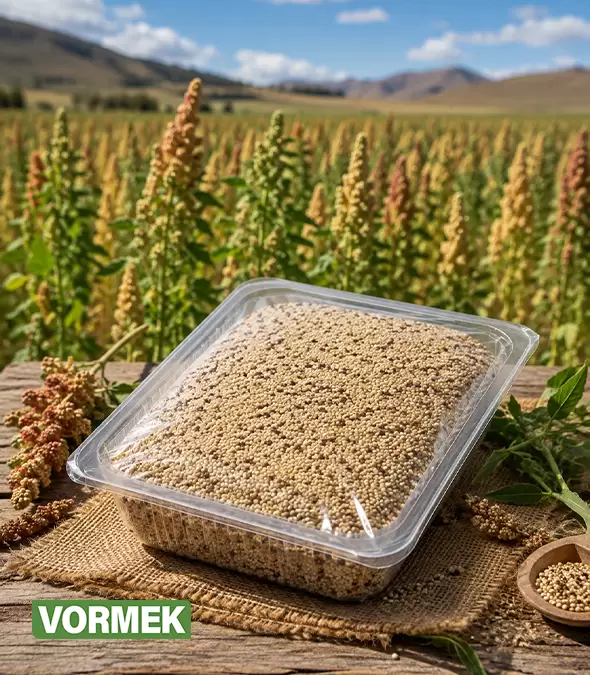
The sealing process is one of the most critical stages in grain packaging because it determines whether the package can maintain its protective barrier throughout storage, transportation, and final distribution.
Even the most advanced moisture barrier film cannot provide complete protection if the sealing process is inconsistent or defective. A weak seal can create pathways for:
- Moisture penetration
- Pest entry
- Oxygen exchange
- External contamination
- Product quality deterioration
For grain and cereal processors, seal integrity directly affects:
- Shelf life
- Food safety
- Product appearance
- Customer satisfaction
- Brand reputation
A professional grain packaging system must ensure that every package maintains a strong and continuous barrier from the production line to the consumer.
Heat Sealing Technology in Grain Packaging
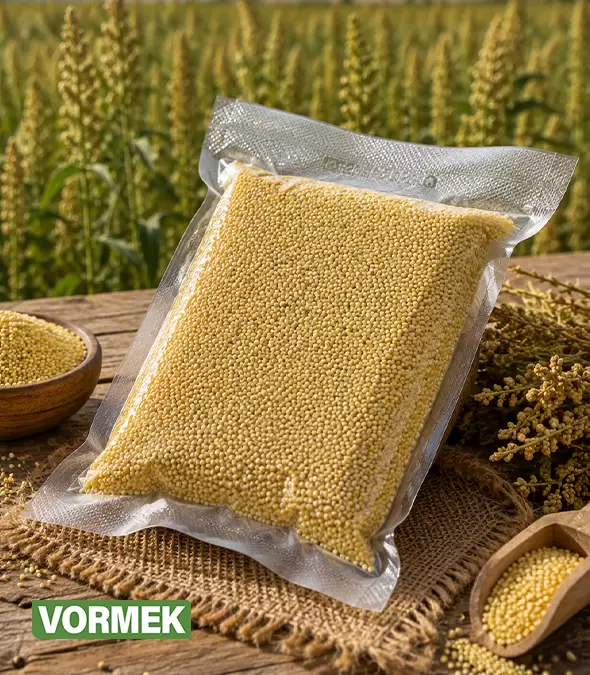
Heat sealing is one of the most common closure methods used for dry food and grain packaging applications.
During heat sealing, controlled heat and pressure create a permanent bond between compatible polymer layers of the packaging film.
A successful heat sealing process depends on several technical parameters:
- Sealing temperature
- Sealing pressure
- Sealing time
- Film structure
- Machine stability
- Cleanliness of the sealing area
When these parameters are properly controlled, packaging manufacturers can achieve:
- Strong package integrity
- Reduced moisture transfer
- Improved pest protection
- Lower packaging failure rates
Critical Sealing Parameters for Moisture Protection
1. Sealing Temperature Control
Sealing temperature must be carefully adjusted according to the packaging material structure.
Different polymer layers require different temperature ranges to achieve proper bonding.
For example:
- PE-based films usually require lower sealing temperatures.
- Multi-layer laminated films may require higher temperatures because of their structure.
- Barrier films require precise temperature control to prevent deformation.
Incorrect temperature settings can create significant problems.
Insufficient sealing temperature may cause:
- Weak bonding
- Incomplete seals
- Channel leaks
- Increased moisture penetration risk
Excessive sealing temperature may cause:
- Film deformation
- Seal damage
- Reduced mechanical strength
- Poor package appearance
Modern industrial packaging machines use advanced temperature control systems such as PID controllers to maintain stable sealing performance during continuous operation.
2. Sealing Pressure Uniformity
Pressure distribution across the sealing surface plays a key role in creating a reliable package barrier.
If pressure is insufficient, the sealing layers may not fully contact each other.
Possible results include:
- Uneven sealing
- Micro leakage points
- Weak package areas
- Reduced shelf life
On the other hand, excessive pressure can damage sensitive packaging structures.
A mechanically stable sealing system ensures uniform pressure distribution and improves package reliability.
3. Sealing Time and Heat Transfer
The sealing time must provide enough heat transfer to create a strong polymer bond without damaging the film.
If sealing time is too short:
- Film layers may not bond properly.
- Seal strength decreases.
If sealing time is too long:
- Production efficiency decreases.
- Film deformation may occur.
Industrial packaging systems optimize sealing time based on:
- Film thickness
- Material composition
- Production speed
- Product requirements
The Importance of a Clean Sealing Area
One of the most common causes of packaging failure in grain applications is contamination in the sealing area.
During filling operations, small particles such as:
- Grain dust
- Flour particles
- Broken cereals
- Powder residues
may enter the sealing zone and prevent proper bonding.
Contaminated seals can create:
- Weak sealing points
- Moisture pathways
- Pest entry opportunities
- Reduced package integrity
To maintain reliable sealing performance, manufacturers should focus on:
- Accurate filling systems
- Controlled product movement
- Proper package positioning
- Regular cleaning of sealing components
How Packaging Design Prevents Pest Damage
Pest protection depends on more than the strength of the packaging film.
A complete pest protection strategy includes:
Strong Packaging Structure
Durable packaging materials reduce the possibility of:
- Film puncture
- Tearing
- Mechanical damage
during handling and transportation.
Reliable Edge Sealing
The edges and sealing areas are among the most vulnerable parts of a package.
A consistent seal creates a continuous barrier that prevents insects and external contaminants from entering.
Controlled Packaging Environment
Food residues around the sealing area can reduce seal quality.
Maintaining hygienic packaging conditions helps improve:
- Seal performance
- Food safety
- Package reliability
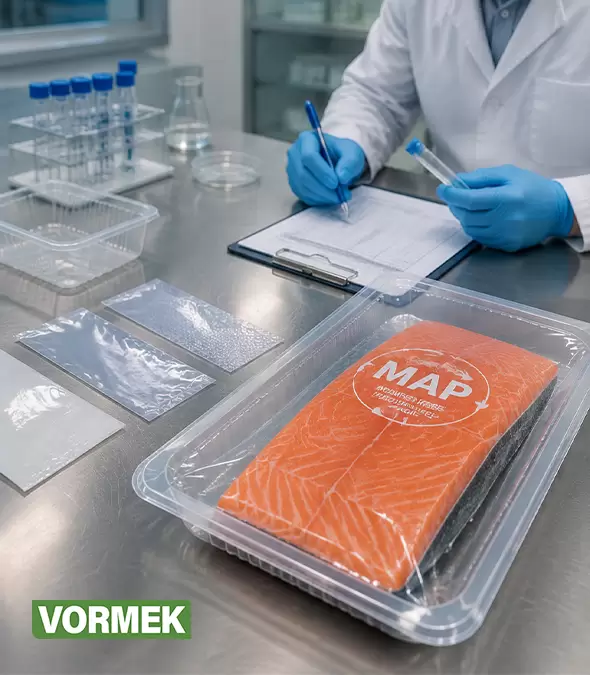
Modified Atmosphere Packaging (MAP) for Selected Grain Products
Modified Atmosphere Packaging (MAP) can improve the stability of certain grain-based products by controlling the internal atmosphere of the package.
However, MAP is not necessary for every grain product.
Its application depends on:
- Product composition
- Moisture sensitivity
- Fat content
- Oxygen sensitivity
- Storage conditions
MAP is particularly useful for products such as:
- Seeds
- Grain mixtures
- Cereals containing nuts
- Premium dry food products
Potential benefits include:
- Reduced oxidation
- Improved freshness
- Extended shelf life
- Better protection of sensitive ingredients
The gas composition should always be selected according to the product requirements rather than applying a universal solution.
The Role of Automation in Grain Packaging Quality
Modern grain processors increasingly use automated packaging systems to improve production consistency and reduce operational losses.
Manual packaging processes may create variations in:
- Filling weight
- Sealing quality
- Package appearance
- Production speed
Automation improves control over critical production parameters and creates a more reliable packaging process.
Improving Filling Accuracy and Reducing Product Giveaway
Accurate filling is essential for grain packaging because small weight variations can create significant financial losses in high-volume production.
Automated weight control systems help manufacturers monitor:
- Filling accuracy
- Package consistency
- Production efficiency
Solutions such as WeightControl help reduce product giveaway while maintaining compliance with declared package weights.
Benefits include:
- Reduced raw material waste
- Better cost management
- Improved customer confidence
- More consistent production output
Product Handling Systems in Grain Packaging Lines
Grain products have different physical characteristics and require suitable handling solutions.
Examples include:
- Fine powders such as flour
- Small particles such as rice and pulses
- Fragile cereal pieces
- Mixed grain products
Poor handling can lead to:
- Product breakage
- Excessive dust generation
- Uneven filling
- Contamination of sealing areas
Controlled product handling improves both packaging quality and operational efficiency.
Technologies such as Mechoris Visco support accurate product handling where consistency and gentle processing are important.
Complete Packaging System Approach for Moisture Prevention
Preventing moisture and pest damage requires a complete packaging strategy rather than focusing on only one component.
An effective system combines:
- Correct barrier film selection
- Reliable sealing technology
- Accurate filling process
- Controlled storage conditions
- Continuous quality inspection
The protection chain can be summarized as:
External Environment
↓
High Barrier Packaging Film
↓
Reliable Heat Seal
↓
Controlled Internal Conditions
↓
Protected Grain Product
This integrated approach reduces quality losses and improves shelf-life performance.
Quality Control Methods for Grain Packaging Lines
Professional grain packaging operations require continuous inspection to maintain package integrity.
Important quality control methods include:
Seal Strength Testing
Seal strength testing evaluates whether packages can withstand:
- Transportation stress
- Warehouse handling
- Distribution conditions
Leak Detection
Leak testing identifies:
- Micro leaks
- Weak sealing areas
- Packaging defects
Early detection prevents defective packages from reaching customers.
Weight Verification
Weight verification ensures every package meets declared specifications.
Incorrect weight can lead to:
- Regulatory issues
- Financial losses
- Customer dissatisfaction
Integrated quality control systems improve production reliability and reduce packaging waste.
Technical Comparison: Grain Packaging Protection Methods
Selecting the correct packaging solution depends on several factors, including product sensitivity, required shelf life, storage environment, transportation conditions, and production requirements.
A successful grain packaging system must balance:
- Moisture protection
- Pest resistance
- Mechanical strength
- Packaging efficiency
- Cost effectiveness
The following comparison provides an overview of common packaging approaches used for grain and cereal products.
| Packaging Method | Moisture Protection | Pest Protection | Shelf Life Performance | Typical Applications |
|---|---|---|---|---|
| Standard PE Packaging | Medium | Medium | Suitable for short and medium storage periods | Basic grain products, local distribution |
| BOPP/PE Laminated Packaging | High | High | Improved storage stability | Cereals, rice, pulses, dry foods |
| PET/PE Barrier Packaging | Very High | High | Suitable for premium products | Export products, specialty cereals |
| PET/AL/PE High Barrier Packaging | Excellent | Excellent | Maximum protection for extended shelf life | Long-term storage products |
| MAP Packaging | High | High | Suitable for sensitive products | Seeds, grain mixes, premium dry foods |
Moisture Risk Assessment in Grain Packaging
Understanding moisture risk helps manufacturers select the correct packaging structure.
| Moisture Risk Level | Storage Condition | Potential Problem | Recommended Solution |
|---|---|---|---|
| Low Risk | Dry climate, short storage period | Limited quality changes | Standard moisture-resistant packaging |
| Medium Risk | Variable humidity conditions | Gradual moisture absorption | Laminated barrier films |
| High Risk | Tropical or humid environments | Mold, texture loss, reduced shelf life | High-barrier multi-layer structures |
| Very High Risk | Long-term storage and export | Severe quality deterioration | Advanced barrier packaging with strong sealing |
Practical Checklist for Preventing Moisture and Pest Damage
Grain processors can significantly reduce packaging failures by following a structured quality management approach.
Packaging Material Selection
- ✓ Select films based on product moisture sensitivity
- ✓ Evaluate WVTR and OTR performance
- ✓ Consider required shelf life
- ✓ Check mechanical resistance
- ✓ Confirm compatibility with packaging equipment
Filling Process Control
- ✓ Prevent product particles from entering the sealing area
- ✓ Maintain accurate filling performance
- ✓ Reduce dust generation
- ✓ Ensure stable product flow
Sealing Process Management
- ✓ Maintain correct sealing temperature
- ✓ Verify sealing pressure consistency
- ✓ Control sealing time
- ✓ Perform regular seal strength testing
- ✓ Inspect packages for leakage and defects
Storage Management
- ✓ Control warehouse humidity
- ✓ Prevent extreme temperature fluctuations
- ✓ Maintain proper inventory rotation
- ✓ Protect finished packages from mechanical damage
Common Mistakes That Reduce Grain Packaging Performance
Even advanced packaging materials can fail if the overall packaging process is not properly controlled.
1. Selecting Packaging Materials Only Based on Price
One of the most common mistakes is choosing packaging films only according to initial cost.
Low-cost films may provide insufficient protection in demanding environments, especially in:
- High humidity regions
- Long-distance transportation
- Export applications
The consequences may include:
- Reduced shelf life
- Higher product waste
- Customer complaints
- Increased operational costs
A professional approach evaluates the total cost of ownership, including product losses and quality risks.
2. Ignoring Seal Integrity
Many packaging failures are caused by weak seals rather than poor film quality.
A small sealing defect can allow:
- Moisture penetration
- Pest entry
- Oxygen exchange
- External contamination
Regular machine inspection and sealing parameter control are essential for maintaining package integrity.
3. Incorrect Packaging Machine Settings
Incorrect machine parameters can reduce packaging performance.
Common problems include:
- Excessive sealing temperature
- Insufficient sealing pressure
- Incorrect film tension
- Unstable filling speed
Modern automated packaging systems help minimize these issues through precise control of production parameters.
4. Neglecting Storage Conditions
Even high-quality packaging requires proper storage management.
Poor storage conditions can increase the risk of:
- Moisture accumulation
- Condensation
- Pest activity
- Product deterioration
Packaging protection and warehouse management must work together to maintain grain quality.
How Vormek Supports Advanced Grain and Cereal Packaging
Grain and cereal processors require packaging solutions that combine reliability, efficiency, and consistent product protection.
Vormek develops industrial packaging technologies designed to support food manufacturers in achieving:
- Reliable production performance
- Improved packaging consistency
- Reduced product losses
- Better shelf-life management
For companies operating in the Grains & Cereals industry, selecting the correct combination of packaging materials, filling technology, sealing systems, and quality control solutions is essential for maintaining product quality from production line to consumer.
Advanced solutions such as Mechoris Visco support controlled and accurate product handling where consistency and gentle processing are important.
In addition, WeightControl solutions help manufacturers improve filling accuracy, reduce product giveaway, and maintain compliance with package weight requirements.
By integrating:
- High-barrier packaging films
- Reliable sealing technology
- Accurate filling systems
- Automated quality control
grain processors can achieve:
- Lower product losses
- Improved shelf-life stability
- Higher production efficiency
- Better customer satisfaction
Frequently Asked Questions (FAQ)
1. Why is moisture protection important in grain packaging?
Moisture protection prevents water absorption, microbial growth, texture changes, and shelf-life reduction. Since grains are hygroscopic products, they can absorb humidity from the surrounding environment if packaging barriers are insufficient.
2. What packaging film is best for grain products?
The best packaging film depends on the product type, storage conditions, and required shelf life. Multi-layer structures such as BOPP/PE, PET/PE, and PET/AL/PE provide stronger moisture and oxygen protection compared with basic films.
3. How does packaging prevent pest damage in grains?
Packaging prevents pest damage by creating a physical barrier through strong film structures and reliable sealing systems. Proper sealing reduces the possibility of insect penetration and external contamination.
4. What causes moisture failure in grain packaging?
The main causes include:
- Low-barrier packaging films
- Weak sealing performance
- Incorrect sealing parameters
- Damaged packages
- Poor storage conditions
5. Can MAP improve grain product shelf life?
MAP can improve shelf stability for selected grain-based products, especially products sensitive to oxidation such as seeds and cereal mixtures. The correct gas composition depends on product characteristics.
6. How does automation improve grain packaging quality?
Automation improves packaging consistency by controlling filling accuracy, sealing parameters, and production speed. This reduces human error and improves product reliability.
7. What quality checks are important in grain packaging?
Important quality checks include:
- Seal strength testing
- Leak detection
- Weight verification
- Film inspection
- Package integrity testing
Conclusion
Preventing moisture and pest damage in grain packaging requires a complete protection strategy rather than relying on a single packaging component.
The combination of high-barrier films, reliable sealing technology, accurate filling systems, and controlled storage conditions creates a strong defense against quality deterioration.
For grain and cereal processors, packaging performance directly influences:
- Shelf life
- Food safety
- Production efficiency
- Brand reputation
Selecting the correct packaging materials and integrating advanced packaging technologies allows manufacturers to reduce losses and deliver consistent product quality throughout the supply chain.
Modern grain packaging is not simply about containing a product. It is about creating a controlled protection system that maintains freshness, prevents contamination, improves operational efficiency, and supports long-term business growth.
By applying professional packaging principles and using advanced solutions such as those provided by Vormek, grain processors can achieve higher reliability, improved quality control, and stronger market competitiveness.