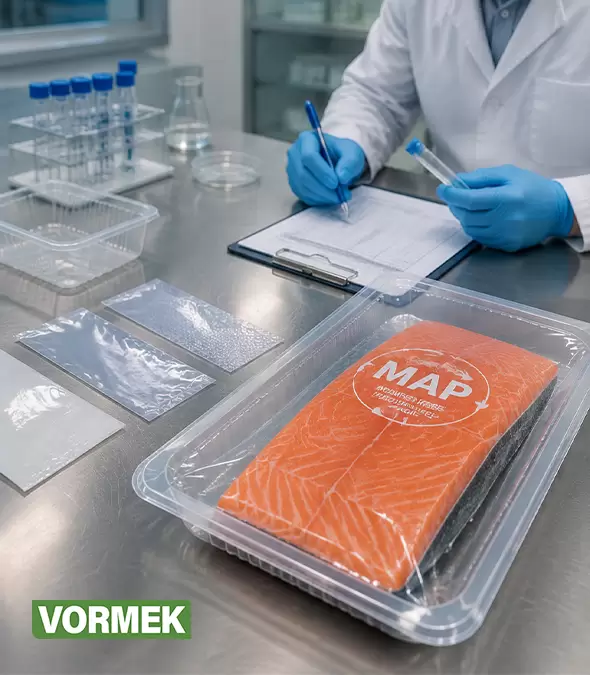
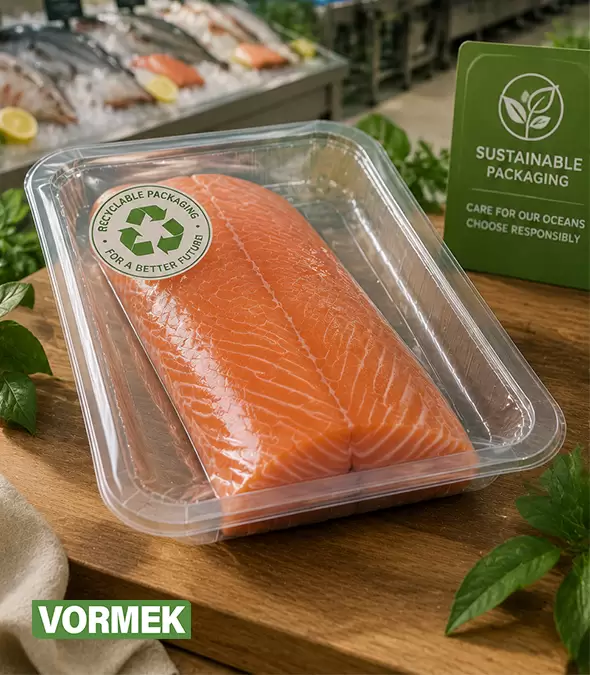
The poultry industry operates under some of the most demanding food safety and quality standards in modern food manufacturing. Fresh chicken, turkey, duck, and other poultry products are highly perishable due to their elevated moisture content, neutral pH, and susceptibility to microbial growth. As consumer expectations for freshness continue to rise and retailers demand longer distribution windows, packaging has evolved into a strategic manufacturing process rather than simply a method of containing food.
Modern poultry packaging systems must preserve freshness, minimize contamination risks, maintain product appearance, extend refrigerated shelf life, reduce waste, and improve operational efficiency—all while complying with international food safety regulations.
At Vormek, we design advanced poultry packaging machines engineered specifically for fresh poultry processors, integrated poultry plants, food service suppliers, and retail packaging facilities. Our portfolio includes high-performance tray sealers, Modified Atmosphere Packaging (MAP) systems, vacuum packaging machines, hygienic cleaning solutions, and complete automated packaging lines that help manufacturers optimize production while protecting product quality.
Whether packaging whole chickens, chicken breasts, wings, thighs, drumsticks, marinated products, turkey portions, or value-added poultry meals, Vormek provides scalable packaging technologies designed for demanding industrial environments.
Poultry Packaging Solutions
Packaging poultry products requires considerably more than producing an attractive retail package. Every stage—from product handling to sealing—must contribute to food safety, shelf-life stability, and efficient logistics.
An effective poultry packaging solution integrates several engineering disciplines simultaneously:
- Hygienic machine design
- Controlled atmosphere management
- Leak-free sealing
- High-speed automation
- Cold chain compatibility
- Food-grade materials
- Easy sanitation
- Production flexibility
The objective is not simply to package poultry—it is to preserve its microbiological integrity throughout transportation, storage, retail display, and consumer handling.
Why Poultry Packaging Is Different
Compared with many other food categories, poultry presents unique packaging challenges because raw poultry naturally carries microorganisms that require strict control throughout processing.
Packaging systems must therefore reduce contamination risks while slowing microbial growth without compromising product quality.
Several factors make poultry one of the most technically demanding food categories:
| Packaging Requirement | Importance |
|---|---|
| High hygiene standards | Prevent cross-contamination |
| Strong hermetic seals | Prevent oxygen ingress and leakage |
| Controlled gas atmosphere | Slow spoilage microorganisms |
| Moisture retention | Reduce weight loss and purge |
| Attractive presentation | Improve retail sales |
| High production speed | Support industrial throughput |
| Reliable package integrity | Protect products throughout distribution |
Every packaging parameter influences shelf life, customer satisfaction, and operational profitability.
Packaging Objectives Throughout the Poultry Supply Chain
A properly engineered poultry packaging process achieves multiple objectives simultaneously.
Food Safety
The primary goal is reducing opportunities for contamination after primary processing.
Packaging equipment should be designed with hygienic principles such as:
- Stainless steel construction
- Open-frame architecture
- Sloped surfaces
- Minimal product traps
- Easy cleaning access
- Washdown compatibility
Combined with validated sanitation procedures, these features significantly reduce microbial accumulation.
Shelf-Life Extension
Fresh poultry deteriorates rapidly because spoilage bacteria multiply efficiently under refrigerated conditions.
Modified Atmosphere Packaging (MAP) reduces microbial activity by replacing atmospheric air with optimized gas mixtures.
When correctly implemented, MAP can:
- Slow bacterial growth
- Preserve meat appearance
- Reduce oxidation
- Maintain texture
- Extend refrigerated shelf life
- Reduce retail waste
However, packaging performance depends on selecting the appropriate gas composition, barrier films, sealing quality, and storage temperature.
Product Appearance
Consumers often judge freshness before reading the label.
Packaging must therefore preserve:
- Natural color
- Surface moisture
- Texture
- Transparency
- Clean package presentation
Excess purge, fogging, collapsed trays, or weak seals negatively affect purchasing decisions.
Anti-fog films, high-clarity top webs, and precise tray sealing all contribute to stronger shelf appeal.
Operational Efficiency
Packaging equipment should increase productivity while minimizing downtime.
Modern poultry facilities benefit from automated systems capable of:
- High sealing consistency
- Fast changeovers
- Automatic tray indexing
- Precise temperature control
- Recipe management
- Production monitoring
Automation also reduces labor dependency while improving packaging consistency.
Typical Poultry Products Suitable for Industrial Packaging
Modern poultry processors package a wide variety of fresh and value-added products.
Typical applications include:
- Whole chickens
- Chicken breasts
- Chicken thighs
- Drumsticks
- Wings
- Boneless portions
- Skin-on fillets
- Marinated poultry
- Breaded poultry
- Ready-to-cook poultry
- Turkey breast
- Turkey portions
- Duck meat
- Poultry giblets
- Mixed poultry packs
- Family-size retail trays
- Food service bulk packs
Each application requires different tray dimensions, barrier films, sealing parameters, and gas compositions.
Packaging Technologies Used in Poultry Processing
Different products require different packaging methods depending on distribution channels, shelf-life targets, and customer requirements.
Modified Atmosphere Packaging (MAP)
MAP is one of the most widely adopted technologies for fresh poultry.
After evacuating atmospheric air, the package is flushed with a carefully controlled protective gas mixture before sealing.
Benefits include:
- Extended refrigerated shelf life
- Reduced spoilage
- Better retail presentation
- Reduced product waste
- Improved distribution flexibility
When combined with high-barrier films and reliable sealing technology, MAP becomes one of the most effective preservation methods for fresh poultry.
Vacuum Packaging
Vacuum packaging removes oxygen before sealing the package.
This solution is especially suitable for:
- Bulk poultry
- Food service products
- Export shipments
- Further processing operations
- Frozen poultry
Advantages include:
- Compact packaging
- Excellent product protection
- Reduced freezer burn
- Lower oxidation
- Improved transport efficiency
Tray Sealing
Tray sealing remains the preferred retail packaging format worldwide.
Rigid trays provide:
- Product protection
- Attractive merchandising
- Labeling flexibility
- Consumer convenience
- Excellent sealing reliability
Modern tray sealing systems support:
- Standard sealing
- Vacuum sealing
- Modified Atmosphere Packaging
- Skin packaging (where applicable)
High-speed tray sealers also enable continuous production with minimal interruption.
Why Packaging Equipment Selection Matters
Choosing packaging machinery based solely on purchase price often leads to higher operating costs over the equipment’s lifetime.
Industrial poultry processors should evaluate:
- Production capacity
- Hygiene design
- Service accessibility
- Seal consistency
- Automation level
- Energy efficiency
- Gas consumption
- Changeover time
- Maintenance requirements
- Future production expansion
A packaging machine is a long-term manufacturing asset rather than a short-term purchasing decision.
Well-designed equipment contributes directly to:
- Lower operating costs
- Higher Overall Equipment Effectiveness (OEE)
- Reduced downtime
- Improved product consistency
- Better return on investment
Integrated Packaging Lines
Many modern poultry facilities no longer operate standalone packaging machines.
Instead, packaging systems are integrated with upstream and downstream automation, including:
- Portioning systems
- Weighing equipment
- TrayFlow automatic tray handling
- Labeling systems
- Checkweighers
- Metal detection
- Cartoning
- Palletizing
An integrated production line minimizes manual handling while improving throughput and traceability.
Packaging Challenges in Poultry Processing
Raw poultry is among the most microbiologically sensitive food products processed on an industrial scale. Unlike many processed foods, fresh poultry cannot rely on heat treatment or preservatives after packaging to ensure safety. Consequently, the packaging process becomes a critical control point that directly influences product quality, shelf life, regulatory compliance, and brand reputation.
A successful poultry packaging system must control biological, chemical, and physical hazards while maintaining production efficiency and minimizing operating costs.
Below are the primary engineering and food safety challenges faced by poultry processors—and the technologies used to overcome them.
Microbial Growth Control
The greatest challenge in poultry packaging is controlling microbial proliferation.
Fresh poultry naturally contains microorganisms that, while often harmless when properly handled and cooked, can multiply rapidly if temperature, oxygen availability, and hygiene are not tightly controlled.
Common spoilage organisms include:
- Pseudomonas spp.
- Brochothrix thermosphacta
- Lactic acid bacteria
- Enterobacteriaceae
- Yeasts and molds
Pathogenic bacteria that require rigorous preventive control include:
- Salmonella spp.
- Campylobacter jejuni
- Listeria monocytogenes
- Escherichia coli (certain pathogenic strains)
Packaging alone cannot eliminate these microorganisms; however, it can significantly slow their growth when combined with:
- Strict cold chain management
- Hygienic processing
- Modified Atmosphere Packaging (MAP)
- High-barrier packaging materials
- Reliable hermetic sealing
Every minute between chilling and final sealing influences microbial development, making packaging speed and process efficiency essential.
Maintaining Cold Chain Integrity
Temperature remains the single most influential factor affecting poultry shelf life.
Even a brief interruption in refrigeration accelerates bacterial growth, increases drip loss, and shortens product life.
Packaging equipment should therefore integrate seamlessly with refrigerated production environments.
Important considerations include:
- Rapid product transfer
- Minimal exposure time
- Low product handling
- Stable packaging cycles
- Fast sealing
- Efficient logistics flow
Continuous production supported by automated tray handling helps reduce temperature fluctuations throughout the packaging process.
Managing Purge (Drip Loss)
One of the most common quality issues in fresh poultry packaging is purge, commonly referred to as drip loss.
Purge is the liquid released from muscle tissue during storage.
Although largely composed of water, it also contains proteins, pigments, and soluble nutrients.
Excessive purge negatively affects:
- Consumer perception
- Product appearance
- Package cleanliness
- Retail acceptance
- Product weight
- Brand image
Several factors influence drip loss:
| Factor | Impact on Purge |
|---|---|
| Processing conditions | High |
| Muscle structure | Moderate |
| Storage temperature | High |
| Packaging atmosphere | High |
| Film barrier properties | Moderate |
| Seal integrity | Moderate |
Proper tray design, absorbent pads where appropriate, optimized gas composition, and controlled refrigeration all contribute to reducing visible purge.
Oxygen Management in MAP
Oxygen concentration is one of the most carefully controlled variables in Modified Atmosphere Packaging.
Excess oxygen can accelerate oxidation and support the growth of aerobic spoilage microorganisms.
Conversely, reducing oxygen and replacing it with carefully balanced gases helps preserve freshness.
Typical MAP objectives include:
- Suppressing aerobic bacteria
- Reducing oxidation
- Maintaining package stability
- Preserving appearance
- Extending refrigerated shelf life
The optimal gas composition depends on the poultry product, distribution period, and target market.
Precise gas mixing, accurate vacuum control, and continuous monitoring are therefore essential components of an industrial MAP system.
Seal Integrity
Even the most sophisticated packaging materials and gas mixtures become ineffective if the package seal is compromised.
Seal failures may result from:
- Product contamination within the sealing area
- Incorrect sealing temperature
- Insufficient pressure
- Inadequate dwell time
- Worn sealing tools
- Film misalignment
- Damaged trays
Poor seals can lead to:
- Gas leakage
- Oxygen ingress
- Reduced shelf life
- Product recalls
- Customer complaints
- Increased food waste
Modern tray sealers continuously regulate sealing parameters to produce consistent, repeatable hermetic seals across varying production conditions.
Film Selection and Barrier Performance
Packaging film plays a decisive role in preserving poultry quality.
A high-performance barrier film must provide:
- Low oxygen transmission rate (OTR)
- Controlled moisture vapor transmission rate (MVTR)
- High puncture resistance
- Excellent sealability
- Optical clarity
- Mechanical durability
Depending on the application, multilayer structures incorporating materials such as EVOH, PE, PP, or PET may be selected to optimize gas retention and mechanical performance.
Film selection should always be validated according to:
- Product characteristics
- Storage duration
- Distribution conditions
- Retail display requirements
- Packaging technology
Condensation and Anti-Fog Performance
Condensation inside poultry packages is a common retail issue.
Temperature changes throughout transportation and merchandising can cause moisture to condense on the inner surface of the film, obscuring product visibility.
Reduced visibility often leads consumers to perceive the product as less fresh.
High-quality anti-fog films maintain transparency by preventing water droplets from forming, allowing moisture to spread as a thin, uniform layer.
Benefits include:
- Improved shelf appearance
- Better product visibility
- Enhanced consumer confidence
- Stronger retail presentation
Proper refrigeration practices remain essential, as even the best anti-fog technology cannot compensate for poor temperature control.
Hygienic Equipment Design
Packaging machinery used for raw poultry must be engineered according to hygienic design principles.
Equipment should facilitate thorough cleaning while minimizing areas where bacteria can accumulate.
Key hygienic design features include:
- Open-frame construction
- Rounded corners
- Continuous welds
- Minimal horizontal surfaces
- Easy component accessibility
- Stainless steel contact surfaces
- Washdown compatibility
- Hygienic cable routing
These features reduce cleaning time and improve sanitation effectiveness.

Cleaning and Sanitation
Effective sanitation is fundamental to maintaining food safety and preventing cross-contamination.
Cleaning procedures should be standardized, validated, and documented as part of the facility’s food safety management system.
The VORMEK Clean hygienic cleaning solution is designed to support efficient sanitation of packaging equipment by facilitating repeatable cleaning protocols while minimizing production downtime.
A comprehensive sanitation program typically includes:
- Pre-rinse to remove gross debris.
- Application of alkaline detergent to eliminate proteins and fats.
- Intermediate rinse.
- Acid cleaning where mineral deposits are present.
- Final potable water rinse.
- Disinfection using approved sanitizing agents.
- Drying or air removal before restarting production.
Cleaning effectiveness should be verified through microbiological monitoring and environmental swabbing.
Cross-Contamination Prevention
Cross-contamination remains one of the highest food safety risks in poultry processing.
Potential contamination routes include:
- Employee handling
- Packaging surfaces
- Conveyor systems
- Airborne particles
- Tools and utensils
- Reusable containers
- Improper cleaning practices
Packaging systems should minimize manual intervention through automation while maintaining clear separation between raw product zones and finished packaged products.
Preventive measures include:
- Hygienic zoning
- Personnel hygiene protocols
- Controlled equipment flow
- Dedicated sanitation tools
- Regular environmental monitoring
HACCP Integration
Packaging should be fully integrated into the facility’s HACCP plan.
Critical control and monitoring points may include:
| HACCP Monitoring Point | Purpose |
|---|---|
| Product temperature | Control microbial growth |
| Gas composition | Verify MAP performance |
| Vacuum level | Ensure package integrity |
| Seal quality | Prevent leakage |
| Film specification | Maintain barrier performance |
| Cleaning verification | Reduce contamination risk |
| Metal detection | Prevent physical hazards |
Continuous monitoring and documentation support regulatory compliance and strengthen traceability throughout the production process.
Automation as a Competitive Advantage
Automation delivers benefits that extend beyond labor savings.
Modern poultry packaging systems improve:
- Process consistency
- Product traceability
- Production capacity
- Packaging accuracy
- Operational efficiency
- Food safety performance
- Data collection
- Overall Equipment Effectiveness (OEE)
Automated systems also reduce operator variability, contributing to more consistent package quality across long production runs.
Recommended Vormek Machines
Selecting the right packaging equipment requires more than matching production capacity. Poultry processors must evaluate hygiene, automation, package quality, product flexibility, maintenance requirements, and future scalability. The ideal solution should integrate seamlessly into existing production lines while supporting long-term operational growth.
Vormek designs packaging systems that address the specific demands of fresh poultry processing, from small-scale production facilities to fully automated industrial plants.
Automatic Tray Sealers
Automatic tray sealers are the preferred solution for high-volume poultry production.
These systems deliver precise sealing, consistent package quality, and reliable Modified Atmosphere Packaging (MAP) performance while maintaining continuous production.
Typical applications include:
- Whole chicken
- Chicken breast
- Thighs
- Drumsticks
- Wings
- Marinated poultry
- Turkey portions
- Family-size retail packs
Key advantages include:
- Continuous automatic operation
- High sealing accuracy
- Vacuum and MAP capability
- Printed and transparent film compatibility
- Recipe management
- Rapid product changeovers
- Servo-controlled motion
- Low maintenance requirements
For processors supplying supermarkets and export markets, automatic tray sealing significantly improves productivity while reducing packaging variability.
Smart Sealer Technology
One of the most important contributors to package consistency is Smart Sealer technology.
Rather than relying solely on fixed machine settings, Smart Sealer continuously controls critical sealing parameters throughout production.
These include:
- Sealing temperature
- Sealing pressure
- Dwell time
- Film positioning
- Cycle consistency
The result is repeatable hermetic seals that protect the modified atmosphere and maintain package integrity throughout storage and distribution.
Benefits include:
- Reduced seal failures
- Lower product waste
- Improved shelf life
- Greater production consistency
- Reduced operator intervention
For processors operating multiple shifts, automated sealing control also minimizes variation between operators.
Modified Atmosphere Packaging (MAP) Systems
MAP has become the industry standard for fresh poultry sold through modern retail channels.
Vormek tray sealers integrate advanced MAP technology that combines vacuum evacuation with controlled gas flushing prior to sealing.
The system offers:
- Accurate vacuum control
- Stable gas replacement
- High gas retention
- Consistent package quality
- Reliable shelf-life extension
When paired with high-barrier packaging films, MAP helps preserve product freshness while reducing spoilage during refrigerated storage.
Typical benefits include:
| MAP Benefit | Operational Value |
|---|---|
| Reduced microbial growth | Longer refrigerated shelf life |
| Lower food waste | Higher profitability |
| Better product presentation | Improved retail sales |
| Stable package atmosphere | Consistent product quality |
| Reduced oxidation | Better sensory characteristics |
Vacuum Packaging Machines
While tray sealing dominates retail poultry packaging, vacuum packaging remains an excellent choice for numerous industrial applications.
Typical uses include:
- Bulk poultry
- Export shipments
- Frozen poultry
- Food service distribution
- Central kitchens
- Industrial ingredients
Vacuum packaging provides:
- Excellent package protection
- Reduced oxidation
- Compact package dimensions
- Efficient transportation
- Improved freezer performance
These systems are particularly valuable where appearance is less important than product protection and logistics efficiency.
Integrated Automation Solutions
Today’s poultry processing facilities increasingly rely on fully integrated packaging lines.
Rather than functioning as isolated machines, packaging equipment communicates with upstream and downstream automation to maximize productivity.
A typical integrated line may include:
- Portioning systems
- Multihead weighing
- Tray denesting
- Automatic loading
- TrayFlow conveyor management
- Tray sealing
- Labeling
- Checkweighing
- Metal detection
- Case packing
- Palletizing
Automation minimizes manual handling while improving hygiene, traceability, and production efficiency.
Hygienic Equipment Construction
Raw poultry environments require machinery designed specifically for intensive sanitation.
Vormek packaging equipment incorporates hygienic engineering principles such as:
- Stainless steel construction
- Open-frame architecture
- Sloped surfaces
- Hygienic welds
- Washdown compatibility
- Easy maintenance access
- Reduced contamination points
These design characteristics simplify sanitation while supporting compliance with modern food safety standards.
Flexible Packaging Formats
Consumer preferences continue to diversify, requiring processors to package poultry in multiple formats.
Modern tray sealers accommodate:
- Skinless chicken breasts
- Bone-in portions
- Family packs
- Single-serve trays
- Marinated products
- Ready-to-cook meals
- Mixed poultry assortments
Quick mold changes and programmable recipes allow manufacturers to switch products with minimal downtime.
Energy and Operational Efficiency
Packaging equipment represents a long-term operational investment.
Beyond initial purchase cost, processors should evaluate:
- Energy consumption
- Gas utilization
- Maintenance intervals
- Spare parts availability
- Machine uptime
- Overall Equipment Effectiveness (OEE)
Efficient machine design reduces operating expenses throughout the equipment lifecycle while improving production reliability.
Digital Process Control
Modern poultry packaging increasingly depends on digital monitoring.
Advanced control systems provide:
- Recipe storage
- Production statistics
- Alarm history
- Temperature monitoring
- Vacuum monitoring
- Gas monitoring
- Maintenance reminders
- Operator access management
Real-time process visibility enables faster troubleshooting and more consistent package quality.
Packaging Line Hygiene Management
Equipment hygiene extends beyond machine design.
A comprehensive sanitation strategy combines hygienic equipment with validated cleaning procedures.
The VORMEK Clean sanitation solution supports repeatable cleaning protocols that help processors:
- Reduce contamination risks
- Standardize cleaning procedures
- Minimize sanitation downtime
- Improve production readiness
- Support food safety compliance
Routine sanitation verification should be integrated into the facility’s quality management system to ensure consistent cleaning performance.
Choosing the Right Packaging Solution
Every poultry processor has unique operational requirements.
Factors influencing equipment selection include:
| Selection Criterion | Consideration |
|---|---|
| Production volume | Packs per hour and future expansion |
| Product variety | Fresh, marinated, frozen, or ready-to-cook |
| Packaging format | Tray, vacuum bag, or bulk pack |
| Distribution channel | Retail, wholesale, export, or food service |
| Shelf-life objectives | Required refrigerated storage period |
| Hygiene requirements | Cleaning frequency and sanitation standards |
| Automation level | Manual, semi-automatic, or fully automatic |
| Budget | Total cost of ownership rather than purchase price alone |
Selecting equipment based on long-term operational performance rather than initial acquisition cost typically delivers the highest return on investment.
Related Technical Guides
To further optimize poultry packaging performance, explore these technical resources from the Vormek Knowledge Center:
- Food Safety Standards for Poultry Packaging Equipment – Best practices for hygienic equipment design, regulatory compliance, and contamination prevention.
- Shelf Life Extension for Ready Meals with MAP Technology – A comprehensive guide to Modified Atmosphere Packaging principles, gas management, and shelf-life optimization.
- Red Meat Packaging Machines – Learn how MAP requirements, sealing parameters, and packaging materials differ between red meat and poultry applications.
These technical guides provide additional engineering insights that help processors improve packaging performance, product quality, and production efficiency across a wide range of protein applications.
Get a Custom Quote
Every poultry processing facility has unique production goals, packaging formats, throughput requirements, and food safety standards. Selecting the right packaging system requires more than choosing a machine—it requires engineering a solution that aligns with your products, production environment, and long-term business objectives.
The Vormek engineering team works closely with poultry processors to develop packaging solutions tailored to their operational needs.
During the consultation process, our specialists evaluate:
- Product type and dimensions
- Daily and hourly production capacity
- Packaging format and tray specifications
- Shelf-life targets
- MAP or vacuum packaging requirements
- Packaging film compatibility
- Automation level
- Factory layout and line integration
- Hygiene and sanitation requirements
- Future production expansion plans
Based on this assessment, we recommend the most suitable packaging configuration, ensuring maximum efficiency, food safety, and return on investment.
Whether you are launching a new poultry packaging line or upgrading an existing operation, Vormek provides scalable solutions designed to grow with your business.
Why Processors Choose Vormek
Poultry manufacturers require equipment that performs consistently under demanding production conditions. Beyond technical specifications, long-term reliability, hygienic construction, and responsive engineering support are essential factors in maintaining uninterrupted production.
Vormek packaging solutions are designed to deliver:
- Consistent package quality
- Reliable hermetic sealing
- High-performance MAP technology
- Hygienic machine construction
- Easy maintenance access
- Flexible production capability
- Integration with automated packaging lines
- Reduced operating costs
- Increased Overall Equipment Effectiveness (OEE)
- Long-term production reliability
By combining engineering expertise with practical food industry experience, Vormek helps processors reduce waste, improve product presentation, and maintain high food safety standards throughout the packaging process.
Frequently Asked Questions
1. What is the best packaging method for fresh poultry?
Modified Atmosphere Packaging (MAP) combined with high-quality tray sealing is generally considered the most effective solution for fresh retail poultry because it extends refrigerated shelf life, improves product presentation, and helps reduce spoilage when supported by an uninterrupted cold chain.
2. How does MAP improve poultry shelf life?
MAP replaces atmospheric air with a controlled gas mixture that slows the growth of spoilage microorganisms and reduces oxidative changes. When combined with high-barrier films and reliable sealing, it significantly improves product stability during refrigerated storage.
3. Can vacuum packaging be used for poultry products?
Yes. Vacuum packaging is widely used for frozen poultry, export shipments, food service distribution, bulk products, and industrial processing applications where compact packaging and maximum product protection are priorities.
4. Why is seal integrity so important?
A defective seal allows oxygen to enter the package and protective gases to escape, accelerating microbial growth and reducing shelf life. Reliable sealing is therefore one of the most critical factors in successful poultry packaging.
5. Which packaging film is recommended for poultry?
The ideal film depends on the product, distribution period, and packaging method. High-barrier multilayer films with low oxygen transmission rates and excellent sealing properties are typically recommended for MAP applications.
6. How often should poultry packaging equipment be cleaned?
Cleaning frequency depends on production schedules and food safety protocols, but equipment should be thoroughly cleaned and sanitized according to validated Standard Operating Procedures (SOPs) and HACCP requirements after each production shift—or more frequently when necessary.
7. Can one tray sealer package different poultry products?
Yes. Modern tray sealers support multiple tray sizes and product formats through interchangeable tooling and programmable recipes, allowing processors to package various poultry products with minimal downtime.
8. How can automation improve poultry packaging operations?
Automation increases production consistency, reduces manual handling, improves hygiene, enhances traceability, minimizes packaging defects, and lowers overall operating costs while increasing throughput.
9. What should be considered when selecting a poultry packaging machine?
Key considerations include:
- Production capacity
- Packaging format
- Product variety
- Shelf-life objectives
- Hygiene requirements
- Automation level
- Maintenance accessibility
- Energy efficiency
- Total Cost of Ownership (TCO)
- Future production expansion
Selecting equipment based on lifecycle performance rather than purchase price alone typically delivers greater long-term value.
10. Why choose Vormek for poultry packaging?
Vormek offers integrated packaging solutions engineered specifically for food manufacturers. Combining advanced tray sealing technology, MAP systems, hygienic equipment design, and comprehensive technical support, Vormek helps poultry processors improve food safety, packaging consistency, and operational efficiency.
Conclusion
Packaging has become one of the most influential factors in modern poultry processing. It is no longer simply the final stage of production but an essential component of food safety, product preservation, operational efficiency, and brand value.
An effective poultry packaging system must achieve multiple objectives simultaneously: protecting product quality, extending refrigerated shelf life, maintaining attractive retail presentation, minimizing waste, and ensuring compliance with increasingly stringent food safety regulations.
Advanced technologies such as Modified Atmosphere Packaging (MAP), vacuum packaging, intelligent tray sealing, hygienic machine design, and automated production lines enable poultry processors to meet these objectives while improving productivity and reducing operating costs.
Equally important is selecting equipment designed for long-term performance. Packaging machinery should provide consistent sealing quality, efficient sanitation, reliable operation, and the flexibility to accommodate evolving market demands and future production growth.
Vormek combines food engineering expertise with advanced packaging technologies to deliver comprehensive solutions tailored to the needs of modern poultry processors. From high-performance tray sealing systems and Smart Sealer technology to automated TrayFlow handling and VORMEK Clean sanitation solutions, every system is engineered to support safer production, longer shelf life, and greater operational efficiency.
As consumer expectations, regulatory requirements, and distribution networks continue to evolve, investing in a well-designed poultry packaging solution is not simply a production upgrade—it is a strategic investment in product quality, customer confidence, and long-term business success.