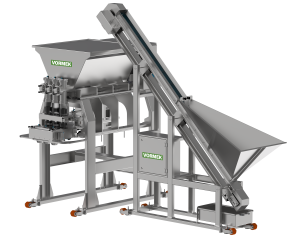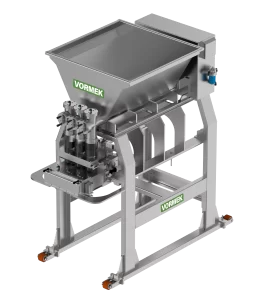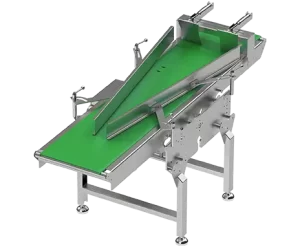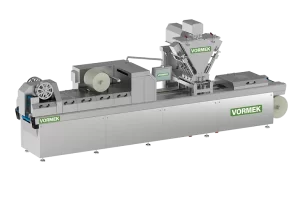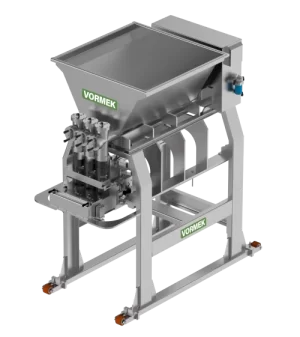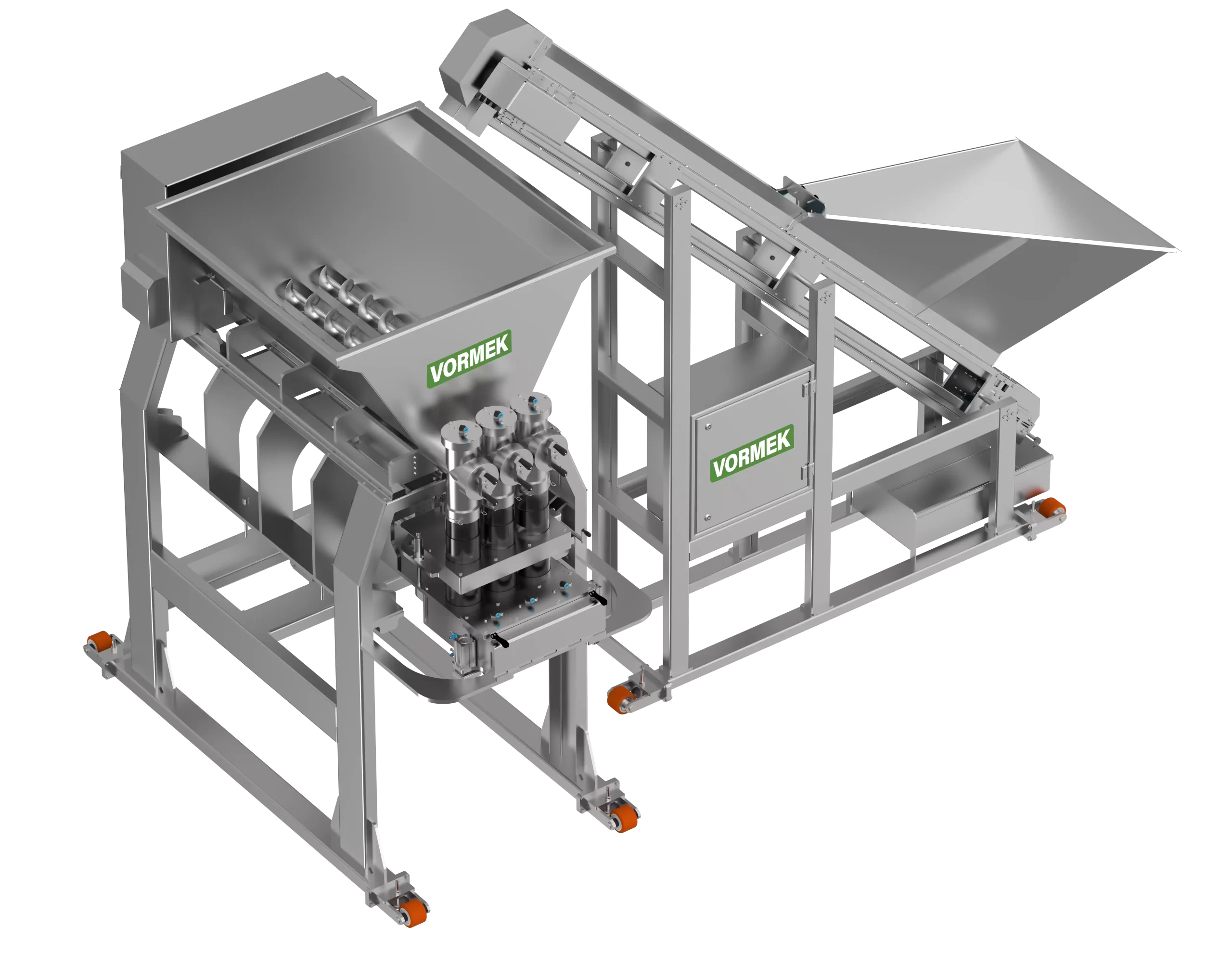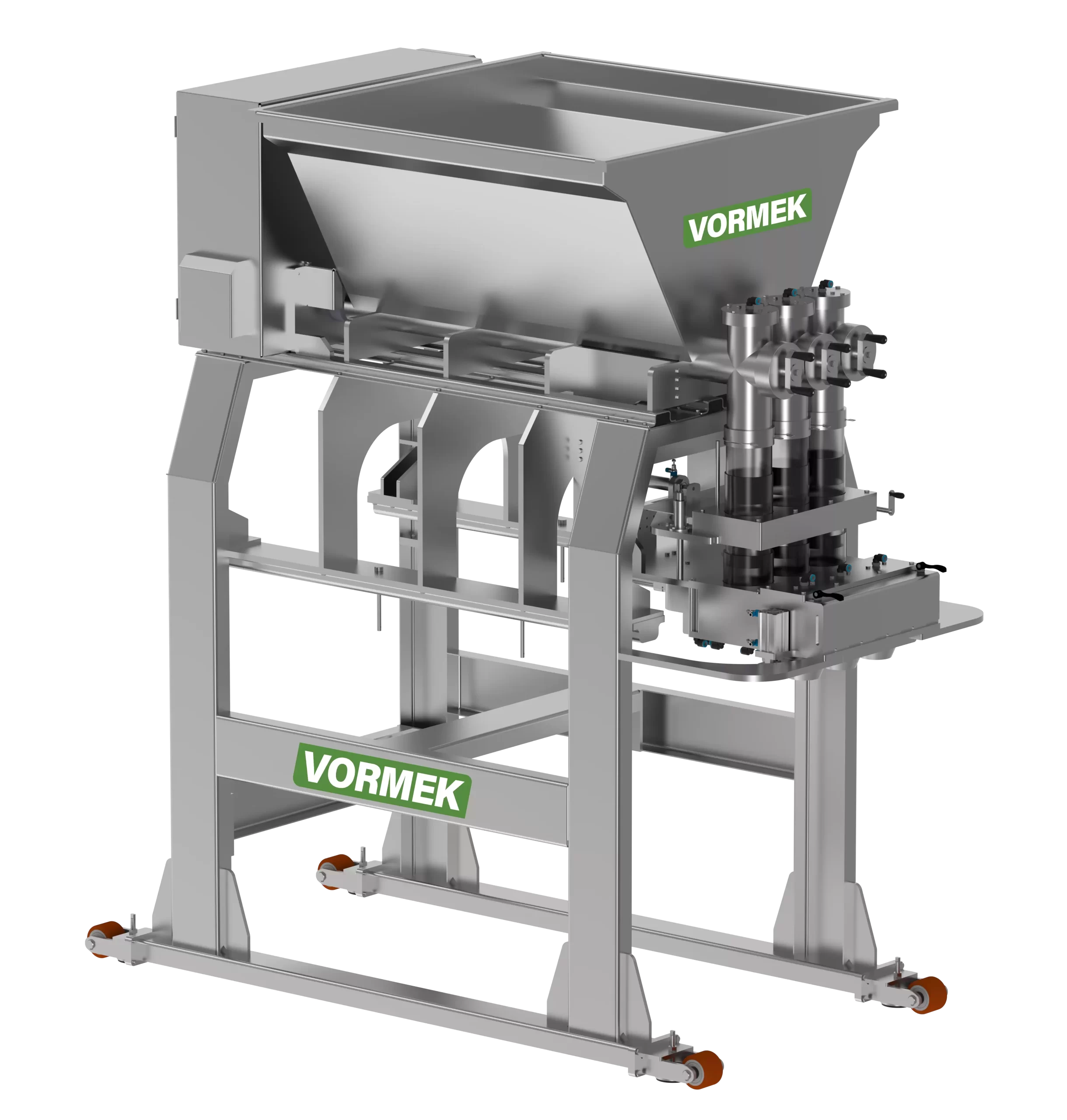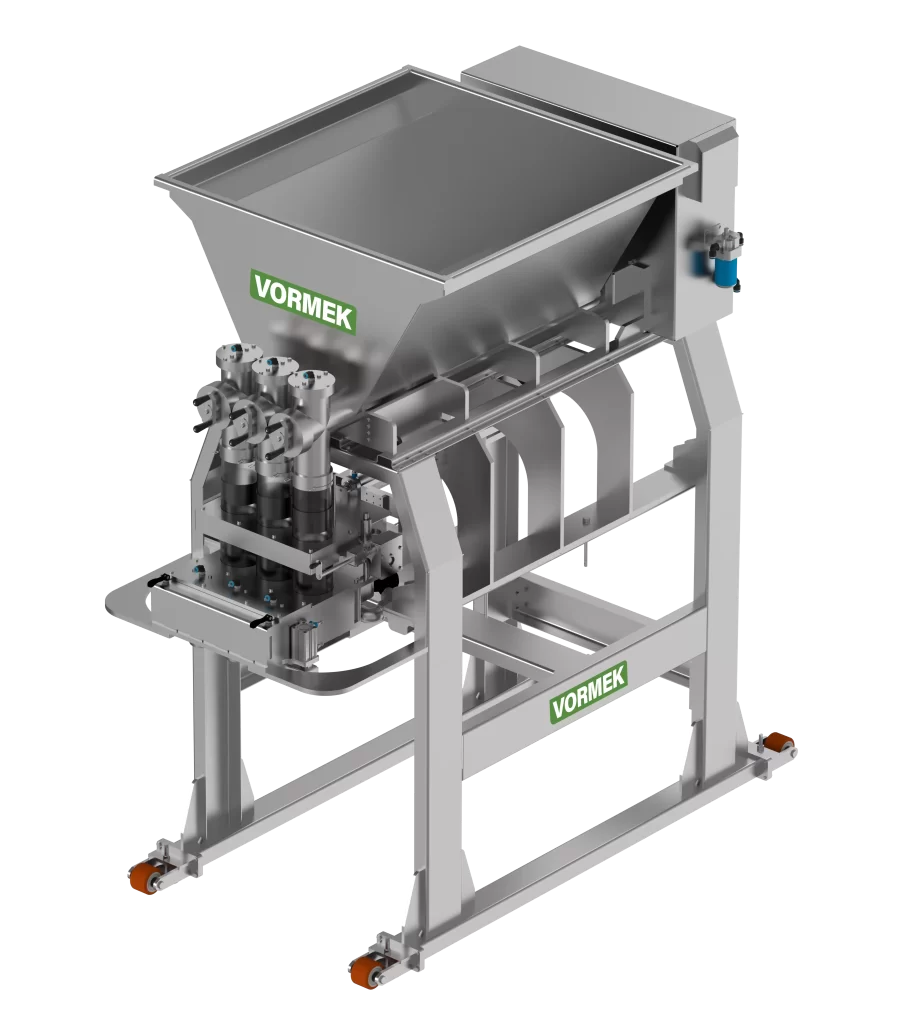
The Mechoris Volu / VFL-720 is an innovative Volumetric Filling Machine engineered for solid food products with controlled moisture content, sticky textures, heterogeneous compositions, and, most importantly, specific processing temperature requirements.
In the food processing industry, selecting the right filling technology is a strategic decision that directly influences product quality, process consistency, production costs, food safety, line efficiency, and brand competitiveness.
While many conventional industrial filling systems are designed for standardized products, a significant range of food products presents challenges that traditional filling technologies cannot easily address. For low-viscosity liquid packaging requirements, you can check our industrial gravity filler machines, whereas demanding semi-solid applications require advanced volumetric engineering.
Products characterized by high moisture content, sticky consistency, non-uniform textures, temperature sensitivity, and variable rheological behavior often pose considerable challenges when it comes to accurate, consistent, and efficient filling into containers.
Hot Filling Challenges in a Volumetric Filling Machine Workflow
Now imagine these challenges becoming even more complex when a product must be filled at a precisely controlled temperature. Under such conditions, even minor temperature fluctuations can trigger a series of problems that affect both product quality and processing efficiency:
- Changes in viscosity: Temperature variations can alter product viscosity, resulting in inconsistent flow behavior and reduced filling accuracy.
- Deterioration of product texture: Improper temperature control can compromise the delicate texture, consistency, and sensory characteristics consumers expect.
- Increased risk of microbial growth: Inadequate temperature management can create conditions that encourage the growth of spoilage microorganisms, including molds.
- Compromised final product quality: For certain food products, maintaining the correct filling temperature is essential to preserving their intended characteristics and overall quality.
Some products require carefully controlled thermal processing to achieve their desired shelf life. Consider, for example, a product that must be filled into containers at 85°C (185°F). This temperature is more than just a processing parameter; it may represent the beginning of a precisely managed thermal treatment sequence.
Depending on the product and its processing requirements, additional steps may be necessary after filling and sealing. These may include holding the packaged product in a temperature-controlled water bath for a specified period, followed by rapid cooling in colder water to achieve a controlled thermal transition.
Why Is Controlled Rapid Cooling Important?
When properly integrated into a validated thermal processing system, rapid cooling can provide several important benefits:
- Minimize the time the product spends within temperature ranges favorable to microbial growth.
- Reduce the risk of microbial spoilage and mold development when combined with appropriate heat treatment, hygienic processing, and effective package sealing.
- Help preserve the product’s desired texture, appearance, and overall quality.
The filling temperature is not simply a technical setting; it is a critical component of the overall food safety and quality management strategy. When the container, sealing film, processing temperature, and holding time are not properly coordinated, both product integrity and shelf life may be compromised. Achieving reliable results requires a carefully engineered process in which every stage, from the initial filling operation to the final cooling phase, is precisely controlled.
Note: It is important to recognize that the effectiveness of any thermal treatment depends on the product formulation, microbial risk profile, packaging characteristics, and validated time-temperature conditions. Rapid cooling supports product safety and quality but does not replace an appropriate microbial inactivation process.
Mechoris Volu / VFL-720: Advanced Volumetric Filling Machine Architecture
The Mechoris Volu / VFL-720 has been specifically developed to address these demanding processing requirements. More than a conventional machine, it is a specialized engineering solution designed for products where precise temperature control, preservation of product structure, accurate volumetric dosing, and hygienic processing are essential.
By combining these critical functions within a dedicated filling system, the Mechoris Volu / VFL-720 helps manufacturers achieve greater process consistency, maintain product quality, and support reliable production of challenging temperature-sensitive food products.
Challenges of Filling Products That Must Remain Frozen
Some food products are stored at freezing temperatures. These products must not undergo defrosting (thawing) during packaging, as this can compromise their quality, cause moisture loss, and ultimately reduce their nutritional value.
What Is Defrosting (Thawing), and What Are Its Disadvantages During Frozen Food Packaging?
Defrosting, or unintended thawing, is the process by which a product stored at sub-zero temperatures (in a frozen state) gradually or suddenly begins to thaw due to various factors, such as exposure to warm air, contact with surfaces at higher temperatures, or extended processing times. This phenomenon presents a significant challenge, particularly during the filling and packaging of frozen food products.
| No. | Disadvantage | Explanation |
|---|---|---|
| 1 | Moisture Release (Drip Loss) | As the temperature rises, ice crystals melt, causing the product to become partially or fully liquid. This can damage the product’s original texture. |
| 2 | Changes in Texture and Structure | Products such as frozen vegetables, fruits, and dough may become soft, mushy, or slimy after thawing, losing their original quality. |
| 3 | Reduced Shelf Life and Rapid Spoilage | As ice melts, conditions become more favorable for microbial growth. Once a product has thawed, even if it is refrozen, its safety and quality may be compromised, and its shelf life can be significantly reduced. |
| 4 | Loss of Nutritional Value | Thawing causes moisture and water-soluble nutrients to escape from the product. Vitamins and minerals may be lost along with the released liquid. |
| 5 | Reduced Filling Accuracy | A product that is solid and easy to handle when frozen may become sticky, soft, and unpredictable after thawing. This can disrupt filling accuracy and increase weight variations. |
| 6 | Adhesion to Equipment Surfaces | Water released from melting ice, combined with organic components of the product, can adhere to hopper walls, augers, and filling nozzles, causing blockages and reducing operational efficiency. |
| 7 | Increased Cleaning Frequency | The accumulation of sticky and viscous residues caused by thawing can compromise production line hygiene, forcing operators to stop production for frequent cleaning. |
| 8 | Increased Microbial Load | Water released during thawing creates a moist environment favorable to the growth of bacteria, molds, and yeasts, directly threatening the safety of the final product. |
1. Why Conventional Systems Fail Compared to a Modern Volumetric Filling Machine
When designing filling lines, many machines available on the market are engineered for specific product categories:
| Product Type | Common Filling Technology |
|---|---|
| Low-viscosity liquids | Liquid Fillers |
| Homogeneous, semi-viscous products | Piston Fillers |
| Powders | Powder Fillers |
| Dry granules | Multihead Weighers |
The challenge begins when a product does not fit into any of these categories. For example, a product that has a high moisture content, a heterogeneous structure, a sticky consistency, or an irregular particle distribution; is sensitive to temperature fluctuations; exhibits changes in viscosity as temperature varies; or requires filling at a controlled temperature. Under such conditions, many conventional filling systems struggle to deliver the desired performance.
2. Why Do Temperature-Sensitive Products Require Different Filling Technology?
In food processing engineering, temperature is not merely an environmental parameter; it is an integral part of a product’s processing characteristics. Many food products exhibit behavior that is directly influenced by temperature, including hot sauces, dairy dips, processed cheeses, semi-solid dairy products, frozen shredded products, hot stews, hot ready-to-eat meals, foods with viscoelastic properties, and specialized formulations.
For these products, temperature fluctuations can lead to:
- Increased or decreased viscosity
- Restricted product flow
- Reduced filling accuracy
- Phase separation
- Damage to product texture
- Deterioration of final product quality
3. The Design Philosophy Behind the Mechoris Volu / VFL-720
The Mechoris Volu / VFL-720 was developed around a clear engineering philosophy: Precise volumetric filling for temperature-sensitive, moist products that conventional fillers cannot reliably handle.
This machine is not designed for dry products, an important distinction that defines its intended applications:
- Moist Products
- Sticky Products
- Non-Homogeneous Products
- Semi-Solid Foods
- Temperature-Sensitive Products
- Warm-Fill Applications
- Cold-Fill Applications
4. Double-Jacketed Hopper Technology: The Heart of Product Temperature Control
One of the machine’s most significant engineering advantages is its double-jacketed hopper. In many conventional filling systems, products may experience temperature drops or fluctuations after entering the filler, posing a serious risk for temperature-sensitive applications. In the Mechoris Volu / VFL-720 , the double-jacketed hopper is engineered to provide continuous thermal control:
| Engineering Advantage | Description |
|---|---|
| Maintaining Product Processing Temperature | Keeps the product within a specified temperature range. |
| Viscosity Stability | Thermal control helps maintain consistent flow behavior. |
| Filling Consistency | Stable product flow helps preserve volumetric filling accuracy. |
| Prevention of Quality Deterioration | Helps prevent unwanted changes in product texture and structure. |
5. Precision Volumetric Filling Machine System
Unlike weight-based (gravimetric) filling systems, this machine is designed around Precision Volumetric Filling. The technology focuses on delivering accurate, repeatable volumes, which is essential for production lines requiring consistency, speed, process control, and repeatability.
6. Product Transfer System: Servo-Controlled Auger Architecture
Product transfer in this machine goes beyond simple mechanical operation. Its architecture is based on an auger system, servo motors, and controlled product movement. Each auger operates under precise control.
| Advantage | Result |
|---|---|
| Precise Motion Control | Improved filling accuracy |
| Gentle Product Transfer | Reduced damage to product texture |
| Ability to Handle Heterogeneous Products | Stable operating performance |
| Reduced Flow Fluctuations | Greater filling consistency |
7. Addressing Product Adhesion: An Engineered Air + Vacuum Solution
One of the most common challenges when filling moist products is product adhesion. Sticky products tend to adhere to equipment walls, block discharge pathways, cause incomplete emptying, and create filling inaccuracies. To address these challenges, the system incorporates a specialized solution: a combined Air + Vacuum System.
| Component | Function |
|---|---|
| Compressed Air | Reduces adhesion and helps release product from equipment walls. |
| Controlled Vacuum System | Establishes pressure balance and enables complete product discharge. |
Key Advantages: Reduced product adhesion, stable product flow, complete discharge with less waste, fewer blockages, increased uptime, and more consistent filling accuracy.
8. Heterogeneous Products: Where Traditional Fillers Struggle
Many food products do not have a uniform structure. These include liquid-solid mixtures, products with mixed textures, fibrous materials, and multiphase formulations. Traditional filling machines often struggle with such products, resulting in blockages, reduced filling accuracy, product damage, and frequent production line stoppages. The Mechoris Volu / VFL-720 is specifically designed for these demanding applications.
9. Hygienic Design and Food Safety Engineering (CIP Design)
In the food industry, operational performance has little value without proper hygienic design. This system has been developed with a strong focus on hygienic engineering, including reducing contamination risks, facilitating cleaning, minimizing microbial loads, and supporting food safety in accordance with FDA food equipment sanitary standards.
One of its key advantages is its CIP (Clean-in-Place) compatible architecture, designed to provide:
- Fast cleaning
- Complete drainage of product pathways
- Easy access for cleaning and maintenance
- Reduced cleaning and changeover time between production batches
The Economic Benefits of CIP:
- Shorter cleaning times → Higher production output
- Reduced contamination → Improved product quality
- Less downtime → Better return on investment (ROI)
10. Eliminating Manual Filling: A Strategic Advantage
In many food processing facilities, challenging products are still filled manually, leading to several problems: low production speeds, human error, contamination risks, inconsistent filling, and high labor costs. Automating this process creates a significant competitive advantage.
| Criteria | Manual Filling | Mechoris Volu / VFL-720 |
|---|---|---|
| Filling Accuracy | Low | High |
| Production Speed | Limited | Industrial-scale |
| Hygiene | Operator-dependent | Controlled |
| Repeatability | Poor | High |
| Labor Requirements | High | Low |
11. Production Efficiency and Real Economic Benefits (TCO & ROI)
In industrial manufacturing, the primary key performance indicators (KPIs) are Throughput, Uptime, Yield, and Consistency. The Mechoris Volu / VFL-720 has been engineered with these performance indicators in mind. Purchasing decisions should not be based solely on the initial equipment price. Instead, manufacturers should evaluate the Total Cost of Ownership (TCO):
| TCO Component | Impact |
|---|---|
| Labor Costs | Significant Reduction |
| Production Downtime | Reduced |
| Product Waste | Reduced |
| Filling Inaccuracies | Eliminated |
| Cleaning and Maintenance | Optimized |
| Product Quality and Rejection Rates | Improved |
ROI Analysis: If your current production process requires four operators and involves filling inaccuracies, product waste, cleaning-related downtime, and contamination risks, your actual operating costs are significantly higher than the initial cost of the machine.
12. Advantages of the Mechoris Volu / VFL-720 Volumetric Filling Machine from a Food Processing Specialist’s Perspective
For Hot-Filled Products
Imagine a machine that controls not only filling volume but also product temperature with exceptional precision. With its specialized design, the Mechoris Volu / VFL-720minimizes temperature fluctuations, resulting in stable viscosity, consistent product flow, and a final texture that closely matches the intended characteristics of your formulation.
The product is also dispensed into containers at a specified temperature, allowing it to undergo the complete pasteurization process. This helps extend shelf life while meeting the desired quality preservation requirements.
For Cold-Filled (Frozen) Products
The product remains at freezing temperatures throughout the entire process, from the hopper inlet to the filling nozzle outlet. As a result, no moisture is released from the product, its texture remains unchanged, no adhesion to equipment surfaces occurs, and there is no risk of microbial growth.
The product enters the container exactly as it leaves cold storage: firm, uniform, and retaining its original nutritional value and texture. Your production line will never have to stop again, whether for frequent cleaning, clearing blockages, or dealing with the difficulties operators face when handling sticky products.
Reliability, Repeatability, Flexibility, Hygiene Confidence, and Reduced Risk
The Mechoris Volu / VFL-720 is a specialized engineering solution designed to address a specific category of industrial challenges. This positioning gives it a distinctive and valuable place in the market.
The Mechoris Volu / VFL-720 provides an effective solution to real-world filling challenges involving moist, sticky, heterogeneous, and temperature-sensitive products that conventional filling machines struggle to handle. Equipped with a double-jacketed hopper, servo-controlled product transfer system, Air + Vacuum technology, hygienic CIP design, and precision volumetric filling capabilities, the machine not only improves product quality and hygiene but also reduces operating costs and accelerates return on investment.