Introduction
The global ready meal market has expanded rapidly over the past decade as consumers increasingly seek convenient, high-quality foods that fit busy lifestyles. Whether sold through supermarkets, online retailers, airline catering, or institutional food services, ready meals have become a major segment of the modern food industry. However, convenience alone is no longer enough. Today’s consumers expect products that retain their fresh appearance, pleasant texture, natural flavor, and nutritional value while remaining safe throughout refrigerated storage.
Meeting these expectations presents a significant challenge for food manufacturers. Unlike single-component foods, ready meals combine several ingredients—such as cooked meat, rice, pasta, vegetables, sauces, or dairy products—within a single package. Each ingredient has different microbiological characteristics, moisture content, fat composition, and sensitivity to oxygen. As a result, the shelf life of the finished product is determined by the weakest component rather than the strongest.
For example, cooked poultry is highly susceptible to lipid oxidation, vegetables gradually lose color and texture, while rice and pasta may become microbiologically unsafe if cooling is not properly controlled. Preserving all these components simultaneously requires much more than refrigeration alone.
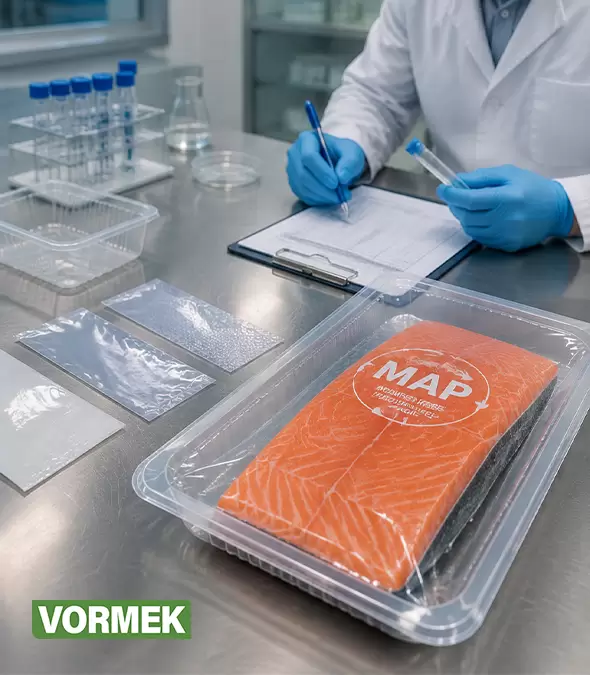
Among modern food preservation technologies, Modified Atmosphere Packaging (MAP) has become one of the most effective methods for extending the refrigerated shelf life of ready meals. Instead of sealing food in normal atmospheric air, MAP replaces the air inside the package with a carefully controlled mixture of food-grade gases. When combined with hygienic production, rapid chilling, high-barrier packaging materials, and proper cold-chain management, this technology significantly slows microbial growth and oxidative deterioration without changing the product formulation.
Today, MAP is widely adopted by manufacturers of ready-to-eat meals, airline catering companies, hospital food suppliers, meal-kit producers, and supermarket private-label brands because it helps maintain food quality while reducing waste across the supply chain.
This guide explains the scientific principles behind shelf-life extension, the role of food microbiology, and the engineering considerations required to achieve reliable packaging performance.
Why Shelf Life Is Critical for Ready Meals
Shelf life is not simply the number of days printed on a package. From a food engineering perspective, it is the period during which a product remains microbiologically safe, chemically stable, physically acceptable, and organoleptically desirable under specified storage conditions.
For ready meal manufacturers, extending shelf life provides several important advantages:
- Wider distribution to regional and international markets
- Lower product returns due to spoilage
- Reduced food waste throughout the supply chain
- Better inventory management
- Greater production flexibility
- Improved retail availability
- Higher consumer confidence and brand loyalty
Conversely, inadequate shelf life can result in product recalls, increased operational costs, customer complaints, and damage to brand reputation.
Consequently, extending shelf life has become a strategic objective rather than merely a packaging consideration.
Factors That Influence Ready Meal Shelf Life
The commercial life of a ready meal depends on numerous interrelated factors. No single preservation method can compensate for weaknesses elsewhere in the production process.
Product Formulation
Every ingredient contributes differently to overall stability. Meals rich in proteins and unsaturated fats are generally more susceptible to microbial spoilage and oxidation than products based primarily on carbohydrates.
Recipe formulation therefore has a direct impact on packaging strategy.
Water Activity (aw)
Most ready meals possess high water activity, usually above 0.97, providing excellent conditions for bacterial growth.
Because reducing water activity is impractical for most cooked meals, manufacturers rely on refrigeration and MAP to control microbial activity.
pH
Acidity strongly influences microbial growth.
Meals containing tomato sauces generally have lower pH values and naturally inhibit some spoilage microorganisms, whereas cream sauces, cooked rice, pasta, and meat dishes provide a more favorable environment for bacterial multiplication.
Initial Microbial Load
The microbial population present immediately before packaging plays a major role in determining final shelf life.
Effective sanitation, hygienic equipment design, and strict personnel hygiene help minimize contamination after cooking.
Cooling Rate
Rapid chilling is essential because microorganisms multiply rapidly within the temperature danger zone.
Blast chilling immediately after cooking minimizes bacterial growth before packaging and is considered standard practice in commercial ready meal production.
Packaging Atmosphere
Replacing atmospheric air with an optimized gas mixture reduces oxidation and suppresses the growth of many spoilage microorganisms.
However, the ideal gas composition varies depending on the ingredients and intended shelf life of the product.
Packaging Materials
Barrier properties determine how effectively the package maintains its internal atmosphere.
Poor barrier materials allow oxygen to enter and carbon dioxide to escape, reducing the effectiveness of MAP over time.
Storage Temperature
Even the most advanced packaging technology cannot compensate for temperature abuse.
Maintaining refrigerated storage between 0°C and 4°C is essential for preserving both food safety and quality.
Understanding Food Deterioration
To extend shelf life effectively, manufacturers must understand why ready meals deteriorate.
Food quality gradually declines because of four principal mechanisms.
1. Microbiological Spoilage
Microorganisms remain the primary cause of spoilage in refrigerated ready meals.
As bacteria, yeasts, and molds multiply, they produce undesirable changes including:
- Off-odors
- Slime formation
- Gas production
- Texture degradation
- Package swelling
- Discoloration
The rate of microbial growth depends on temperature, oxygen concentration, water activity, pH, nutrient availability, and initial contamination.
2. Oxidative Reactions
Oxygen reacts with food components throughout storage.
Lipid oxidation is particularly important in meals containing meat, poultry, seafood, dairy products, or vegetable oils. These reactions produce rancid flavors, unpleasant odors, color changes, and nutritional losses.
Reducing oxygen exposure is therefore one of the primary objectives of MAP technology.
3. Physical Changes
Not all quality losses are microbiological.
Ready meals may also experience:
- Moisture migration between ingredients
- Sauce separation
- Rice hardening
- Vegetable softening
- Texture deterioration
Appropriate packaging design helps slow these physical changes.
4. Enzymatic Activity
Some naturally occurring enzymes remain active even after cooking.
Residual enzymatic reactions gradually affect:
- Color stability
- Flavor
- Texture
- Nutritional quality
Although slower than microbial spoilage, enzymatic deterioration contributes to overall shelf-life limitation.
Food Microbiology: The Foundation of Shelf-Life Extension
Packaging alone cannot make food safe. Instead, it preserves the quality already achieved through hygienic production and controlled processing.
Several microorganisms are frequently associated with refrigerated ready meals, including Pseudomonas spp., Brochothrix thermosphacta, lactic acid bacteria, yeasts, molds, and, under certain conditions, pathogens such as Listeria monocytogenes or Bacillus cereus.
The goal of MAP is not to eliminate microorganisms completely but to create conditions that slow their growth while maintaining product quality. This is why successful shelf-life extension always combines multiple preservation strategies rather than relying on packaging alone.
The most effective approach is known as the multiple-hurdle concept, where several protective factors work together, including:
- High-quality raw materials
- Hygienic processing
- Validated cooking
- Rapid blast chilling
- Low initial microbial contamination
- Modified Atmosphere Packaging
- High-barrier packaging materials
- Reliable seal integrity
- Continuous cold-chain management
- Scientific shelf-life validation
When these hurdles are properly integrated, manufacturers can achieve significantly longer refrigerated shelf life while maintaining food safety, product quality, and consumer satisfaction.
What Is Modified Atmosphere Packaging?
Modified Atmosphere Packaging (MAP) is a food preservation technology that extends the shelf life of perishable products by replacing the normal atmospheric air inside a package with a carefully controlled mixture of food-grade gases. Unlike vacuum packaging, which simply removes air, MAP creates an atmosphere specifically designed to slow spoilage while preserving the product’s sensory and nutritional quality.
Atmospheric air naturally contains approximately 78% nitrogen (N₂), 21% oxygen (O₂), and 0.04% carbon dioxide (CO₂). While this composition is ideal for human life, it is not suitable for preserving most refrigerated ready meals because oxygen accelerates microbial growth, lipid oxidation, pigment degradation, and flavor deterioration.
The objective of MAP is to replace this atmosphere with a gas composition that delays these deterioration processes while maintaining product safety and quality throughout refrigerated storage.
It is important to emphasize that MAP is not a sterilization method. It does not destroy microorganisms already present in the food. Instead, it slows their growth, making it one component of a complete food preservation system that also includes hygienic manufacturing, rapid chilling, proper refrigeration, and validated shelf-life studies.
The Functions of Food-Grade Gases
Successful MAP depends on understanding the role of each gas used during packaging.
Carbon Dioxide (CO₂)
Carbon dioxide is the primary antimicrobial gas used in Modified Atmosphere Packaging.
When CO₂ dissolves in the moisture naturally present on food surfaces, it forms a weak carbonic acid that lowers surface pH slightly and interferes with microbial metabolism. This effect significantly slows the growth of many spoilage bacteria, molds, and yeasts.
The antimicrobial efficiency of carbon dioxide increases at lower temperatures because gas solubility rises as temperature decreases. This explains why MAP is particularly effective when combined with refrigerated storage.
The main benefits of carbon dioxide include:
- Inhibiting spoilage microorganisms
- Reducing mold growth
- Delaying yeast development
- Extending microbiological shelf life
- Preserving sensory quality
However, excessive CO₂ concentrations may cause package collapse due to gas absorption by the food or may slightly alter flavor in sensitive products. For this reason, gas composition should always be optimized for each specific product.
Nitrogen (N₂)
Nitrogen is an inert gas with very low chemical reactivity.
Unlike carbon dioxide, nitrogen does not inhibit microorganisms directly. Instead, it performs important physical functions inside the package.
Nitrogen helps to:
- Replace oxygen
- Prevent package collapse
- Maintain package shape
- Protect delicate food components
- Stabilize internal gas composition
Because nitrogen has very low solubility in water and fats, it remains inside the package during storage, providing structural support even after part of the carbon dioxide has dissolved into the product.
Oxygen (O₂)
Oxygen is often considered undesirable in food packaging, but its role depends entirely on the product being packaged.
For most cooked ready meals, oxygen should be minimized because it promotes oxidation and supports aerobic microorganisms.
However, products containing fresh vegetables may require limited amounts of oxygen to maintain normal plant respiration and prevent anaerobic metabolism, which can generate unpleasant flavors.
Therefore, oxygen concentration should always be selected according to the physiological and microbiological characteristics of the product rather than applying a universal formulation.
Gas Behavior After Packaging
The atmosphere inside a MAP package is not static.
Immediately after sealing, gases begin interacting with the food.
Carbon dioxide gradually dissolves into:
- Sauces
- Meat
- Poultry
- Rice
- Dairy products
Nitrogen remains relatively stable because of its low solubility.
Residual oxygen is gradually consumed through:
- Oxidation reactions
- Residual microbial activity
- Vegetable respiration (where applicable)
Because gas composition changes during storage, manufacturers evaluate gas concentrations not only immediately after packaging but throughout the entire shelf-life study.
Headspace Design
Headspace refers to the empty volume between the product and the sealing film.
Although consumers sometimes perceive headspace as unnecessary empty space, it performs several important engineering functions.
Proper headspace allows:
- Efficient gas replacement
- Stable internal atmosphere
- Improved vacuum performance
- Reduced package deformation
- Better protection for delicate food products
Too little headspace can reduce gas exchange efficiency and increase residual oxygen.
Excessive headspace unnecessarily increases gas consumption and packaging costs.
For this reason, determining the appropriate product-to-headspace ratio is an essential part of packaging design.
Residual Oxygen Control
Residual oxygen is one of the most important indicators of MAP performance.
It represents the amount of oxygen remaining inside the package after vacuum and gas flushing.
High residual oxygen usually results from:
- Poor vacuum efficiency
- Inadequate gas flushing
- Seal leakage
- Incorrect machine settings
- Damaged packaging materials
Elevated oxygen levels accelerate:
- Lipid oxidation
- Vitamin degradation
- Color loss
- Flavor deterioration
- Growth of aerobic spoilage microorganisms
Professional food manufacturers routinely monitor residual oxygen using gas analyzers as part of their quality assurance program.
Selecting Gas Mixtures for Different Ready Meals
There is no universal MAP gas mixture suitable for every ready meal. The optimal atmosphere depends on product composition, microbial risks, and desired shelf life.
Meat-Based Meals
Cooked beef and lamb contain proteins and fats that are susceptible to both microbial spoilage and oxidation.
Packaging objectives include:
- Suppressing aerobic bacteria
- Preserving flavor
- Delaying fat oxidation
- Maintaining texture
Carbon dioxide is typically the dominant gas, while nitrogen provides package stability.
Poultry Meals
Cooked poultry products contain highly unsaturated lipids that oxidize relatively quickly.
Effective MAP focuses on:
- Oxidation control
- Microbial inhibition
- Moisture retention
- Flavor preservation
Strict refrigeration remains essential because poultry products generally have favorable conditions for bacterial growth.
Seafood Meals
Seafood is among the most perishable categories of ready meals.
Its high moisture content, delicate muscle structure, and abundance of unsaturated fatty acids make rapid spoilage likely if preservation is inadequate.
Successful seafood packaging requires:
- Rapid chilling
- Hygienic handling
- High-barrier packaging
- Optimized gas composition
- Continuous refrigeration
Rice and Pasta Meals
Rice and pasta themselves are relatively stable after cooking, but they become microbiologically vulnerable when improperly cooled.
Particular attention should be given to controlling Bacillus cereus, whose spores can survive cooking and germinate if products remain too long within the temperature danger zone.
Consequently, rapid cooling combined with MAP provides significantly better shelf-life performance than packaging alone.
Vegetarian Meals
Vegetarian ready meals frequently contain vegetables that continue limited physiological activity during refrigerated storage.
Packaging engineers must balance microbial inhibition with the respiration requirements of fresh vegetable ingredients.
Carefully controlled oxygen concentrations may therefore be necessary in some formulations.
Why Product Validation Is Essential
Published gas recommendations should always be considered starting points rather than universal solutions.
Every ready meal has its own formulation, microbial ecology, moisture distribution, packaging configuration, and storage conditions.
Consequently, manufacturers should validate each product individually before commercial production.
A comprehensive validation program typically includes:
- Total viable count
- Yeast and mold analysis
- Residual oxygen measurement
- Carbon dioxide monitoring
- pH determination
- Color evaluation
- Texture analysis
- Sensory assessment
- Consumer acceptance testing
Only after these studies confirm acceptable product quality throughout storage should a commercial shelf-life claim be established.
High-Barrier Packaging Films
Most commercial MAP applications use multilayer structures because no single polymer provides all the required properties.
Common materials include:
- EVOH (Ethylene Vinyl Alcohol): Excellent oxygen barrier that protects products from oxidation and preserves aroma.
- PET (Polyethylene Terephthalate): Provides rigidity, transparency, and dimensional stability.
- PA (Polyamide): Offers high puncture resistance and mechanical durability.
- PP (Polypropylene): Commonly used for microwaveable trays due to its heat resistance and reliable sealing characteristics.
- PE (Polyethylene): Usually forms the sealing layer because of its excellent heat-sealing performance and moisture resistance.
By combining these materials, manufacturers create packaging capable of maintaining the modified atmosphere throughout the intended refrigerated shelf life.
Oxygen and Moisture Barrier Performance
Barrier performance determines how effectively the package protects food against external influences.
The two most important characteristics are:
Oxygen Barrier
Oxygen entering the package can accelerate:
- Lipid oxidation
- Color fading
- Vitamin degradation
- Off-flavor development
- Growth of aerobic spoilage bacteria
For this reason, films with low oxygen permeability are preferred for most refrigerated ready meals.
Moisture Barrier
Water migration between meal components can significantly affect product quality.
Examples include:
- Rice absorbing moisture from sauces
- Breaded products becoming soggy
- Vegetables losing crispness
- Pasta continuing to hydrate during storage
A suitable moisture barrier helps maintain the intended texture of every component throughout shelf life.
Tray Selection
The packaging tray is equally important because it supports the product, protects it during transportation, and withstands heating or cooling processes.
The most common tray materials include:
Polypropylene (PP)
PP trays are widely used because they:
- Withstand microwave reheating
- Provide good chemical resistance
- Offer reliable sealing performance
- Are lightweight and economical
CPET (Crystallized PET)
CPET trays tolerate both frozen storage and conventional oven heating, making them suitable for premium ready meals that consumers heat directly in the package.
APET (Amorphous PET)
APET offers exceptional clarity and an attractive appearance, making it ideal when product presentation is a key marketing factor.
Recycled PET (rPET)
As sustainability becomes increasingly important, many manufacturers are adopting food-grade recycled PET to reduce environmental impact while maintaining packaging performance.
Seal Integrity
A perfect seal is essential for maintaining the modified atmosphere.
Even microscopic defects allow oxygen to enter and carbon dioxide to escape, reducing shelf life and increasing the risk of spoilage.
Seal quality depends on several process parameters, including:
- Sealing temperature
- Pressure
- Dwell time
- Film compatibility
- Tray design
- Equipment calibration
Food residues trapped in the sealing area can also create leakage paths. Maintaining clean sealing surfaces and accurately positioning the product inside the tray are therefore essential for reliable packaging.
Quality Control and Package Testing
Quality assurance should verify that every package leaving the production line meets predefined performance standards.
Common testing methods include:
Leak Detection
Leak tests identify defects that may not be visible during routine inspection.
Widely used methods include:
- Vacuum decay testing
- Bubble emission testing
- Dye penetration testing
These techniques help detect even very small leaks before products reach the market.
Seal Strength Testing
Seal strength is measured by determining the force required to separate the sealing film from the tray.
Insufficient seal strength may lead to package failure during transportation, while excessive seal strength can make the package difficult for consumers to open.
Gas Composition Analysis
Gas analyzers are routinely used to verify that the desired concentrations of oxygen, carbon dioxide, and nitrogen have been achieved after packaging.
Monitoring gas composition throughout production helps identify equipment or process deviations before they affect product quality.
Packaging Equipment for MAP Ready Meals
Packaging performance depends heavily on equipment capability.
Modern MAP production lines typically include:
- Automatic tray denesters
- Multi-head or piston filling systems
- MAP tray sealers
- Gas mixing units
- Vacuum pumps
- Vision inspection systems
- Checkweighers
- Metal detectors
- Coding and labeling systems
Integrating these components into a fully automated line improves production efficiency, reduces operator intervention, and increases packaging consistency.
Cold Chain Management
Modified Atmosphere Packaging extends shelf life only when the cold chain remains uninterrupted.
Immediately after cooking, ready meals should be rapidly cooled using blast chillers before entering the packaging line. After packaging, refrigerated temperatures must be maintained during storage, transportation, retail display, and final distribution.
Temperature fluctuations accelerate microbial growth and shorten shelf life even when packaging quality is excellent.
For most refrigerated ready meals, maintaining temperatures between 0°C and 4°C is recommended throughout the supply chain.
Continuous temperature monitoring and digital data logging enable manufacturers to verify compliance and quickly identify deviations.
Sustainability in Ready Meal Packaging
Environmental sustainability has become a major priority for both manufacturers and consumers.
Packaging developers are increasingly working to reduce environmental impact while preserving food safety and shelf life.
Current industry trends include:
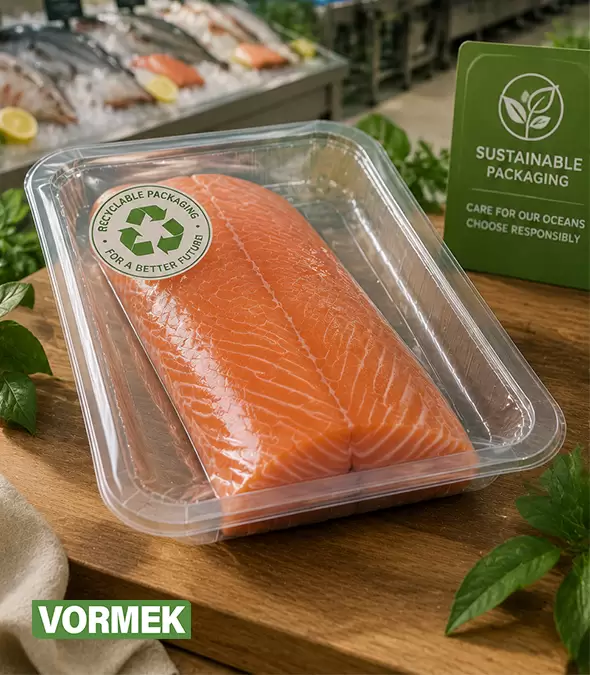
- Recyclable mono-material structures
- Lightweight packaging
- Food-grade recycled plastics
- Bio-based polymers
- Reduced packaging weight
- Improved material recovery
However, reducing packaging material should never compromise product protection. Preventing food waste often has a greater environmental benefit than reducing plastic consumption alone.
Consequently, sustainable packaging solutions must balance recyclability with barrier performance, mechanical strength, and food safety.
Preparing for Commercial Production
Before launching a new ready meal, manufacturers should validate the complete packaging system under actual production and storage conditions.
A comprehensive validation program typically includes:
- Microbiological shelf-life studies
- Residual oxygen measurements
- Seal integrity testing
- Mechanical performance evaluation
- Sensory assessment
- Transportation simulation
- Consumer acceptance testing
Only after successful validation should an official shelf-life claim be established.
Proper validation not only ensures regulatory compliance but also reduces product returns, improves customer satisfaction, and protects brand reputation.
Future Trends in Ready Meal Packaging
Consumer expectations, environmental regulations, and advances in packaging technology continue to reshape the ready meal industry. Packaging is no longer viewed solely as a protective container but as a strategic tool for improving food safety, extending shelf life, reducing waste, and enhancing the consumer experience.
Several emerging technologies are expected to influence the next generation of Modified Atmosphere Packaging systems.
Smart Packaging
Smart packaging incorporates indicators and sensors that provide real-time information about product condition throughout the supply chain.
Examples include:
- Time-temperature indicators (TTIs)
- Freshness indicators
- Oxygen indicators
- Leak detection labels
- QR-code traceability systems
These technologies help manufacturers, retailers, and consumers verify that products have been stored under appropriate conditions.
Active Packaging
Unlike conventional packaging, active packaging interacts with the food environment to maintain product quality.
Common examples include:
- Oxygen scavengers
- Moisture absorbers
- Ethylene absorbers
- Antimicrobial packaging materials
These technologies complement MAP by slowing deterioration even further, particularly for products with extended distribution periods.
Sustainable Packaging Solutions
Sustainability has become a key purchasing criterion for both retailers and consumers.
Packaging manufacturers are increasingly developing:
- Mono-material recyclable films
- Lightweight trays
- Bio-based polymers
- Recycled food-grade plastics
- Solvent-free laminates
The challenge is achieving environmental sustainability without compromising barrier performance or food safety.
Industry 4.0 and Artificial Intelligence
Modern packaging lines are becoming increasingly connected through digital manufacturing technologies.
Artificial intelligence and machine learning can analyze production data to:
- Optimize sealing parameters
- Detect packaging defects
- Predict equipment maintenance
- Reduce downtime
- Improve overall equipment effectiveness (OEE)
Combined with real-time monitoring systems, these technologies help manufacturers improve consistency while reducing operating costs.
Best Practices for Maximizing Ready Meal Shelf Life
Successful shelf-life extension depends on the entire production process rather than packaging alone.
Manufacturers should follow these best practices:
- Source high-quality raw materials from approved suppliers.
- Maintain strict hygiene throughout production.
- Apply validated cooking procedures.
- Cool products rapidly after thermal processing.
- Minimize contamination during filling and packaging.
- Select gas mixtures based on product-specific validation.
- Use high-barrier packaging materials.
- Verify seal integrity throughout production.
- Monitor residual oxygen routinely.
- Maintain an uninterrupted cold chain.
- Perform scientific shelf-life studies before commercialization.
- Review packaging performance regularly and update validation when formulations or materials change.
When these practices are implemented together, they significantly improve product quality, food safety, and operational efficiency.
Frequently Asked Questions (FAQ)
1. What is Modified Atmosphere Packaging (MAP)?
Modified Atmosphere Packaging is a preservation technology that replaces the air inside a package with a controlled mixture of food-grade gases to slow microbial growth and oxidation, thereby extending the shelf life of refrigerated foods.
2. Can MAP replace refrigeration?
No. MAP is designed to work alongside refrigeration. Without proper temperature control, microorganisms can still grow rapidly, reducing shelf life and compromising food safety.
3. Which gas is most important in MAP?
Each gas has a different function. Carbon dioxide inhibits microbial growth, nitrogen stabilizes the package and displaces oxygen, while oxygen is adjusted according to the specific needs of the product.
4. How much can MAP extend the shelf life of ready meals?
The exact extension depends on the product formulation, packaging materials, gas composition, processing hygiene, and storage temperature. Shelf-life claims should always be established through scientific validation studies.
5. Why is residual oxygen monitored?
Residual oxygen is a key quality indicator because excessive oxygen accelerates oxidation and supports the growth of aerobic microorganisms. Regular monitoring helps ensure consistent packaging performance.
6. What packaging materials are commonly used for MAP?
Most ready meals are packaged using multilayer structures that combine materials such as EVOH, PET, PA, PP, and PE to provide the necessary oxygen barrier, mechanical strength, and sealing performance.
7. Why is seal integrity so important?
Even a microscopic leak can allow oxygen to enter the package and carbon dioxide to escape. This changes the protective atmosphere and can significantly shorten shelf life.
8. How should manufacturers validate shelf life?
Shelf-life validation should include microbiological analysis, chemical testing, physical package evaluation, sensory assessment, and verification of storage conditions under realistic commercial environments.
Conclusion
The growing demand for convenient, safe, and high-quality ready meals has made shelf-life extension a critical objective for food manufacturers. While refrigeration remains essential, it is no longer sufficient on its own to meet the distribution and quality requirements of modern food supply chains.
Modified Atmosphere Packaging (MAP) has proven to be one of the most effective technologies for preserving ready meals by slowing microbial growth, reducing oxidative reactions, and maintaining the sensory characteristics that consumers expect. However, its success depends on much more than selecting an appropriate gas mixture. Manufacturers must integrate hygienic processing, rapid chilling, optimized packaging materials, reliable sealing, accurate gas control, and continuous cold-chain management into a single preservation strategy.
Equally important is the validation of every packaging system under real production and storage conditions. Scientific shelf-life studies provide the evidence needed to establish reliable expiration dates, minimize food waste, and ensure consistent product quality throughout the supply chain.
As packaging technology continues to evolve, innovations such as smart packaging, active packaging, sustainable materials, and AI-driven production systems will further improve efficiency and product protection. Companies that invest in these technologies while maintaining rigorous quality control will be better positioned to meet changing consumer expectations and increasingly demanding regulatory requirements.
Ultimately, extending the shelf life of ready meals is not the result of one technology alone. It is achieved through the successful integration of food science, packaging engineering, process control, and quality management. When these disciplines work together, manufacturers can deliver ready meals that remain safe, fresh, and appealing from the production line to the consumer’s table while strengthening operational performance and long-term market competitiveness.