Marinated Poultry Packaging: 7 Best MAP Solutions
Introduction
The global poultry processing industry faces increasing pressure to deliver products that meet evolving consumer expectations for quality, safety, convenience, and extended shelf life. In this demanding landscape, modern marinated poultry packaging has emerged as the defining technology for brand differentiation and microbial security.
Among the various processing interventions available to meat manufacturers, combining active marinades with modified atmosphere packaging simultaneously enhances multiple quality attributes of poultry meat.
This multifaceted process involves the application of solutions containing organic acids, salts, bioactive plant extracts, and physical treatments. Together, these elements modify the structure of myofibrillar proteins, increase water-holding capacity, improve tenderness, and substantially suppress microbial activity and lipid oxidation within the meat matrix.
The marination process operates through a complex interplay of physicochemical mechanisms. When applied to poultry meat, marinade components penetrate the muscle tissue through diffusion and capillary action, interacting with the protein matrix to alter its functional properties.
Acidic components partially denature surface proteins, increasing the ionic strength of the medium and causing myofibrillar proteins to swell. This swelling creates additional space between muscle fibers, allowing greater water entrapment and contributing to the characteristic juiciness of marinated poultry packaging meat cuts. Simultaneously, the osmotic effect of salts and other solutes influences water activity, directly supporting microbial stability.
From an industrial perspective, selecting appropriate marination ingredients and application methods represents a critical decision point that influences product quality, production efficiency, and economic viability. The choice between natural and synthetic marinade components carries major implications for clean-label positioning and regulatory compliance.
Similarly, the decision to employ conventional immersion marination versus advanced technologies—such as vacuum tumbling, ultrasound-assisted processing, or high-pressure treatment—profoundly affects process economics, batch throughput, and final product characteristics.
The integration of natural marinades with Modified Atmosphere Packaging (MAP) creates a preservation synergy that addresses degradation mechanisms at multiple levels. Marinades provide immediate antimicrobial and antioxidant activity during and immediately after processing, while MAP maintains conditions that suppress spoilage throughout retail storage.
This comprehensive approach ensures both initial reduction and ongoing suppression of quality degradation, achieving shelf-life extension that neither technology can provide individually. For meat processors seeking to optimize marinated poultry packaging, implementing certified marinated poultry packaging lines represents a technically sound methodology that delivers immediate competitive leverage.
Our technical engineering team at Vormek provides comprehensive machinery support for food processing facilities. Explore our advanced industrial tray sealer packaging machines to discover how automated tray sealing and thermoforming systems can be tailored to meet your specific operations for marinated poultry packaging.
The Science of Marination: Fundamental Mechanisms
Protein Modification and Structural Changes
The primary mechanism through which marination improves poultry meat quality involves modification of the myofibrillar protein structure. The myofibril, the basic contractile unit of muscle tissue, consists of interdigitating thick (myosin) and thin (actin) filaments whose arrangement determines meat texture and water-holding capacity. Understanding these structural changes is essential for optimizing marination processes and predicting their effects on final product quality.
- Acid-Induced Protein Denaturation occurs when marinade acids (citric, lactic, acetic) lower the pH of the meat surface. This pH reduction moves the environment away from the isoelectric point of myofibrillar proteins (approximately pH 5.0-5.2), increasing the net charge on protein molecules and causing electrostatic repulsion between adjacent filaments. The resulting expansion of the myofibrillar lattice creates additional space for water entrapment, directly improving water-holding capacity. Citric acid, with its tricarboxylic structure, provides particularly strong effects due to its ability to chelate metal ions and its buffering capacity.
- Salt-Induced Protein Solubilization represents another critical mechanism. Sodium chloride and phosphate salts increase ionic strength, solubilizing myosin and other myofibrillar proteins. This solubilized protein forms a gel-like matrix that immobilizes water and contributes to the characteristic texture of processed meat products. The solubilization process also facilitates the incorporation of fat and other ingredients into the meat matrix. Phosphates are particularly effective in this regard, as they not only increase ionic strength but also bind calcium ions that would otherwise cross-link proteins, further enhancing solubilization.
- Enzymatic Tenderization may occur when marinades contain proteolytic enzymes such as those found in certain fruit juices (papain from papaya, bromelain from pineapple, ficin from figs). These enzymes hydrolyze specific peptide bonds within the protein structure, weakening the connective tissue network and reducing mechanical strength. While enzymatic tenderization can produce significant texture improvements, careful control is required to prevent over-tenderization and the development of mushy texture.
- Collagen Modification affects the connective tissue component of meat. Acidic marinades can hydrolyze collagen, converting the rigid triple-helical structure into a more flexible gelatinous form. This transformation reduces the shear force required for mastication and improves perceived tenderness. The effect on collagen is particularly important for poultry products that contain significant connective tissue, such as thighs and drumsticks, where collagen contributes substantially to texture.
Water‑Holding Capacity and Juiciness
Water-holding capacity (WHC) represents one of the most important quality attributes influenced by marination, directly affecting both consumer acceptance (juiciness) and economic yield (cooking loss). The relationship between marinade composition and WHC is complex, involving multiple competing mechanisms that must be carefully balanced for optimal results.
- The pH-Dependent Swelling of myofibrillar proteins creates the primary WHC increase in marinated poultry. When the pH of the meat is shifted away from the isoelectric point, the net charge on proteins increases, creating electrostatic repulsion that expands the myofibrillar lattice. This expansion allows water to be held in the spaces between filaments rather than being expelled during cooking. Maximum WHC is achieved at pH values significantly above or below the isoelectric point, depending on protein composition and ionic environment.
- Osmotic Effects influence water distribution between the marinade and the meat. When the marinade has higher osmotic pressure than the meat tissue (due to dissolved salts, sugars, or other solutes), water is drawn from the meat into the marinade. Conversely, when marinade solutes diffuse into the meat, they increase the osmotic pressure within the tissue, creating an osmotic gradient that can draw water into the meat matrix. Salt concentration is particularly important in this regard, as it both increases osmotic pressure and affects protein structure.
- Protein Gelation during subsequent heating creates a three-dimensional network that immobilizes water. The heat-induced denaturation of solubilized myofibrillar proteins forms a gel matrix that traps water, preventing its expulsion during cooking. The strength and water-holding capacity of this gel depend on the protein concentration, pH, and ionic strength. Optimal gelation requires sufficient protein solubilization during marination, which is achieved through appropriate salt and phosphate concentrations.
- Drip Loss Prevention represents an important practical outcome of WHC improvement in marinated poultry packaging. During refrigerated storage, marinated products lose less moisture than unmarinated controls, resulting in higher retail yield and better appearance. The reduction in drip loss also minimizes the availability of free moisture that could support microbial growth, indirectly contributing to preservation.
Lipid Oxidation and Oxidative Stability
Oxidative rancidity represents a primary degradation pathway in marinated poultry packaging products, affecting both flavor and nutritional quality. The high unsaturated fatty acid content of poultry meat makes it particularly susceptible to oxidation, which proceeds through a free radical chain reaction initiated by reactive oxygen species. Understanding the oxidation process is essential for selecting appropriate antioxidant strategies.
- Primary Oxidation involves the formation of hydroperoxides from unsaturated fatty acids through hydrogen abstraction and oxygen addition. This initial stage is often undetectable by sensory means but sets the stage for subsequent degradation reactions. The rate of primary oxidation depends on fatty acid composition, oxygen availability, temperature, and pro-oxidants such as transition metals and heme proteins.
- Secondary Oxidation produces volatile aldehydes, ketones, and other compounds responsible for the characteristic off-flavors of rancid meat. These compounds have low sensory threshold values, meaning that even minor oxidation can be detected by consumers. Secondary oxidation products include hexanal, pentanal, and other volatile aldehydes that cause stale and cardboard-like off-flavors.
- Antioxidant Mechanisms within marinades include:
- Free Radical Scavenging: Direct neutralization of reactive oxygen species through hydrogen donation or electron transfer. Phenolic compounds are particularly effective free radical scavengers due to their ability to stabilize unpaired electrons through resonance.
- Metal Chelation: Binding of transition metals (iron, copper) that catalyze oxidation. Citric acid and other organic acids are effective metal chelators, removing pro-oxidant metal ions from the reaction environment.
- Oxygen Scavenging: Reduction of available oxygen for oxidation reactions. Some antioxidant compounds consume oxygen directly, reducing the oxygen concentration available for lipid oxidation.
The effectiveness of antioxidants depends on their concentration, distribution within the meat matrix, and interaction with other marinade components. The complex mixture of antioxidants in plant extracts often provides synergistic effects that exceed the sum of individual activities.
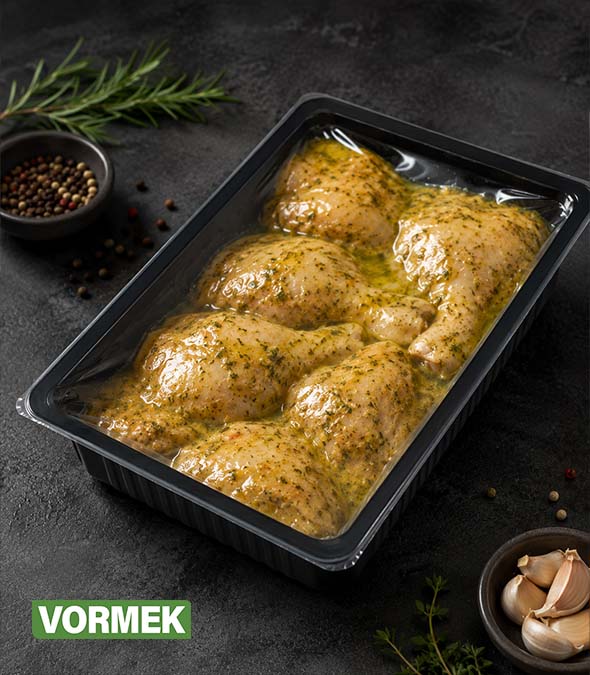
Figure 1: High-barrier marinated poultry packaging preserving fresh color and eliminating purge loss.
Classification of Marinating Agents and Ingredients
Biological Marinades: Natural Plant and Fermented Sources
Biological marinades encompass a diverse range of ingredients derived from plant sources, fermented dairy products, and microbial cultures. These materials offer several advantages for industrial marinated poultry packaging and processing, including clean-label positioning, regulatory acceptance, and multifunctional activity that combines preservation with flavor enhancement.
- Plant Extracts and Spices represent the most widely used category of biological marinades. These materials contain complex mixtures of bioactive compounds that provide antimicrobial, antioxidant, and flavoring properties simultaneously:
- Herbs and Spices: Rosemary, thyme, oregano, basil, and sage contain high levels of phenolic compounds with demonstrated antioxidant activity. Rosmarinic acid, carnosic acid, and thymol are among the most active compounds. Essential oils from these herbs provide additional antimicrobial effects against foodborne pathogens through membrane disruption.
- Citrus Juices and Extracts: Lemon, lime, orange, and grapefruit juices contribute both acidity for tenderization and bioactive flavonoids with antioxidant properties. Research demonstrates that lime extract exhibits particularly strong antibacterial activity against aerobic mesophilic bacteria in marinated poultry packaging.
- Onion and Garlic: These allium vegetables contain sulfur compounds with antimicrobial and antioxidant properties. The characteristic flavor profile contributes to consumer acceptance while allicin demonstrates broad-spectrum antimicrobial activity.
- Fruit Juices and Purees: Pineapple, papaya, and kiwi contain proteolytic enzymes that contribute to tenderization. The natural fruit acids also contribute to pH reduction and WHC improvement.
- Fermented Products provide both flavor development and preservation through the action of lactic acid bacteria:
- Yogurt and Kefir: These fermented dairy products contribute lactic acid for protein modification, along with antimicrobial metabolites produced during fermentation. The bacterial cultures in yogurt produce bacteriocins and other antimicrobial compounds that inhibit pathogenic organisms.
- Fermented Plant Extracts: Soy sauce, miso, and other fermented plant products provide complex flavor profiles along with bioactive compounds such as isoflavones and phenolic acids. Fermentation increases the bioavailability of bioactive compounds while producing new flavor notes.
- Botanical Extracts and Oleoresins offer standardized concentrations of bioactive compounds, enabling precise formulation control. These processed materials provide consistent performance while simplifying ingredient handling and ensuring batch-to-batch repeatability.
Antimicrobial Mechanisms of Biological Marinades
The antimicrobial activity of biological marinades arises from multiple mechanisms working in concert across marinated poultry packaging products:
- Phenolic Compounds interact with bacterial cell membranes, increasing permeability and causing leakage of cellular contents. The phenolic hydroxyl groups can also bind to proteins and enzymes, disrupting metabolic processes. Compounds containing catechol groups generally show the highest antibacterial efficacy.
- Organic Acids diffuse through bacterial cell membranes and dissociate within the cell, lowering internal pH and disrupting pH homeostasis. The undissociated form of the acid is particularly antimicrobial, as it penetrates cell membranes more readily. Once inside, dissociation releases protons that disrupt essential metabolic pathways.
- Essential Oils contain terpenes and other volatile compounds that disrupt membrane integrity and inhibit cellular respiration. The hydrophobic nature of these compounds allows them to partition into the lipid bilayer of bacterial membranes, increasing permeability and inducing lysis.
- Competitive Inhibition by lactic acid bacteria in fermented marinades prevents pathogen establishment through competition for nutrients and production of antagonistic metabolites. This mechanism is particularly important in yogurt-based marinades during refrigerated storage.
Chemical Marinades: Inorganic and Organic Compounds
Chemical marinades encompass a range of inorganic and organic compounds that modify meat properties through physicochemical mechanisms. While consumer preferences are increasingly shifting toward clean-label products, chemical marinades remain important for specific industrial applications where consistent performance is required.
- Acidulants include organic acids such as citric, lactic, malic, and acetic acid. These compounds lower the pH of the meat surface, causing the protein modifications described earlier:
- Citric Acid: Provides a pleasant citrus flavor profile along with tenderization. The tricarboxylic acid structure provides strong metal-chelating properties, contributing to antioxidant activity.
- Lactic Acid: Occurs naturally in meat and contributes to the characteristic flavor of fermented products. The mild acid profile provides effective tenderization without excessive sourness while enhancing safety.
- Acetic Acid: Provides characteristic vinegar flavor along with antimicrobial activity. The low molecular weight allows rapid penetration into poultry tissue.
- Phosphates represent a class of inorganic compounds with important functional properties in marinated poultry packaging:
- Water-Holding Capacity Enhancement: Phosphates increase the ionic strength and pH of the meat, promoting protein solubilization and myofibrillar swelling at levels of 0.2-0.5% of product weight.
- Color Stabilization: Phosphates bind metal ions that would otherwise catalyze myoglobin oxidation, stabilizing the characteristic pink color of poultry meat.
- Texture Improvement: The interaction between phosphates and myofibrillar proteins creates a more uniform gel matrix with improved binding properties.
- Sodium Chloride (Salt) remains one of the most important ingredients in marination:
- Protein Solubilization: Chloride ions bind to myosin at specific sites, increasing solubility and promoting water binding at levels of 0.5-1.5% of product weight.
- Flavor Enhancement: Salt enhances the perception of other flavors while reducing perception of bitterness and sourness.
- Preservation: Salt reduces water activity, inhibiting microbial growth through osmotic mechanisms and contributing to microbiological safety.
- Sugar‑Based Compounds contribute to flavor development, browning reactions, and osmotic effects. The Maillard reaction during cooking produces desirable roasted and browned flavors.
Physical Marination Technologies
Physical marination technologies enhance the effectiveness of marinade ingredients through mechanical and physical interventions that improve penetration and distribution while reducing processing time.
- Vacuum Tumbling represents the standard industrial method for marination application. Agitation under vacuum pulls marinade deep into muscle tissues, eliminates air pockets, accelerates protein extraction, and avoids oxidative degradation during processing.
- Ultrasound‑Assisted Marination employs high-frequency sound waves to enhance mass transfer. Acoustic cavitation generates microstreaming that accelerates marinade uptake without the mechanical tearing associated with aggressive tumbling.
- High‑Pressure Processing (HPP) subjects meat to isostatic pressures, causing protein unfolding, inactivating endogenous enzymes, and achieving substantial vegetative bacterial reduction without heat.
- Pulsed Electric Field (PEF) Technology applies brief high-voltage electrical pulses to create reversible electroporation in cell membranes, accelerating marinade diffusion with minimal temperature increase.
Nanoparticle‑Assisted Marination
Nanoparticle-based approaches represent an emerging frontier in marination technology, offering controlled delivery capabilities not achievable with conventional ingredients.
- Nanocarriers provide controlled release of bioactive compounds:
- Lipid‑Based Nanocarriers: Liposomes and nanoemulsions encapsulate hydrophobic essential oils, protecting them from oxidation and enabling sustained release during shelf life.
- Protein‑Based Nanocarriers: Plant protein isolates encapsulate sensitive bioactive compounds, providing biocompatible and controlled release properties.
- Polysaccharide‑Based Nanocarriers: Chitosan and alginate nanoparticles offer bioadhesive properties that improve marinade retention and provide contact antimicrobial activity.
- Metal‑Based Nanoparticles provide targeted antimicrobial activity:
- Zinc Oxide Nanoparticles: Release Zn²⁺ ions that disrupt bacterial membranes with low toxicity to mammalian cells.
- Silver Nanoparticles: Provide broad-spectrum antimicrobial activity against both Gram-positive and Gram-negative food pathogens.
- Nanostructured Hydrogels create three-dimensional networks that trap free water and release bioactive compounds gradually throughout storage.
The Synergistic Impact of Marinades and MAP Packaging
How Marinades and MAP Work Together
The integration of natural marinades with Modified Atmosphere Packaging (MAP) creates a preservation synergy that addresses multiple degradation mechanisms simultaneously. Understanding this interaction is essential for optimizing shelf life and product quality in marinated poultry packaging lines.
“Marinade formulations neutralize microbial loads and scavenge free radicals during initial processing, while MAP tray sealing suppresses subsequent microbial proliferation by eliminating headspace oxygen. Together, this integrated marinated poultry packaging methodology achieves shelf-life extension impossible with standalone technologies.”
Peer-reviewed biochemical literature documented in ScienceDirect studies on modified atmosphere packaging confirms that combining carbon dioxide ($CO_2$) flushing with natural antioxidant marinades halts aerobic bacterial proliferation and extends chilled shelf life far beyond atmospheric limits.
- Complementary Antimicrobial Activity represents the most significant interaction. Marinades containing bioactive phenolic antioxidants and organic acids provide immediate antimicrobial effects, reducing the initial bacterial bioburden. MAP then maintains this protective environment throughout storage by creating atmospheric conditions ($CO_2$ enriched) that inhibit the growth of surviving psychrotrophic spoilage organisms.
- Enhanced Oxidative Stability is achieved through the combination of antioxidant activity from marinade components and oxygen reduction from MAP. While marinade antioxidants scavenge free radicals within the meat matrix, MAP removes oxygen from the package headspace, eliminating the primary reactant for new oxidation reactions.
- Moisture Management Synergy occurs when marinade effects on water-holding capacity combine with MAP’s ability to maintain package relative humidity. Improved water retention reduces free purge in the tray, while MAP prevents condensation that could support microbial slime formation.
- Flavor Protection benefits from both technologies: marinade antioxidants prevent warmed-over oxidized notes, while MAP prevents the development of stale flavors resulting from ambient oxygen exposure.
Research Evidence for Combined Technology Efficacy
Studies examining the combined effect of marinades and MAP on poultry products have demonstrated clear commercial benefits:
- Citrus-Marinated Poultry: The combination of lime extract marinade with MAP packaging significantly extended the period during which quality attributes remained acceptable under refrigerated storage. TBARS values remained below spoilage thresholds throughout the storage period, and sensory scores remained superior compared to products without MAP.
- Yogurt-Marinated Poultry: Products packaged under MAP achieved extended shelf life compared to yogurt-marinated products in air-permeable packaging. The combination effectively controlled both oxidative and microbial spoilage, with lactic acid bacteria and carbon dioxide acting as dual bio-preservatives.
- Comprehensive Preservation: Paralleling findings in modern food preservation research, marinades provide active internal biochemical stability while MAP protects the external package environment.
Operational Considerations for Combined Technology Implementation
Implementing marinades and MAP together requires attention to critical operational parameters on the packaging line:
- Gas Composition Optimization: Products with high antioxidant content may tolerate slightly higher oxygen levels, while sensitive cuts require strict oxygen reduction down to less than 0.5%. Gas mixtures typically range between 60–70% $CO_2$ balanced with $N_2$.
- Marinade‑Package Chemical Interaction: Acidic marinades must be evaluated to ensure organic acids do not corrode packaging materials or induce delamination in barrier trays.
- Seal Integrity Under Moisture: Liquid marinade components (acids, salts, oils) can splash onto tray flanges during high-speed filling. Industrial tray sealers must provide contamination-resistant sealing systems capable of fusing through residues.
- Process Synchronization: Coordination between marination and packaging operations must minimize exposure to ambient conditions, maintaining continuous cold-chain control below 4°C.
Packaging Considerations for Marinated Poultry Packaging
Modified Atmosphere Packaging Systems
Applying automated marinated poultry packaging systems provides the physical barrier needed to lock in marinade tenderness and prevent microbial recontamination:
- Gas Composition Selection: Carbon dioxide provides direct antimicrobial activity against Gram-negative psychrotrophic spoilage bacteria, while nitrogen serves as an inert filler to prevent package collapse as $CO_2$ dissolves into meat moisture.
- Gas‑to‑Product Ratio: A headspace volume ratio of at least 2:1 is recommended to ensure adequate reserve $CO_2$ is maintained above the marinated poultry throughout storage.
- Barrier Requirements: High-barrier materials with low oxygen transmission rates (OTR < 5 cc/m²/24hr) are essential to prevent oxygen ingress over 20+ days of shelf life.
- Hermetic Sealing Pressure: Heavy-duty pneumatic or servo-driven tray sealer tooling ensures consistent, wrinkle-free hermetic seals across rigid tray perimeters.
Packaging Material Selection
Selecting appropriate container structures ensures long-term barrier performance against corrosive marinades:
- Aluminum Laminated Polyethylene (ALP): Provides absolute oxygen and light barrier, ideal for long-life frozen or institutional marinated poultry packaging products.
- High-Barrier Coextruded PP/EVOH Trays: The industrial benchmark for chilled retail display, pairing polypropylene’s moisture resistance with EVOH’s superior oxygen barrier.
- Mono-PET and Recyclable Polymers: Sustainable packaging formats that align with European and North American circular economy mandates while maintaining adequate shelf-life barrier.
Active Packaging Systems
Active packaging technologies provide interactive preservation inside marinated poultry packaging trays:
- Oxygen Scavengers: Absorb residual headspace oxygen down to parts-per-million levels, completely preventing myoglobin discoloration.
- Antioxidant Release Films: Active lidding films that slowly release natural polyphenols onto the top meat surface during transport.
- Moisture Absorbent Pads: Food-grade absorbent pads placed beneath marinated poultry cuts to capture excess liquid purge without drying out the meat.
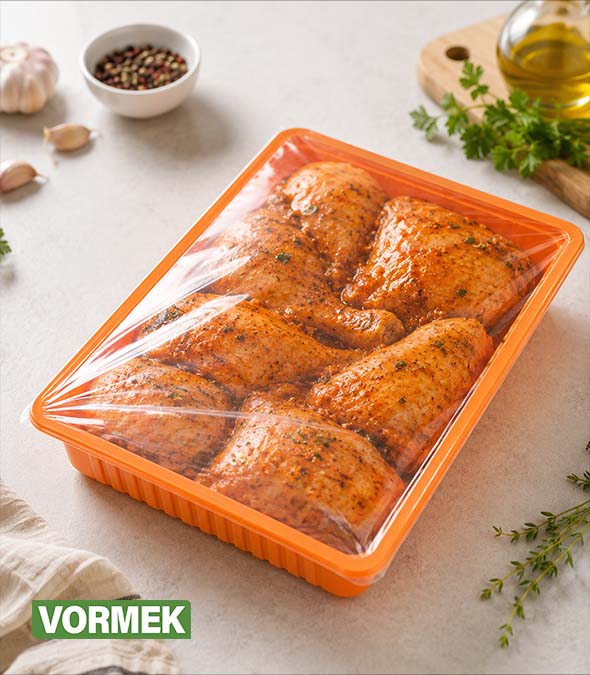
Figure 2: Industrial tray sealer packaging technology engineered for leak-free marinated poultry lines.
Quality Assurance and Control
Analytical Methods for Marination Control
Effective quality control across industrial marinated poultry packaging lines requires continuous analytical monitoring:
- Marinade Uptake Measurement: Verified by gravimetric weight gain following vacuum tumbling and subsequent drip loss monitoring during chilled holding.
- pH Penetration Profiling: pH measurement at both the exterior surface and interior core to confirm uniform acid penetration and protein denaturation.
- Colorimetry (CIE L*a*b*): Objective spectrophotometric color assessment ensuring consistent pink-white poultry presentation and zero graying.
- Warner-Bratzler Shear Force: Mechanical texture analysis to confirm tenderness improvement and prevent over-tenderization.
- Sensory Panel Evaluation: Structured hedonic testing assessing consumer juiciness, flavor release, and aroma acceptability.
Shelf Life Determination
Commercial shelf life achieved through marinated poultry packaging is determined through comprehensive multi-parameter validation:
- Microbiological Limits: Ensuring Total Viable Counts (TVC) remain strictly below 7 log CFU/g throughout the targeted retail window.
- Chemical Indicators: Monitoring Thiobarbituric Acid Reactive Substances (TBARS < 1.0 mg MDA/kg) and Total Volatile Basic Nitrogen (TVB-N).
- Sensory Rejection Thresholds: Assessing odor, visual slime formation, and surface sheen during accelerated storage testing.
HACCP Integration for Processing and Packaging
Marination and MAP packaging must be seamlessly integrated into plant HACCP plans:
Critical Control Points (CCPs):
- Raw Poultry Receiving: Verification of initial temperature (< 4°C) and pathogen-free microbiological status.
- Marinade Chilling and Preparation: Maintaining marinade batches below 4°C to prevent bacterial growth during preparation.
- Vacuum Tumbling Time/Temperature: Standardized tumbling cycles in refrigerated clean rooms.
- MAP Sealing and Gas Purity: In-line seal integrity inspection and continuous gas analyzer checks for oxygen percentage.
Case Studies in Marinated Poultry Preservation
Commercial Application: Citrus‑Marinated Chicken Fillets
A high-volume processing plant implemented natural citrus marination combined with inline MAP tray sealing for fresh chicken breast fillets:
- Process Parameters: Key lime extract formulation, continuous vacuum tumbling, and packaging in EVOH barrier trays with 70% $CO_2$ / 30% $N_2$.
- Commercial Outcome: Extended refrigerated display life from 6 days to 22 days at 4°C, maintained TBARS below 0.6 mg MDA/kg, and achieved complete retail acceptance with zero customer returns.
Commercial Application: Yogurt‑Marinated Poultry Cuts
A regional producer of traditional spiced yogurt poultry cuts transitioned from manual bag packing to automated MAP tray sealing:
- Process Parameters: Cultured yogurt marinade, refrigerated tumbling, and rigid tray sealing with anti-fog barrier lidding film.
- Commercial Outcome: Chilled shelf life extended to 18 days, curd whey separation eliminated, and retail supermarket distribution radius expanded by over 300 kilometers.
Frequently Asked Questions (FAQ)
1. What makes marinated poultry packaging with MAP superior to standard vacuum packaging?
Standard vacuum packaging pulls juice purge out of marinated cuts and compresses tender meat, damaging presentation. MAP marinated poultry packaging preserves structural shape, cushions juices in an inert gas pocket, and uses $CO_2$ to suppress bacteria without meat deformation.
2. How do natural citrus extracts enhance poultry shelf life?
Citrus extracts (especially Key Lime) contain rich concentrations of citric acid and phenolic flavonoids that disrupt bacterial cell membranes and chelate free iron, lowering lipid oxidation TBARS values.
3. What packaging material is best for high-acid marinated poultry?
Coextruded barrier PP trays with an internal EVOH barrier layer and anti-fog peelable lidding films provide the chemical resistance needed to withstand acidic marinades while blocking oxygen ingress.
4. How does marinade residue on tray flanges affect seal integrity?
Marinade oils and water droplets can cause seal leaks on standard heat sealers. Vormek industrial tray sealers incorporate specialized contoured sealing profiles and high-pressure pneumatic heads that displace liquid residues during sealing.
5. What is the typical shelf life achieved with combined marination and MAP?
While unmarinated air-packaged poultry spoils within 4 to 6 days, poultry treated with natural marinades and sealed under optimized MAP atmospheres regularly achieves 18 to 25 days of commercial shelf life under strict 2°C–4°C refrigeration.
6. How does Modified Atmosphere Packaging complement the effects of marination?
MAP provides additional preservation benefits that complement marination by reducing oxidative rancidity through oxygen reduction and inhibiting spoilage organism growth through carbon dioxide addition. The combination creates a synergistic preservation system that extends shelf life beyond what either technology can achieve individually.
7. What are the key quality indicators for monitoring marinated poultry packaging?
Key quality indicators include TBARS (lipid oxidation), total viable counts (microbiological quality), TVB-N (protein degradation), pH (acidification), water-holding capacity (juiciness potential), and sensory attributes (flavor, texture, appearance).
8. What are the advantages of nanoparticle-enhanced marinades?
Nanoparticle-enhanced marinades offer several advantages including controlled release of active compounds throughout storage, enhanced antimicrobial activity through improved delivery, increased bioavailability of bioactive compounds, and reduced need for synthetic preservatives.
9. How does vacuum tumbling improve marinade distribution compared to immersion marination?
Vacuum tumbling improves marinade distribution through multiple mechanisms: vacuum removes air from muscle tissue, preventing air pockets that impede penetration; mechanical agitation creates fresh surfaces for marinade contact; and the massage action promotes protein extraction and redistribution, facilitating even marinade distribution throughout the product.
10. What are the most effective natural antioxidants for poultry marination?
The most effective natural antioxidants for poultry marination include plant extracts rich in phenolic compounds such as rosemary, thyme, oregano, and citrus. These materials provide free radical scavenging activity and metal-chelating properties.
Conclusion: Strategic Value of Marinated Poultry Packaging
The preservation and quality enhancement of marinated poultry products through the strategic application of natural marinades represents a scientifically validated approach that addresses multiple product quality dimensions simultaneously. The marination process operates through a complex series of physicochemical mechanisms that modify protein structure, enhance water-holding capacity, improve textural properties, and provide antimicrobial and antioxidant protection.
The integration of natural marinades with Modified Atmosphere Packaging creates a powerful preservation synergy that addresses degradation mechanisms at multiple levels. Marinades provide immediate antimicrobial and antioxidant activity, while MAP maintains conditions that suppress spoilage throughout storage. The combination extends shelf life while maintaining sensory quality and nutritional value.
The economic benefits of extended shelf life, reduced waste, and maintained product quality justify the investment in comprehensive preservation technologies. For poultry processors operating in increasingly competitive global markets, the ability to deliver consistently high-quality marinated products with extended shelf life represents a significant competitive advantage.
For poultry processors seeking to optimize their preservation strategies, adopting certified marinated poultry packaging systems provides the foundation for commercial success, regulatory safety, and long-term business growth.
Upgrade Your Poultry Packaging Operations with Vormek
Vormek Packaging Solutions engineers custom industrial tray sealers, vacuum gas flush systems, and thermoformers configured specifically for high-speed marinated poultry production lines.
To explore more industrial packaging machinery blueprints, technical reviews, and preservation case studies, visit the Vormek packaging blog or contact our technical applications team today.